







What Growing Conditions for Coffee Does Kenya Offer?
Kenya sits in East Africa with the equator passing through its center, so the whole country lies within the tropical coffee belt. Two harvest seasons run from October to December and June to August, with annual rainfall of about 900 to 1200 mm, and the high-altitude areas of Mount Kenya provide the growing conditions for coffee that define the country's profile.
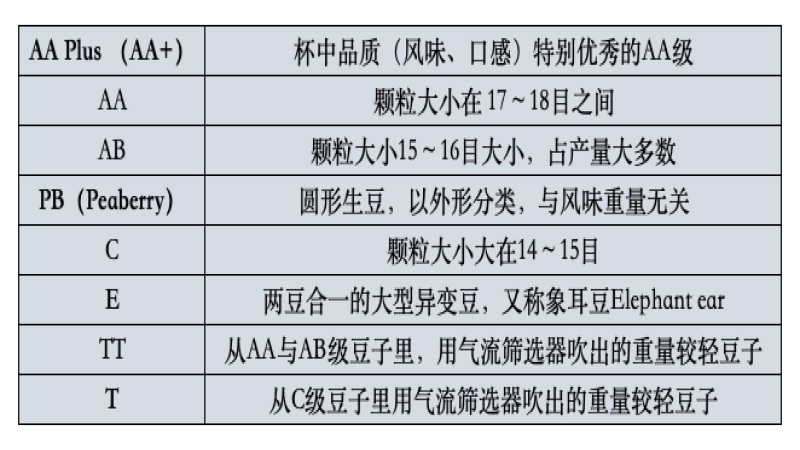
The SL series of varieties established Kenya among main coffee producers, delivering berry-like acidity and sugarcane-like sweetness. Grading uses bean size and quality, with AA+, AA, AB, PB, C, E, TT, and T, and AA, AB, and PB are most common on the market. Fourteen producing regions exist, with Nyeri, Kirinyaga, Murang'a, and Kiambu the most prominent.
Kenya is located in East Africa, with the equator passing through its center, placing the entire country within the tropical coffee-growing belt. There are two harvest seasons each year, from October to December and from June to August, with annual rainfall of about 900-1200 mm. The high-altitude areas of Mount Kenya provide ideal growing conditions for coffee. What truly established Kenya in the specialty coffee world is the SL series of varieties, which deliver highly distinctive berry-like acidity and a sugarcane-like sweetness. This article will outline Kenya's coffee grading standards and its fourteen major producing regions, with a focus on well-known origins such as Nyeri, Kirinyaga, Murang'a, and Kiambu, and will also introduce the flavor profile of Front Street Coffee's Thika Asali AA TOP.
Kenya is located in East Africa, with the equator passing right through its center, so the entire country lies within the tropical coffee-growing zone. There are two harvest periods each year, from October to December and from June to August. Annual rainfall is about 900 to 1200 mm, and the high-altitude areas around Mount Kenya create highly ideal conditions for coffee cultivation.
What has brought Kenya so much attention in the specialty coffee world is the SL series of varieties. The berry-like acidity it delivers is rich and vivid, and combined with a refreshing sweetness similar to sugarcane, it is unforgettable at first taste.
Kenya Grading
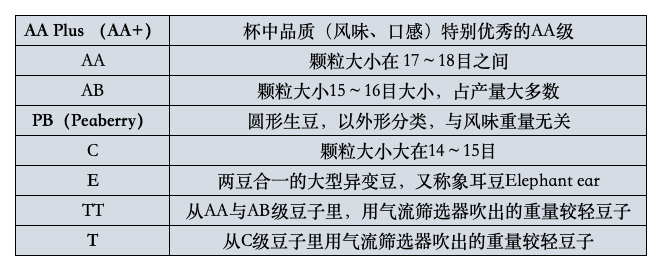
Kenya's coffee grading uses bean size and quality as its criteria, with clear definitions for bean size. The grades include AA+, AA, AB, PB, C, E, TT, and T. The three grades most commonly found on the market are usually AA, AB, and PB.
Kenyan Producing Regions
There are quite a few producing regions in Kenya, fourteen in total: Bungoma, Embu, Kiambu, Kirinyaga, Kisii, Machakos, Meru, Mt. Elgon, Murang'a, Nakuru, Nyeri, Thika, Taita Taveta, and Trans-Nzoia. In terms of recognition, Nyeri, Kirinyaga, Murang'a, and Kiambu are the most prominent.
Nyeri
This producing region is located in central Kenya and is home to the extinct volcano Mount Kenya. The altitude ranges from 1200 to 2300 meters. The terrain is high and the soil is nutrient-rich, so the supporting infrastructure in this area is also relatively well developed.
Kirinyaga
Adjacent to the Nyeri producing region, with an altitude of about 1300 to 1900 meters. Along with Nyeri, it is regarded as one of Kenya's two finest origins. Producers in this area are mainly smallholder coffee farmers. After farmers join a cooperative, the cooperative provides a wet mill, and farmers simply need to deliver the coffee cherries to the mill.
Murang'a
Under the administration of Central Province, it also benefits from volcanic soil, with an altitude between 1350 and 1950 meters. There are roughly one hundred thousand coffee growers in this area, and smallholders clearly outnumber estates.
Kiambu
This producing region is located in central Kenya and is dominated by larger coffee estates, with an altitude of about 1500 to 2200 meters. Coffee from here is often named directly after its origin, such as Thika, Ruiru, and Limuru. Front Street Coffee has previously introduced Asali AA TOP coffee beans from Thika.
This Asali coffee bean uses the SL28 variety and adopts Kenya's refined 72 -hour washed processing method ( K72 ). When tasting, you can perceive notes of cherry tomatoes and smoked plums, with bright acidity, a clean mouthfeel, and a finish that carries brown sugar-like sweetness and green tea-like character.
Disclaimer: Some images in this article are from the internet. For some content on the website, such as images, we respect the original authors' copyright and will indicate the source. However, due to the large volume, a few images and texts may not have been credited in time. Please forgive us. If the original author has any dispute, they may contact the website for handling. Once verified, we will correct it immediately. Compiled and edited by "Coffee Review vdailycom." Please indicate the source when reposting. This article is intended to spread coffee culture. If there is any infringement, please inform us and we will delete it. Thank you~!
The above content is compiled by CoffeeHunters, a coffee news website.


