







Coffee Grind Level in Iced Pour-Over: Ice Timing Test
An iced pour-over test compared putting ice in the server before brewing with adding ice after brewing finishes. A washed Geisha from Colombia's Finca La Divisa was used as the sample, with the same coffee-to-water-to-ice ratio in both runs. Ice added first cools the dripping coffee on contact; ice added later chills liquid that has already been extracted.
The setup held other variables steady: 15g coffee, a 1:10:6 ratio of coffee to hot water to ice, an Ek43 grind setting of 9.5 with 65 percent passing a No. 20 sieve, and 92°C brewing water in a three-pour method, with temperature and flavor recorded over time. The idea behind ice first is rapid cooling that locks in volatile compounds, though the difference between aroma and fragrance in coffee also depends on how the cup is served.
In making iced pour-over coffee, should the ice be placed in the server in advance, or added after brewing is complete? This question seems to concern only the order of operations, yet it may affect the cooling speed of the coffee liquid, aroma retention, and final concentration. Front Street Coffee used a washed Geisha from Colombia's Finca La Divisa as a sample, and by controlling the coffee-to-water-to-ice ratio, grind size, water temperature, and brewing technique, conducted a comparative tasting of "ice first" and "ice after," recording temperature and flavor changes at different time points. The experiment attempted to answer: does the order of adding ice really produce a perceptible difference, or is it merely an illusion caused by the time gap?
Generally speaking, the difference between these two methods may lie only in the operational steps. However, yesterday Front Street suddenly thought of the Paragon ice ball introduced in an earlier article, whose core function is to rapidly cool the coffee liquid so as to lock in volatile aromatic compounds as much as possible, allowing one to capture a richer coffee flavor.
Although the actual performance is not as miraculous as the merchant's marketing claims, thinking from another angle: could iced pour-over with ice added first also produce a similar effect? So we decided to redo the experiment: "What exactly is different between iced pour-over with ice added first and ice added after?"
Differences at the operational level
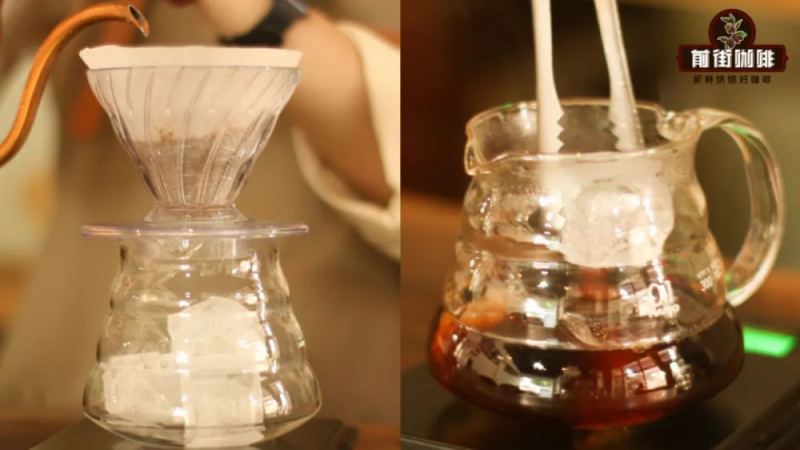
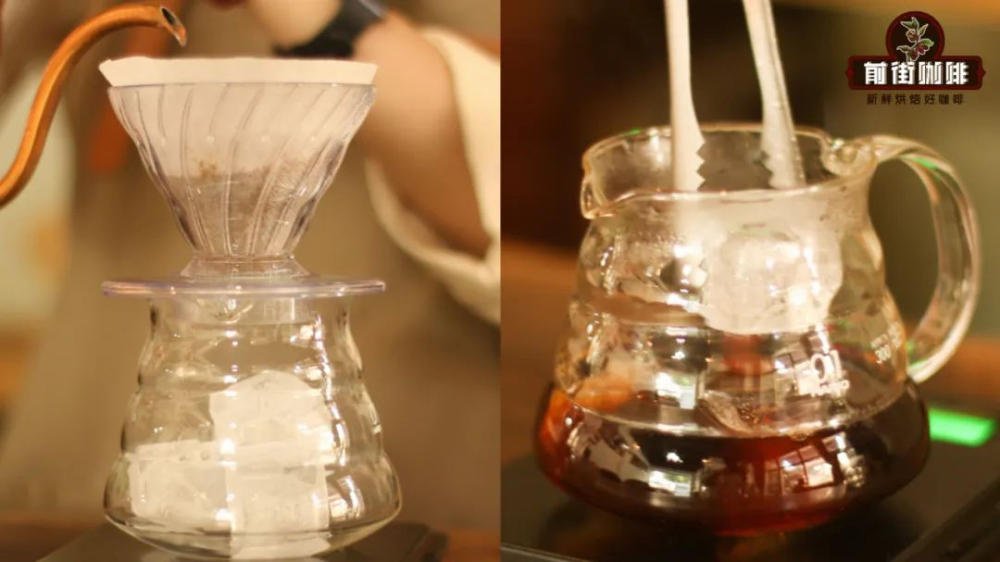
Setting taste aside for now, both methods replace the same proportion of hot water with ice cubes and then incorporate them into the brewing system. Simply put, their operational difference lies in this: one puts the ice into the server before brewing begins, so the dripping coffee liquid is cooled immediately upon contact; the other adds the ice only after brewing is finished, cooling the already-extracted coffee liquid.

Experimental design and comparison
This experiment used a washed Geisha from Colombia's Finca La Divisa, which has a very clear honeysuckle aroma, making it easier for us to distinguish flavor changes accurately in the iced brewing comparison.
Coffee dose: 15g Coffee-to-water-to-ice ratio: 1:10:6, i.e., 15g coffee, 150ml hot water, 90g ice Grind setting: Ek43 setting 9.5, 65% passing rate through a No. 20 sieve Brewing water temperature: 92°C Brewing method: three-pour
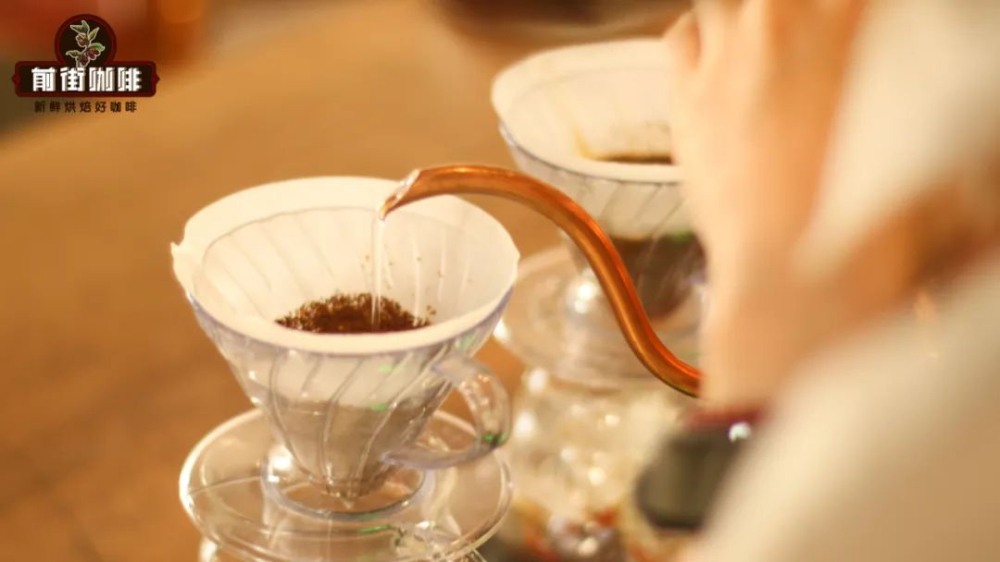
The first pour of the three-pour iced brewing is the same as hot brewing, using twice the coffee dose in water (30ml) for a 30-second bloom; the second pour injects 70ml of hot water in a wide circular motion with a thin stream, and after the drip reaches the bottom, switches to a small circular motion and injects the remaining 50ml of hot water, waiting for the drip to finish.
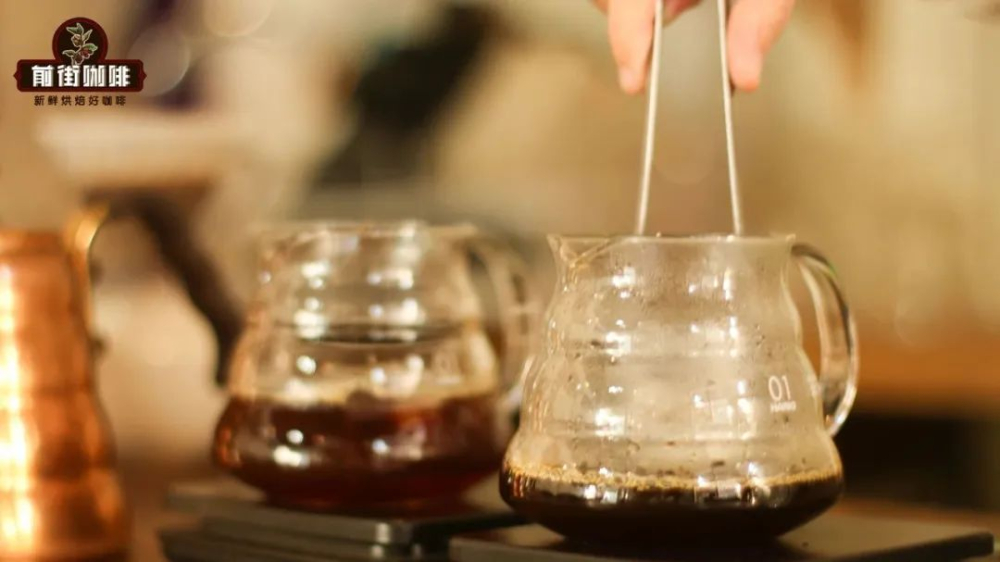
To offset the time gap caused by tasting, the cup with ice added first started brewing 20 seconds earlier than the one with ice added after, and during tasting we also started with the ice-first cup, so that the staggered tasting times could be corrected.
The brewing time for both cups was controlled at 1 minute 30 seconds. Regardless of the order of adding ice, after brewing is finished the coffee and ice must be shaken so the ice rapidly cools the coffee and the two blend more evenly.

After shaking evenly, at the 2-minute mark for each, the iced pour-over with ice added first was 7°C, and the iced pour-over with ice added after was 13°C.
(The pour-over using the black thermometer is the one with ice added after; the pour-over using the white thermometer is the one with ice added first.)
In terms of aroma, the honeysuckle aroma of the ice-added-after cup was slightly more intense than that of the ice-added-first cup. On the palate, both cups of Finca La Divisa Geisha presented rich honeysuckle, citrus acidity, and a honey-like mouthfeel. There was no very obvious difference between the two; if one had to say, the ice-added-after cup was slightly rounder. Front Street then let them sit for five minutes and tasted again, and the results were almost completely identical for both cups.
From this it can be concluded: there is not much difference between iced pour-over coffee with ice added first and ice added after. The slight difference initially tasted mainly came from the slower melting speed of the ice in the ice-added-after cup—at the 2-minute tasting point, it had not yet diluted to the same concentration as the ice-added-first cup, so its aroma and concentration stood out a little more. After five minutes, the concentrations of the two were almost identical, and there was no difference in taste.
FrontStreet Coffee
No. 10, Bao'an Qian Street, Yandun Road, Dongshankou, Yuexiu District, Guangzhou, Guangdong Province
The above content is compiled by CoffeeHunters, a coffee news website.


