







How did the coffee industry in the DRC rise, collapse and rebuild?
The Democratic Republic of the Congo once supplied coffee as a colonial cash crop, then saw production fall sharply through decades of political turmoil and civil war. Smallholder farmers kept selling beans across borders to survive. In peacetime the sector is being rebuilt, with roughly 75 million to 80 million hectares of arable land still available and coffee again seen as a route to rural income.
Coffee reached the region with early European settlers, and King Leopold II's rule from 1885 to 1908 shaped how it was farmed long after independence in 1960. Copper and minerals brought the state most of its wealth, so coffee mattered mainly because it put money back in farmers' hands. That history explains both the slow recovery and the country's unresolved challenges.
The Democratic Republic of the Congo was once hailed as Africa's breadbasket, endowed with vast tracts of arable land, and coffee once held an important place in the country's economy. However, the shadow of colonial rule and successive waves of political turmoil severely constrained the development of the coffee industry. From coffee leaf rust pushing it to become a cash crop, to the sharp drop in production after the civil war and farmers risking cross-border bean sales, to today's gradual reconstruction in peacetime, the coffee industry of the DRC has traveled an extremely rugged road. This article will take you through this little-known history, as well as the opportunities and challenges currently facing the country's coffee industry.
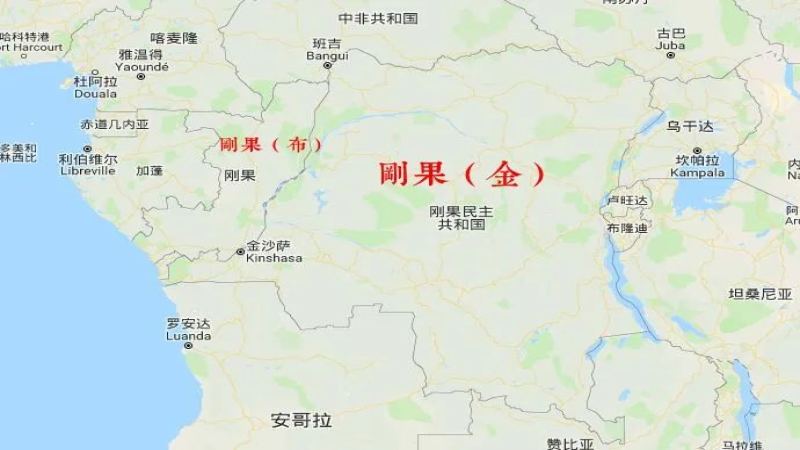
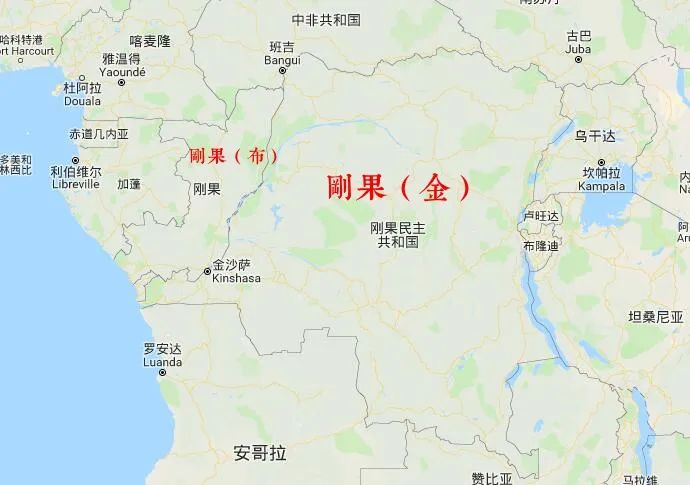
The Democratic Republic of the Congo, also known as the DRC, was once renowned as Africa's breadbasket. The country has roughly 75 million to 80 million hectares of available arable land, and the coffee industry once played a pivotal role in the national economy. However, the dark history of the colonial era and the relentless political upheavals that followed have meant that the coffee industry has never been able to fully develop and grow.
There is currently no definitive conclusion as to exactly when coffee first arrived in the DRC, but what is certain is that it entered the region along with early European settlers. At the time, several major coffee-producing countries around the world were suffering from coffee leaf rust (CLR), and the DRC, like many colonies, began cultivating coffee as a cash crop to meet Europe's demand for coffee.
King Leopold II of Belgium's rule over the DRC began in 1885 and ended in 1908, but his influence and style of governance persisted until the country's independence in 1960. Unfortunately, after independence in 1960, the political situation fell into prolonged chaos, which dealt a blow to coffee production, and a large number of smallholder farmers struggled to make a living.
Coffee was once seen as one of the ways to help the poor in the DRC improve their economic circumstances. Although copper and other mineral exports were the country's main source of wealth, these proceeds almost entirely ended up in the hands of mine owners. While coffee could not be considered a perfect trade system, it did genuinely channel some income back into the hands of smallholder families. Copper and minerals may have kept the Congolese political machine running, but coffee fed a great many ordinary people.
In 1997, the DRC welcomed its first new opportunity for economic development since 1960, and both at home and abroad there were hopes that coffee could become an important driver of economic growth and improved livelihoods. The coffee industry looked set to enter a period of prosperity. But political turmoil struck once again, the Congolese civil war broke out, and the coffee industry was dealt a severe blow.
According to The New York Times, in 2010 the DRC's coffee production was less than one-tenth of what it had been in 1990. Many farmers fell into hunger and poverty, risking their lives to cross Lake Kivu by boat to sell coffee in Rwanda. Even if they could cross the lake safely, they might still be robbed or attacked on either shore.
According to the BBC, during nearly 20 years of civil war, in addition to the six million deaths caused by conflict, disease or malnutrition, millions more were forced to flee their homes. The areas hardest hit by the war were concentrated in the east, which is precisely one of the main coffee-growing regions. Large numbers of farms were destroyed or left untended for years, because it was not safe to return home, and those who did manage to return found that they had to invest more money to restore their farmland.
In addition, there are also those who do not own their own land and have long faced uncertainty, which makes growing a crop like coffee—one that takes years and considerable effort before it can be harvested—especially difficult.
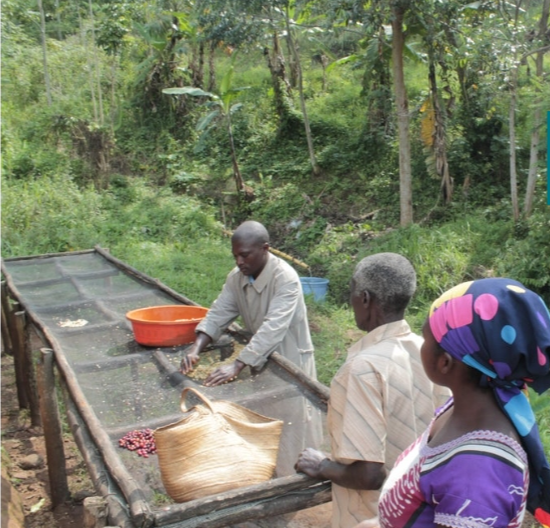
Today, peacetime has brought local tranquility, and the situation has become more stable. But coffee farmers are still frequently plagued by fake taxes, demands for bribes, and other corrupt and exploitative practices, with such commercial obstacles emerging endlessly. The agricultural sector is still in a stage of recovery, and the coffee industry will play an important role in rebuilding the country's economy and social fabric.
As numerous private- and public-sector players invest in the country, many cooperatives and processing stations have been established locally. In the future, the DRC will continue to build the infrastructure and knowledge systems needed for specialty coffee production, and the country's coffee industry is gradually improving.
Disclaimer: Some images in this article are sourced from the internet. For some content on the website, such as images, we will respect the original author's copyright and indicate the source. However, due to the large volume, there may be individual images or texts for which no source has yet been noted; please forgive us. If the original author has any dispute, they may contact the website to have it handled. Once verified, we will correct it immediately. Compiled and edited by "Coffee Review vdailycom". Please indicate the source when reposting. This article is intended to spread coffee culture. If there is any infringement, please inform us and we will delete it. Thank you~!
The above content is compiled by CoffeeHunters, a coffee news website.


