







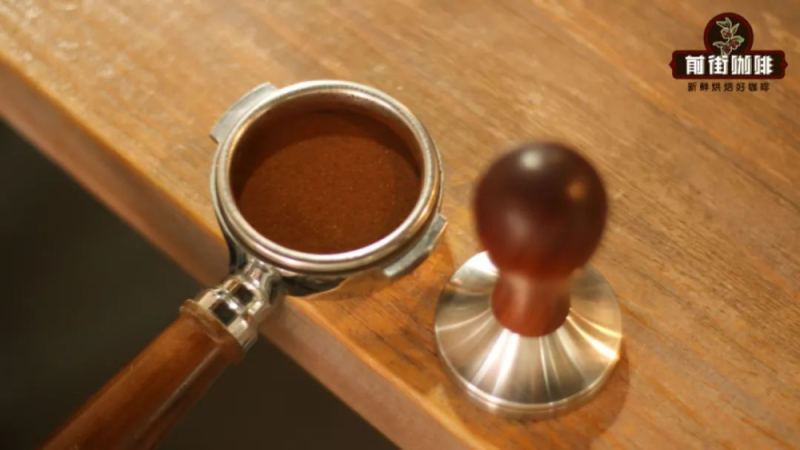
How Much Tamping Pressure Does Each Coffee Grind Level Need?
Tamping pressure only matters as much as the grind requires. A comparison test using 1.5 kg of regular force against roughly 9 kg of full-force pressing found that fine grinds need greater pressure to reach their most compact state, while coarse grinds are already compact at 1.5 kg and full-force tamping barely changes the extraction.
Leveling the puck is settled ground among baristas; uneven tamping with one side high causes channeling and uneven extraction. The disagreement concerns force. The experiment compared two coffee particles sizes, coarse and fine, and recorded extraction times at each pressure, showing that the density of the grounds, not the effort applied, decides the result.
Tamping the coffee puck flat is a basic consensus in espresso extraction, but how much force should actually be used to tamp it down has always been a point of disagreement among baristas. Some gently spin the tamper and apply just a little pressure, while others use all their strength to pack the puck down hard. Front Street Coffee conducted a comparative experiment using coarse and fine grind sizes, tamping with a regular force of 1.5 kg and a full-force press of about 9 kg, to observe changes in extraction time. The results showed that different coffee grounds densities require different levels of force to reach a compacted state: fine grinds need greater pressure to be tamped to their most compact, while coarse grinds are already sufficiently compact at 1.5 kg, and full-force tamping produces almost the same extraction result as regular force. This article will present the full experiment process and conclusions to help coffee enthusiasts understand the relationship between tamping force and grind size.
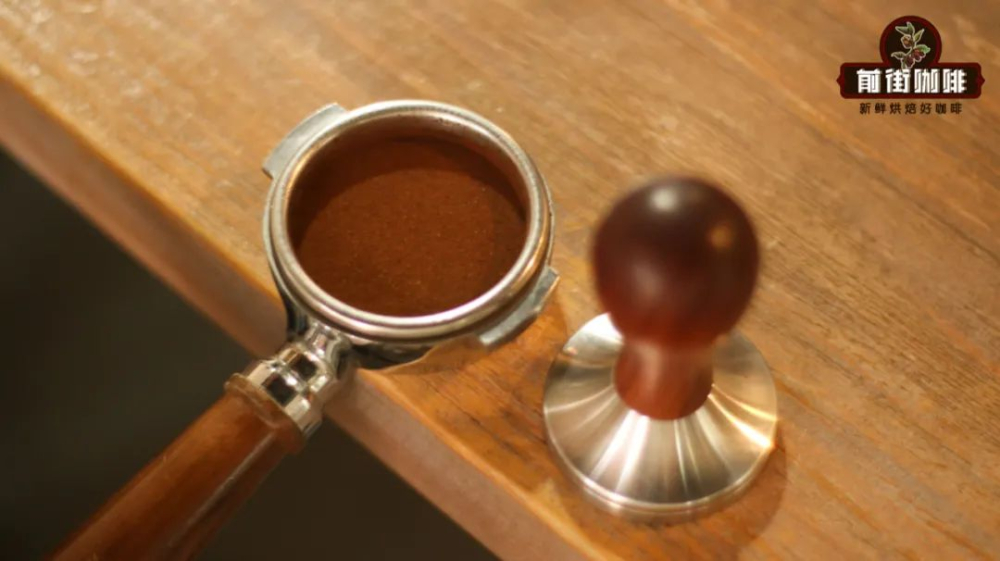
Everyone has basically reached a consensus on leveling the coffee puck. Once the puck is tamped unevenly, with one side high and the other low, channeling occurs, ultimately causing uneven extraction. The disagreement among baristas mainly lies in this: how much force is actually needed to compact the coffee grounds.
The Two Major Schools of Tamping
Some baristas believe that as long as the puck is leveled and compacted, that is enough. When tamping, they usually gently rotate the tamper and apply a little pressure, with the whole motion smooth and elegant. In their view, no matter how much force is used to tamp, the compactness of this puck is negligible in the face of the high-pressure extraction of an espresso machine!
Other baristas firmly believe that enormous force must be used to pack the puck down hard and tight. You will see them concentrate all their body strength into the arm doing the tamping, pressing down with enough force as if they could lift themselves up, as if to say: only one of the table and the coffee grounds can be flat! Because they believe that tamping force can effectively control the flow rate, and the harder you tamp, the more even the extraction.
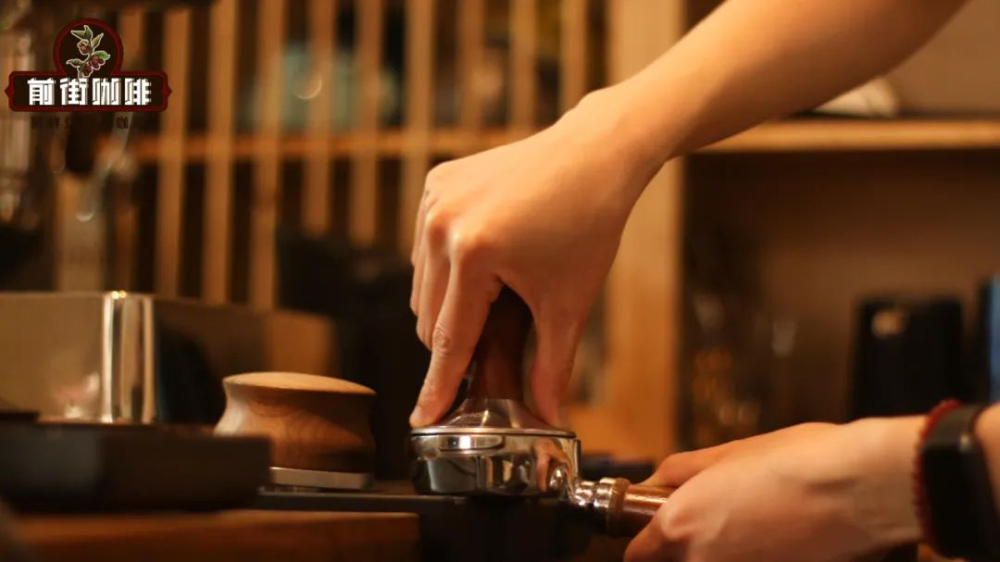
So, exactly how much force should we use to tamp the coffee puck?
The Tamping Experiment
Front Street Coffee selected two different grind sizes, coarse and fine, and designed two groups of experiments, each tamped with different pressures, to see whether tamping coffee grounds really requires precise control of force!
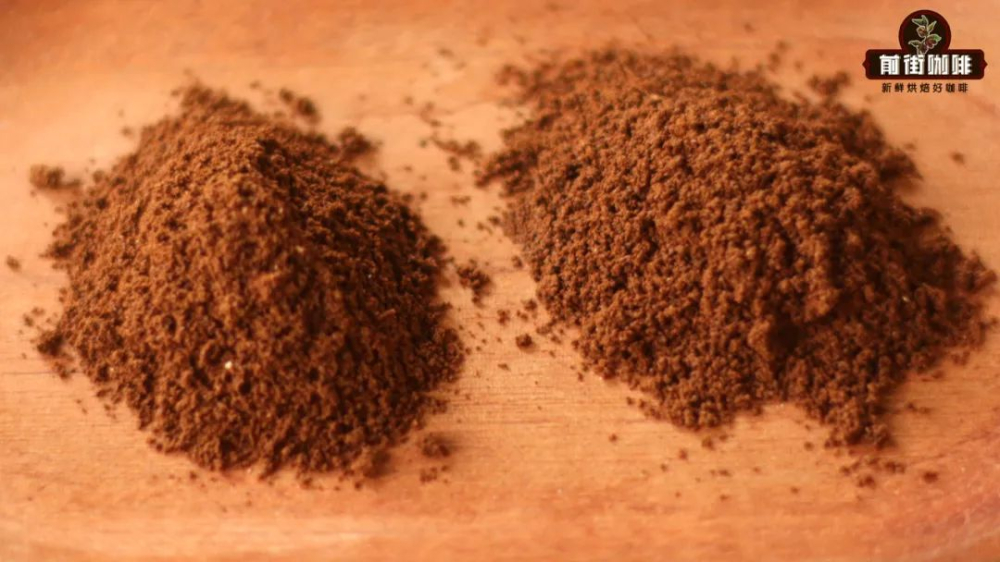
The grinder used in the experiment was a Galileo Q18, with a dose of 20 g, an extraction target of 40 ml, a fine grind setting of 1.5, and a coarse grind setting of 2.5. Extraction time was used to judge whether tamping force would change the extraction!
(The left side of the image shows coffee grounds ground at setting 1.5, and the right side shows coffee grounds ground at setting 2.5.)
Fine Grind Tamping Comparison
After grinding 20 g of coffee at setting 1.5 and completing distribution, we tamped the puck with different degrees of force: 1.5 kg (regular) and full force!
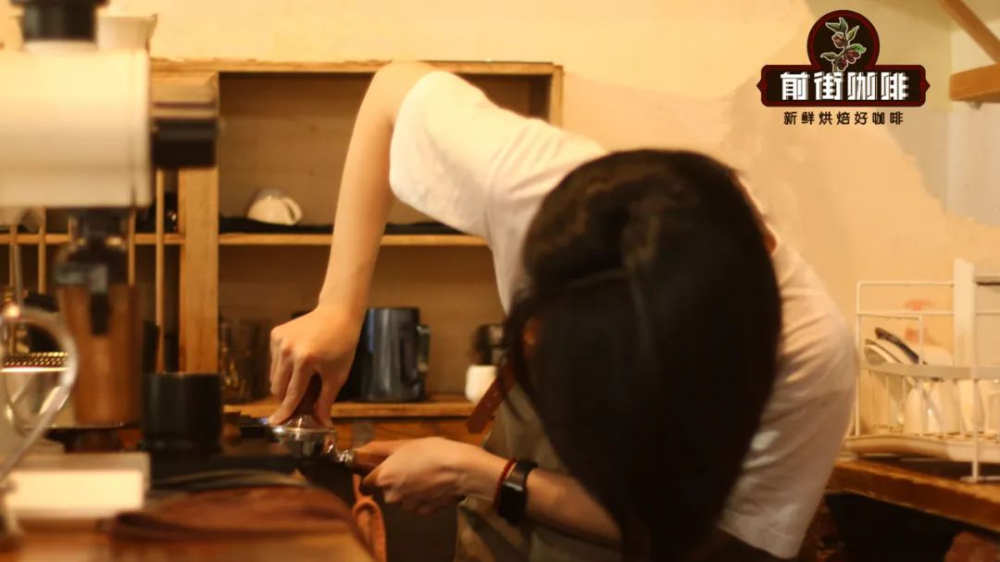
(The electronic scale has a limit of 3 kg, so we borrowed the neighbor's body scale; the weight of a full-force tamp was about 9 kg.)
For the 20 g puck tamped with 1.5 kg of force, the time required to extract 40 ml of liquid was 30 seconds;
while the puck tamped with full force had an extraction time of 33 seconds. To prevent changes in the coffee grounds, we repeated the extraction once, and the time was still 33 seconds. It can be seen that a finely ground puck will be affected in extraction by changes in tamping force.
Coarse Grind Tamping Comparison
Likewise, after distribution, the puck was tamped with different forces of 1.5 kg and full force. The results, however, were surprisingly consistent: the time required to extract 40 ml of liquid was also 20 seconds (because the grind was coarser, the extraction time needed was shorter).
Experiment Conclusion
From the above experiments, it can be seen that differences in coffee grounds density lead to a certain gap in the force required to make the puck compact.
What does this mean? For example, the reason the fine grind experiment produced different results with different tamping forces is that the coffee particles are smaller, so greater force is needed to press them into a compact state! A tamping force of 1.5 kg is clearly not enough; greater force is needed to press the puck to its most compact.
If we slightly increase the force to 2 kg, then its extraction time will be consistent with that of the full-force tamped puck, because at that point the two pucks have reached the same degree of compactness, and the required extraction time will naturally be the same!
The coarse grind puck group happens to illustrate this point: because the gaps between the coffee particles in the puck are larger, 1.5 kg of pressure is already enough to make the puck very compact, so even if you use full force to tamp the puck, the extraction result obtained will be similar to that with 1.5 kg of force. Therefore, we can appropriately adjust the required tamping force according to different grind sizes; the finer the grind, the more the applied force can be slightly increased.
- END -
Front Street Coffee
No. 10, Baoqian Street, Yandun Road, Dongshankou, Yuexiu District, Guangzhou, Guangdong Province
The above content is compiled by CoffeeHunters, a coffee news website.


