







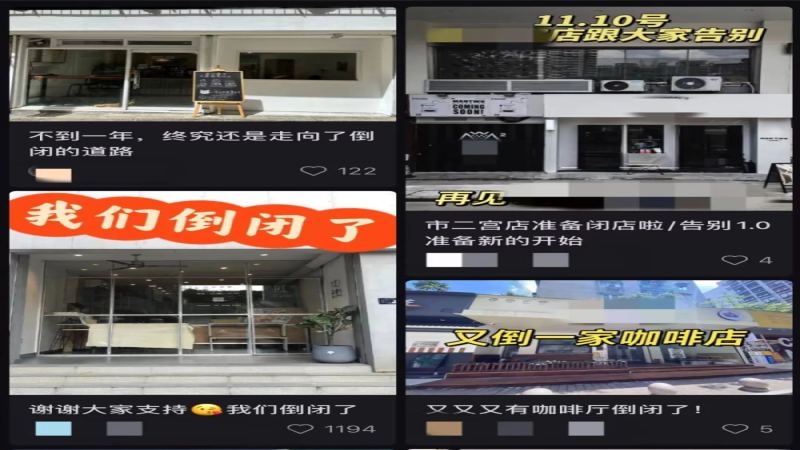
Is Coffee Shop Profit Still Possible After the Price War?
The 9.9-yuan price war from Luckin and Cotti pushed many coffee shops out of business, and a Shanghai owner's books show why: delivery revenue rose by 10,000 yuan and dine-in by 8,000, but materials and labor climbed about 12,000, keeping the shop short of break-even after two months of dawn-to-dusk work.
Whether the low-price strategy is sustainable is now the central question for independent cafes squeezed between chain brands. Operators are looking at pre-opening cost planning, store positioning, differentiated products, and loyalty building, since volume alone rarely covers rent, labor, and ingredients once discounts become the norm.
When Luckin and Cotti's 9.9-yuan price war swept the market, a large number of coffee shops went out of business amid fierce competition. A Shanghai coffee shop owner recently shared his real situation: although delivery orders grew, profits still could not cover costs, and he remained short of the break-even line. Can the low-price strategy be sustained? How can independent shops find room to survive in the cracks between chain brands? Starting from one owner's personal experience, this article combines netizens' suggestions and industry realities to explore the key paths to break-even operation for coffee shops—from pre-opening cost planning and store positioning to differentiated products and customer loyalty building—offering a practical business reference for coffee practitioners.
▲
Click to follow | Daily specialty coffee culture magazine Coffee Workshop
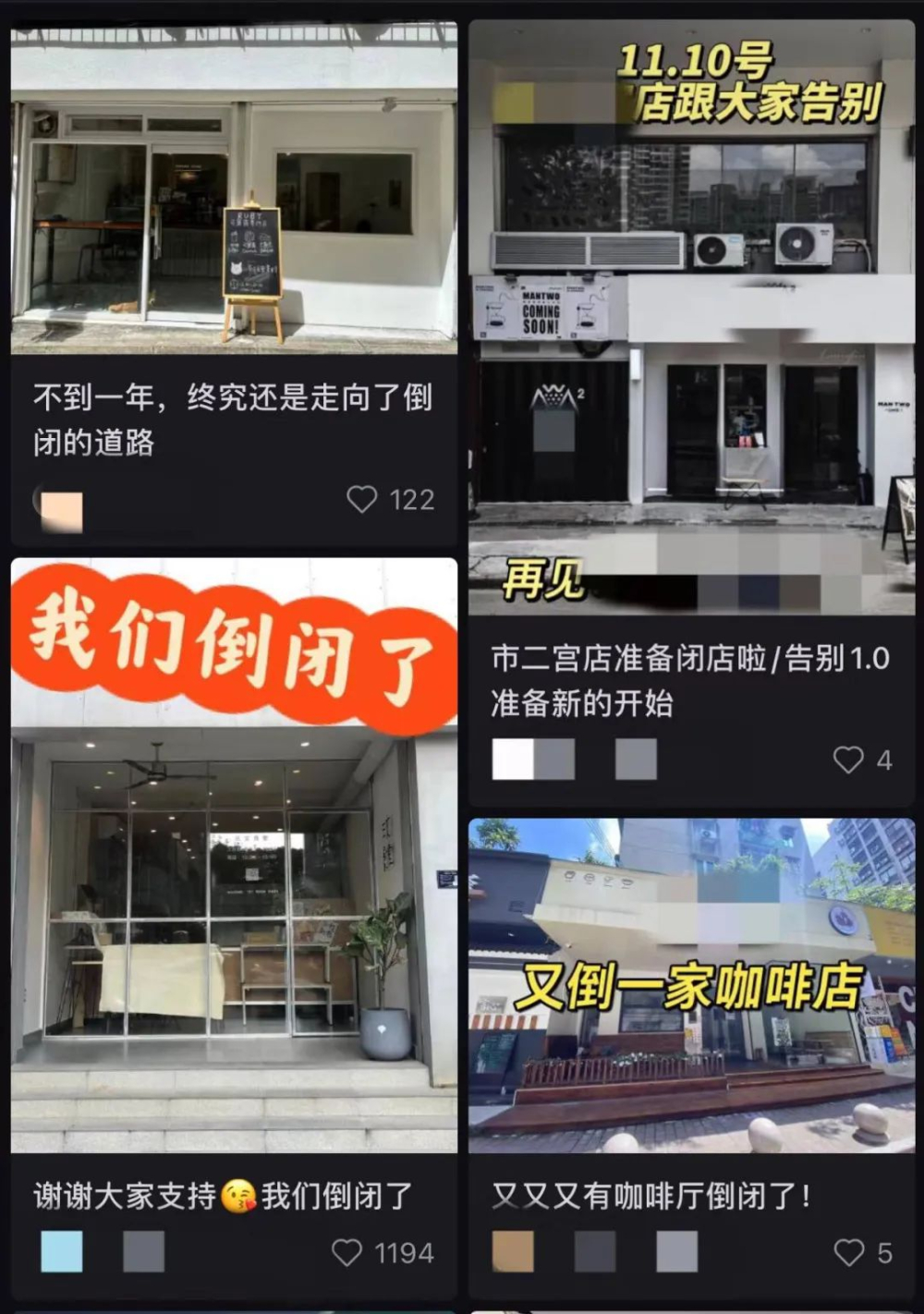
"I really can't hold on anymore! By conservative estimate, at least thirty thousand coffee shops have quietly closed..."
"The entire industry is undergoing a major shake-up: in 2023, the number of coffee shops that closed in China exceeded forty thousand."
"With more than forty thousand falling, where exactly is the way out? The crisis facing coffee shops has left thousands of entrepreneurs at a loss"...
Recently, the coffee market has experienced a major upheaval, and the trigger was precisely the 9.9-yuan price war launched by Luckin and Cotti. Faced with such white-hot competition, many coffee shops have had to pull out all the stops just to survive.
Not long ago, a Shanghai coffee shop owner posted online, lamenting: "Making morning coffee delivery has nearly driven me into depression!" Every morning delivery orders come flooding in, and the entire production process feels like fighting a battle. Doing delivery for so long has left him physically and mentally exhausted. According to this owner's books, compared with September, delivery revenue in October increased by 10,000 yuan and dine-in increased by 8,000 yuan, but spending on materials and labor rose by about 12,000. Although he was one step closer to the break-even line, after working from dawn to dusk and being run off his feet for these two months, he still failed to achieve profitability in the end, which surprised him quite a bit. He admitted that he hoped to avoid losing money while operating in a relatively relaxed state.
In fact, this owner had also considered shutting down the delivery business. But reality was right in front of him: if he completely gave up delivery orders, he might be left with only a few dozen cups of dine-in sales each day, and at that point closure probably would not be far away.
At the same time, he had also thought about adjusting his coffee equipment—for example, replacing the existing semi-automatic espresso machine with a fully automatic model. But he worried that doing so would affect the taste and flavor of the coffee, and that the regular customers he had worked so hard to build up might be lost as a result.
In response to his predicament, many netizens offered suggestions in the comments. Some said bluntly: "What's so difficult about this? Just raise the price, and you'll be more relaxed and make more money." However, once prices rise, order volume is bound to drop sharply under the delivery platforms' recommendation mechanisms. Another netizen pointed out sharply: "Customers are choosing a category, not a brand. He sees you as a functional drink. Even if you raise the price by just one cent, he'll turn around and choose someone else."
This phenomenon reflects a problem: many coffee shops do not have very high customer loyalty, and repurchase rates are low. Therefore, once a product's price is raised, it can easily end up with no one buying.
This shows that many people think increasing order volume is simply a matter of raising or lowering prices. But the actual situation is: raise prices and no one buys; lower prices and profits are sharply squeezed. What's more, many independent coffee shops do not have self-built roasting factories and supply chain systems like large chain brands, so they are naturally at a disadvantage in terms of cost.
Ultimately, the purpose of this owner's post was to hear netizens' suggestions and see whether there were more effective ways to increase order volume. And this is also a question that many coffee shop operators are pondering bitterly.
For independent coffee shops that want to achieve break-even, full planning should be done before formally opening: control costs, design a profit model, clarify store positioning, identify the target consumer group and their consumption habits, and find a reasonable price range.
At the same time, promotional methods cannot be ignored either. Social platforms can be used to drive traffic to the store and expand influence, and online platforms can also be used to launch set meal group-buying activities for promotion.
At the product level, creating unique differentiation to attract customers is key. For example, choosing high-quality coffee beans—such as the specialty beans recommended by Front Street Coffee—can set you apart from chain brands. In addition, a distinctive decorating style and store environment can also become highlights that attract customers, while building good interaction with customers helps strengthen loyalty.
In addition, continuous innovation is equally important; one cannot remain stagnant. Innovative development should be guided by customer needs and produce products that fit the brand's tone. Flavors should not be too novelty-seeking; overly bizarre flavors and presentations cannot effectively retain customers.
Only in this way can one better adapt to market changes, gain a firm foothold in competition, and avoid being eliminated in fierce fighting.
Image source: Internet
Disclaimer: Some images in this article are from the Internet, and for some content on the website such as images, we will respect the original author's copyright and indicate the source. However, due to the large quantity, there may be individual images or texts that have not yet been credited in time. Please understand. If the original author has any dispute, they may contact the website for handling. Once verified, we will correct it immediately. Compiled and edited by "Coffee Workshop." Please indicate the source when reprinting. If there is infringement, please inform us for deletion. Thank you~!
The above content is compiled by CoffeeHunters, a coffee news website.


