







Does Processing Change a Panamanian Geisha Blend That Much?
Processing changes a Geisha blend noticeably even when the variety mix stays the same. A Boquete blend built from roughly 70 percent Geisha with Caturra and Catuai shows clear differences between the washed and natural versions in aroma, acidity and cleanliness, which is why comparing the two side by side is a useful exercise.
Blending Geisha with other varieties is standard practice, not a shortcut. Ethiopia's Gesha Village, for instance, sells mixed lots that combine Geisha 1931 with Gori Geisha, and farms across producing regions commonly plant several varieties together. The blend keeps the floral and citrus character while lowering the price of entry.
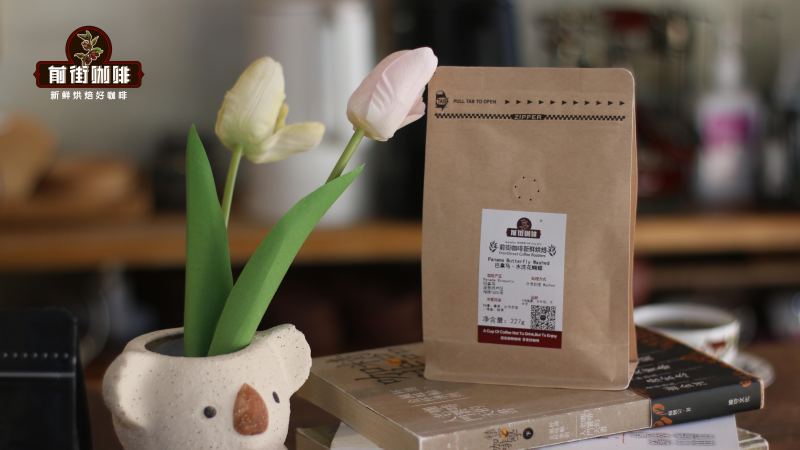
Front Street Panama Butterfly, as a high-cost-performance Geisha blend coffee, has always been favored by coffee lovers. It is made from a mix of three varieties—Geisha, Caturra, and Catuai—with Geisha accounting for about 70%, and it comes from the Boquete region of Panama. So, after the same beans undergo two different processing methods, sun-dried and washed, what differences will appear in flavor? This article will analyze from the perspectives of variety composition, regional background, and processing principles, and through actual brewing tests, compare the specific performances of Front Street Washed Butterfly and Front Street Sun-Dried Butterfly in aroma, acidity, cleanliness, and other aspects, taking you to gain a deeper understanding of the profound impact of processing methods on coffee flavor.
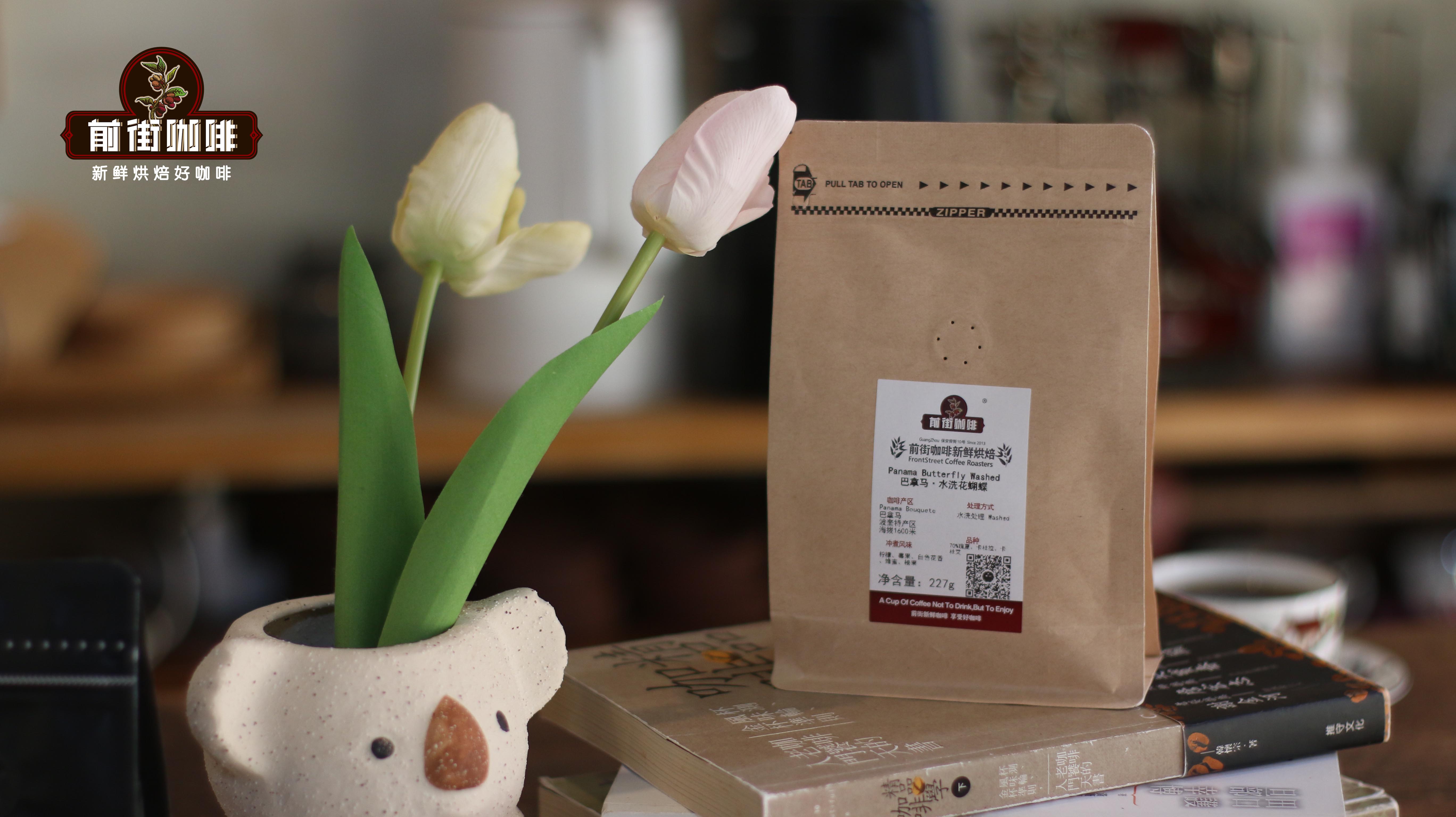
When it comes to Front Street Panama Butterfly, many coffee enthusiasts should be familiar with it. These beans are made from a combination of multiple varieties and belong to the typical "Geisha blend," and thanks to their affordable price, they are regarded by many as an alternative to Geisha.
The so-called "Geisha blend" means adding other coffee varieties on top of the Geisha variety. Taking Front Street's product line as an example, Front Street Panama Washed Butterfly and Front Street Costa Rica Mirazu Strawberry Candy are both well-known Geisha blends. In addition, as one of the few large estates in Ethiopia, Gesha Village's mixed lot Front Street Chaka CHAKA includes two Ethiopian Geisha varieties, Geisha 1931 and Gori Geisha, and can likewise be classified as a Geisha blend.
Front Street Butterfly comes from the place where the Geisha variety rose to fame—the Boquete region of Panama—and is composed of three varieties: Geisha, Caturra, and Catuai. The largest proportion is the outstanding and most renowned washed Geisha, accounting for about 70%. The superior growing environment plus a ratio of 70% Geisha gives this coffee both the rich aroma unique to high-altitude Panamanian beans and excellent performance in body, acidity, and floral notes in cupping, presenting a charming orange-scented honeyed charm.
In producing regions, the practice of mixed cultivation of multiple varieties is actually very common. Take the most familiar example, Ethiopia: whether it is plants in coffee farmers' own yards or coffee trees in wild forests, they usually are not specifically labeled or classified. Various coffee trees are interplanted with other cash crops, and when they mature they are harvested together, then exported under the name "Heirloom" after processing. This method of harvesting brings together the same lot from many smallholders, and a single lot may involve dozens or even hundreds of varieties that have not been subdivided, yet it is still classified as single-origin coffee.
By the same logic, although Front Street Panama Butterfly is labeled a "Geisha blend" and contains three different varieties, they all come from the small town of Boquete in Chiriqui Province, Panama, and are uniformly washed, giving the coffee a refreshing style like washed Panamanian Geisha; therefore, it should rightly belong in the category of single-origin beans.
Recently, Front Street received Front Street Sun-Dried Butterfly sent from the factory. Next, let us conduct a comparative evaluation to see exactly what differences exist between the sun-dried version and Front Street Washed Butterfly.
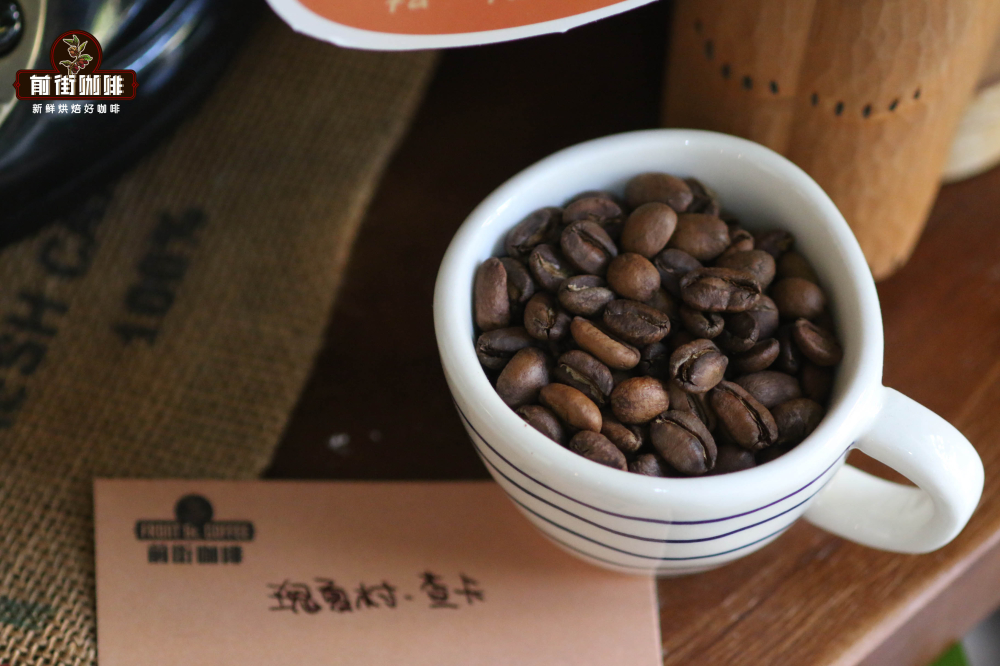
Front Street Panama Boquete Butterfly is composed of 70% Geisha and 30% Caturra and Catuai. Mixed-variety harvesting is common in every producing region. For example, in Ethiopia, which has a large number of native varieties, coffee farmers simply cannot identify the varieties one by one, and at harvest they can only pick them all together and send them to the processing station; this is mixed harvesting of varieties caused by natural factors. In contrast, the protagonist of this article, Front Street Butterfly, is a mixture of varieties caused by human factors.
In earlier years, in pursuit of yield, coffee farmers would plant Geisha together with other varieties to make full use of land resources. But when it came to the picking stage, they found that harvesting a single variety separately consumed a great deal of manpower, material resources, and time. So they simply followed Ethiopia's approach and picked everything at once, and the Geisha blend—Front Street Panama Butterfly—was thus born.
Although it is not pure Geisha, its growing area is precisely Panama Boquete, where masters abound, and it inherits most of Geisha's characteristics. Most importantly, its price is very friendly; the price of regular Panamanian Geisha is at least more than twice that of Front Street Panama Butterfly. For this reason, people often call it an affordable alternative to Geisha. So now let us look at how the flavor of the same beans performs under different processing methods.
The sun-dried method is called "Natural" in English, meaning a natural, non-artificially intervened processing method. Since humans discovered coffee in Ethiopia in the sixth century AD, the sun-dried method has been the only processing method for coffee circulating in the Arab world. The traditional sun-dried method does not require contact with water at all, and the seed extraction process is also quite simple: first dry the whole coffee fruit until completely dry, then hull it by machine crushing, and green coffee beans are obtained; it can be done anywhere there is sunlight. However, the shortcomings of the sun-dried method are also very prominent—it is extremely dependent on weather conditions and requires a drying period of about one month, during which once wind and rain occur, all previous efforts may be wasted. Therefore, this ancient processing method is mostly seen in tropical countries with distinct dry and wet seasons.
The washed method is translated from "Washed Process" and is a traditional processing method that uses water resources to process coffee fruit. Generally speaking, the washed process includes flotation, removal of pulp, soaking and fermentation followed by removal of mucilage, washing or continued soaking, drying and then hulling, finally obtaining the coffee beans we need.
Compared with sun-dried processing, coffee farmers using the washed method need to be equipped with a pulper, build washing channels, and ensure a continuous supply of flowing fresh water, so not all producing regions meet the conditions; it is usually most common in Colombia, Costa Rica, Panama, Kenya, and other places. But the washed method indeed has multiple advantages: on the one hand, it reduces the defect rate of green beans, thereby ensuring stable quality; on the other hand, it greatly shortens the drying cycle, making production more efficient; and of course there is the key point we are discussing today—allowing coffee to retain the "washed taste."
Brewing dripper: V60
The brewing time for Front Street Washed Butterfly was 2 minutes 10 seconds. The flavors tasted included white floral notes and black tea, with soft and rounded citrus acidity, juicy on the palate, and quite high cleanliness.
Although they are the same beans, the differences brought by sun-dried and washed processing are still quite obvious. Washed processing removes the skin and pulp before fermentation, leaving only a small amount of pulp and mucilage to participate in fermentation together with the green beans. It is precisely for this reason that washed Butterfly can show a cleaner and more refreshing flavor profile.
The above content is compiled by CoffeeHunters, a coffee news website.


