








What does high concentration, low extraction mean in american coffee?
High concentration, low extraction is not a fixed technique but an approach and a result. It means using a large dose of coffee grounds and a very low coffee-to-water ratio, so only a small amount of liquid is produced. Each drop is rich and dense, while bitterness stays lower because less is pulled from the grounds.
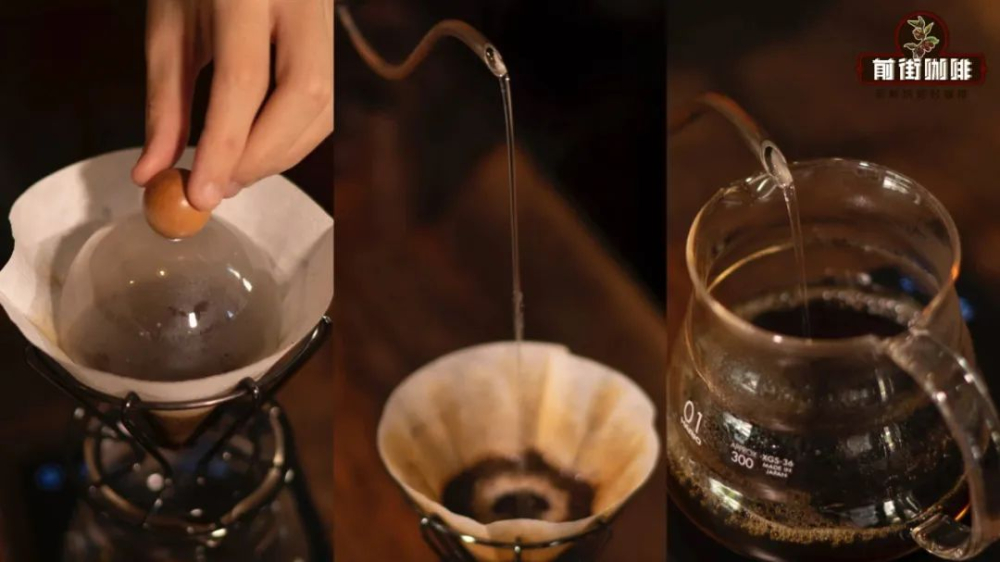
The Golden Cup extraction chart separates concentration from extraction yield, and the method lowers yield while raising concentration. It suits dark roasts, anaerobic coffees and beans that do not resist extraction. Japanese methods such as the volcano pour and the Matsuya style lid for blooming follow the same process description of making coffee.
Many coffee enthusiasts encounter the term "high concentration, low extraction" when browsing Front Street articles or others' brewing sharing, but the explanations they find are often piled with bewildering data. This article breaks down this complex theory into easy-to-understand descriptions: first explaining that high concentration, low extraction is not a fixed technique but a extraction approach and result, then using the Golden Cup extraction chart to clarify the two core concepts of "concentration" and "extraction yield," and finally explaining why when dealing with dark roasts, anaerobic processed, or beans that are not resistant to extraction, one needs to lower the extraction yield while increasing concentration, as well as how this approach manifests in Japanese brewing.
I believe everyone often sees the phrase "high concentration, low extraction" in Front Street articles or brewing shares on other websites! But when you search for it, the explanations that pop up directly throw out a bunch of incomprehensible data stacked together. It's like a hero just entering the beginner's village to level up, only to be greeted by the final boss—completely baffling!
So today, Front Street will translate these complex theories into simple descriptions so that friends can better understand. "High concentration, low extraction"—what exactly is it!
What is high concentration, low extraction?
"High concentration, low extraction" is not a fixed technique or brewing parameter. It is an extraction approach, and also the result presented after extraction is complete.
I believe many friends, although unable to clearly explain what high concentration, low extraction refers to, have more or less tried brewing methods derived from this approach, because there are quite a few practices built around high concentration, low extraction: the most common one is using a large amount of coffee grounds to extract only a small amount of coffee liquid.

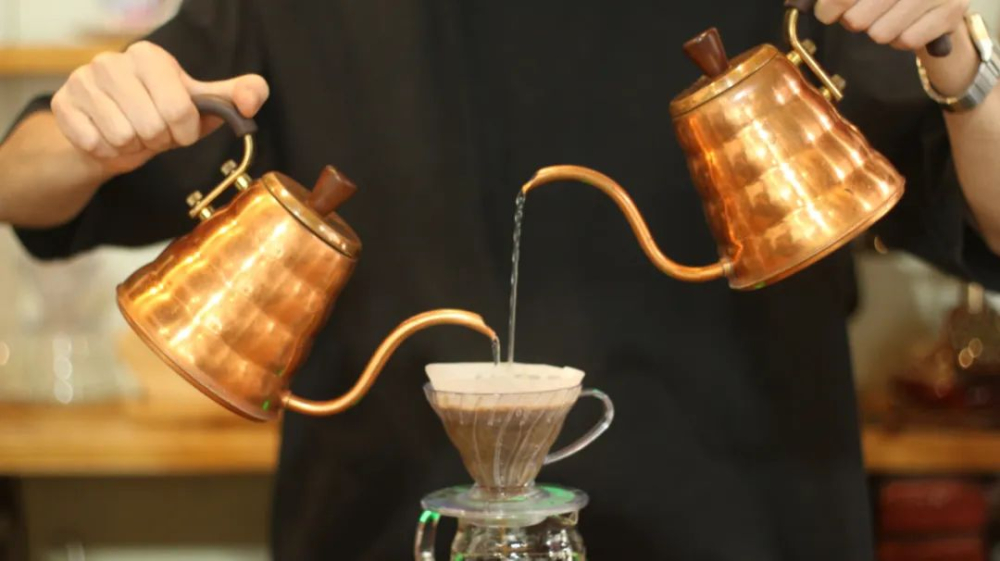
At this point, many friends might think of various Japanese brewing methods? For example: the volcano pour where the coffee bed resembles Mount Fuji, or the Matsuya style that uses a "lid" for blooming. That's right, they use a large amount of coffee grounds and then extract with an extremely low coffee-to-water ratio. Although the resulting coffee liquid is not much, every drop is incredibly rich!
The reason the high concentration, low extraction approach came about involves "concentration" and "extraction yield"! They are the main factors affecting coffee flavor!
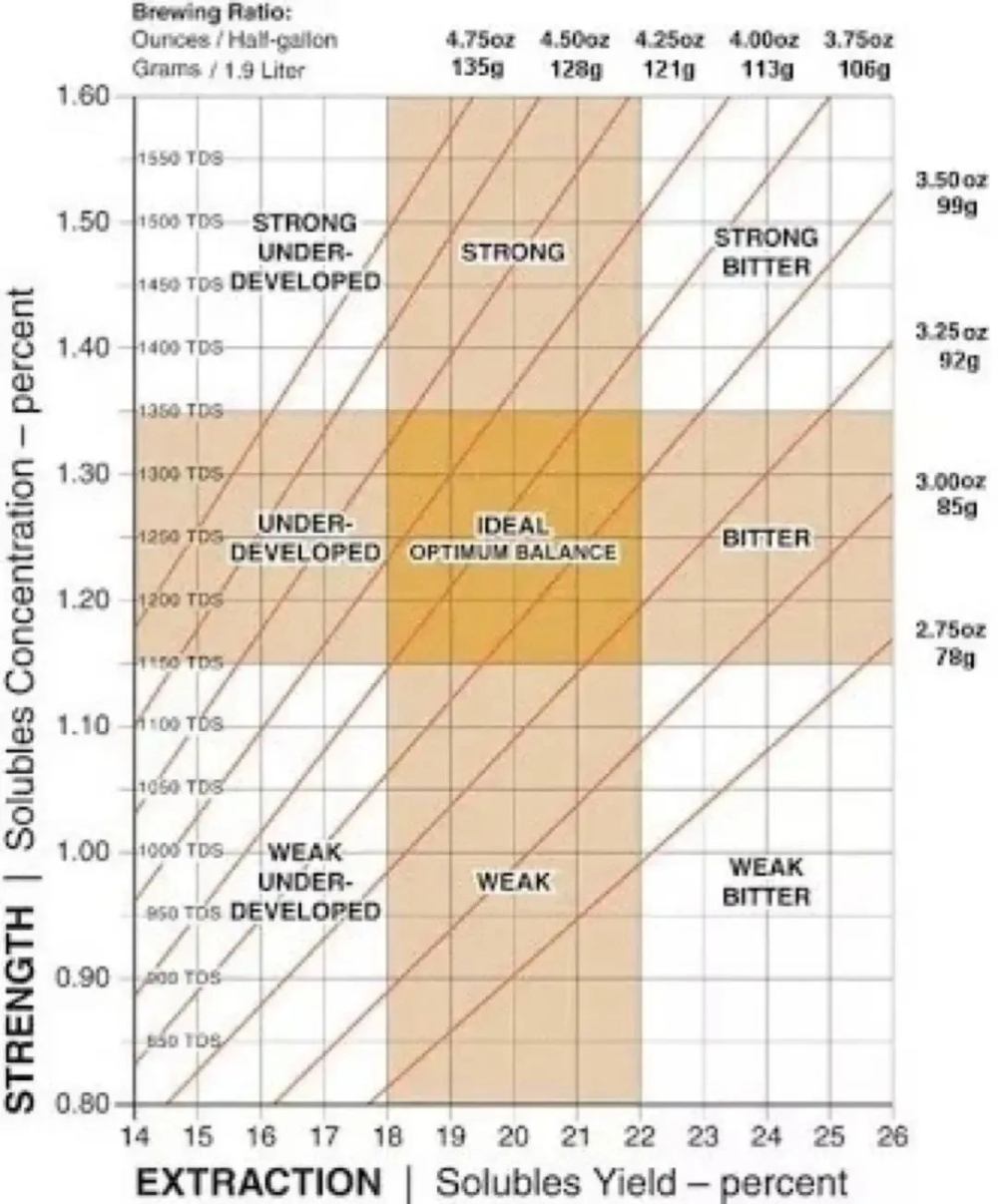
As everyone knows, the Golden Cup extraction chart was created by an authoritative American coffee organization after collecting a large amount of data on Americans' coffee taste preferences. Research shows: coffee with an extraction yield of 18%-22% and a concentration of 1.15%-1.35%—within these two ranges—is what most Americans find delicious! And it's also what the vast majority of us prefer! So, what do these two terms mean respectively?
Concentration:
Concentration is the easiest to understand! For example, a cup of sugar water—if the sugar content is too high, it will be sickeningly sweet, and if the sugar content is too low, then it will just be water with a hint of sweetness.
Applying this principle to coffee is the same. If the concentration is too high, the flavors will be too concentrated, making you feel the whole cup is very thick and murky, unable to distinguish any flavor. If it's too weak, then it's just water with a coffee taste. Only within a reasonable concentration range can you drink a cup of coffee with prominent flavors and a full mouthfeel.
(Thin concentration coffee)
Extraction yield: Extraction yield directly affects the overall flavor of the coffee. When it exceeds the maximum value of 22% in the Golden Cup range, the coffee will have a strong burnt bitter taste, commonly known as over-extraction.
And when your extraction yield is below the minimum value of 18% in the Golden Cup range, the coffee will easily have flavors like sharp acidity and dried grass from under-extraction. Only within the appropriate extraction range can the coffee taste balanced!
Based on the Golden Cup extraction approach, people have created many classic brewing recipes (for example, Front Street's commonly used 15g grounds, 225ml water at 92°C, fine granulated sugar grind, three-stage pour), so that the final coffee falls within the delicious range of Golden Cup extraction. However, there are some coffee beans that are not resistant to extraction (such as dark roasts, or anaerobic processed, or beans that have been stored for a long time). They have a loose texture, and conventional brewing methods easily cause over-extraction and bitterness. So at this point, you need to modify parameters to lower the extraction yield, thereby obtaining coffee without bitterness (parameters you can adjust include: water temperature, grind size).
But if you only lower the extraction yield based on the original recipe without changing other parameters, it means the concentration will also decrease, and the resulting coffee becomes water with a coffee taste—such a concentration is clearly not something we would accept. Therefore, while lowering the extraction yield, you need to increase the concentration (adjustments you can make include: adding grounds, reducing water). High concentration, low extraction is just such a fault-tolerant method, called "high concentration, low extraction"!
Which brewing methods adopt the high concentration, low extraction approach?
There are too many! Reducing the coffee-to-water ratio in conventional brewing is also an extraction method following the high concentration, low extraction approach. Not to mention unique brewing methods like Matsuya style that require bypass to dilute the extremely high concentration coffee liquid.
But as the saying goes, you can't have your cake and eat it too! Low extraction yield mainly extracts the front and middle stages, rarely reaching the back end, which naturally reduces the coffee's finish! So, choose your beans wisely~
- END -
Front Street Coffee (FrontStreet Coffee)
No. 10, Baoqian Street, Yandun Road, Dongshankou, Yuexiu District, Guangzhou City, Guangdong Province
The above content is compiled by CoffeeHunters, a coffee news website.


