








Does Americano Taste Bitter, and Why Cafés Debate Espresso
Customers who order the cheapest espresso on a café menu often react with surprise: the shot is small, and the taste is sharply bitter. In one case, a rural café owner reported guests sending the espresso back, asking for milk and sugar, then converting it into a latte or americano at no extra cost. The owner now questions whether to keep espresso listed at all.
The core issues are cost and expectation. Espresso carries a high cost per serving relative to its low order rate, and many new drinkers do not expect the concentrated, bitter profile. For cafés, the debate is whether to educate customers about why is americano so bitter by comparison, or to absorb the cost of remaking drinks and keep the item on the menu.
Espresso is a daily necessity in Italian dining culture, but in domestic coffee shops, it is often the cheapest item on the menu and the least ordered drink. A rural café owner recently posted an article asking "whether Espresso should be taken off the menu," citing the huge gap between the cost of making it and the actual customer experience. This article explores this topic by combining customer feedback, the dilemmas of operators, and industry advice, discussing the awkward position of espresso in domestic coffee shops, as well as how brands like Front Street Coffee understand espresso products.
▲
Click to follow | Daily specialty coffee culture magazine Coffee Workshop
Espresso is a national drink in Italians' daily lives, and locals generally believe that only that rich, roasted aroma truly qualifies as coffee. Standing at the bar and finishing a small cup of espresso in a few sips is a daily way for many Italians to relax.
But in China, unless a customer specifically asks the barista for an espresso, it is rarely mentioned.
In fact, besides its low order rate, Espresso has another "universal identity" in most domestic coffee shops—the cheapest item on the menu.
Last week, a café owner posted: "I'm thinking... should I take Espresso off the menu?" The reason given was "the cost is too high." This note quickly attracted a lot of attention and discussion, with participants both inside and outside the industry, and IP addresses from home and abroad, making it quite a lively scene.
According to the owner's recollection, during the holiday many customers did not ask the barista and directly placed orders through the mini-program. One table of customers ordered the lowest-priced Espresso on the menu, but were greatly surprised when it was brought to them.
"Why is there only this little? Boss, are you kidding?" "So bitter!!! Boss, add some milk and sugar for me!" "Better change it to a big cup!!!!"
So, with the help of "coffee companions," the customer used the price of one Espresso to turn that small shot of espresso into a latte or americano. The owner said he understands that customers who do not often drink coffee need a process of trial and error and learning, but now this "cost" seems to be borne by the business, which gave rise to the idea of "taking Espresso off the menu."
After reading this familiar conversation, many baristas will probably smile bitterly in tacit understanding, recalling similar scenes they have experienced. Everyone's way of handling it is also similar: either patiently explain, or proactively provide "coffee companions" to ease the bitterness, and finally give the customer a helpless smile.
Regarding the owner's distress—whether Espresso should be taken off the menu—many netizens in the comments gave suggestions. You can mark the volume or add a picture in Espresso's information section, so customers who do not understand will not order it once they see how small it is; you can also simply make it a hidden menu, and those who understand coffee and want to drink it will naturally ask; you can also list Espresso together with americano (Americano/Espresso) and set the same price.
Because he did not expect such an enthusiastic response, with so many views on how to drink Espresso and whether it is necessary to keep it, the author of the note added his own thoughts in the comments section.
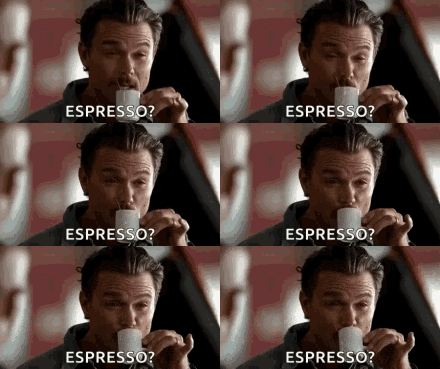
First, he respects every customer's drinking habits and preferences, but as an operator, under limited conditions he can only achieve standardized single output and cannot accommodate different people's habits in every cup. What operators fear most is not consuming ingredients, but customers being dissatisfied after the drink is served; even if secondary processing is done to satisfy them, the experience gap caused by the misunderstanding cannot be made up. Moreover, secondary production seriously interferes with normal service efficiency, because communication and explanation are also needed in between.
Second, espresso is usually rarely ordered anyway, and not even two or three servings are sold in a month. Rather than causing unnecessary misunderstandings for an extremely low output volume, it is better to just take it off the menu.
Moreover, compared with the specialty positioning in big cities, this owner's coffee shop is located in a rural leisure venue, and the customer base is mainly tourists. Many customers indeed do not often drink coffee and are not professional. The reason they order Espresso is very likely just the price, so it is only natural that they find it hard to get used to and think the amount is too small. Rather than "educating" them after they order, it is better to directly help them avoid this wrong choice. Therefore, taking it off the menu directly is the best solution.
As the basis of the vast majority of coffee drinks, espresso can be said to be the true core of a coffee shop's menu, but as a standalone drink, it is not only difficult to price, but also has only moderate taste acceptance. For this reason, it is very low-key in many domestic coffee shops, and even "ignored." Many owners feel there is not much need to include it on the menu, and would rather let it become a "secret code" between baristas and customers—those who know, know!
Image source: Internet
Disclaimer: Some images in this article are from the Internet. For some content on the website, such as images, we will respect the original author's copyright and indicate the source. However, due to the large quantity, some images and texts may not have been credited in time. Please understand. If the original author has any dispute, they can contact the website for handling. Once verified, we will correct it immediately. Compiled and edited by "Coffee Workshop." Please indicate the source when reposting. If there is infringement, please inform us for deletion. Thank you~!
The above content is compiled by CoffeeHunters, a coffee news website.


