







Coffee Aroma and Latte Art: Does the Drawn Pattern Really Change Flavor?
Latte art has little effect on the taste of a latte. In a comparison using the same batch of espresso and milk foam, one cup poured with a leaf pattern and one poured without, a blind tasting found the two cups performed very similarly, with only a slight difference on the first sip. The pattern is visual; the drink underneath is largely the same.
The test used a bottomless portafilter to pull espresso, about 19.9 grams of coffee yielding 40 grams of liquid in 29 seconds, split into two ceramic cups, then 300 grams of milk frothed to medium thickness and poured into each. Crema state, milk foam texture, and pouring control shape the coffee aroma and body far more than the drawn shape.
Many coffee enthusiasts wonder: does latte art actually change the taste of a latte? Does a beautiful pattern equal a good drink? To find out, Front Street Coffee designed a comparative experiment, using the same batch of espresso and milk foam to make milk coffees with and without latte art, and organized a blind tasting. The results showed that the overall performance of the two cups was very similar, with only a slight difference on the first sip. This article will analyze in detail, from the experimental process, the principles of how crema and milk foam merge, and the barista's perspective, just how much latte art affects the taste, and share the key steps that truly matter for a good latte.
In the coffee world, topics like this always spark heated discussion: Why do we do latte art? Does the pattern change the flavor of a milk coffee? Can beautiful latte art make a hot latte taste better? If the latte art isn't pretty, does that mean the coffee isn't good? ... Around these questions, let's chat about it today.
Simply put, latte art is the process of using a steam wand to froth milk into foam of a suitable thickness, and then, while pouring it into espresso, using technique to make the foam float regularly on the surface, ultimately forming a clear white pattern.
To make a milk coffee present a beautiful "visual art," several conditions are needed: a pitcher of milk foam with moderate thickness, fine smoothness, and good flow; crema in the right state; and the barista's skilled control of the pouring technique. Because of this, many people wonder: does the act of latte art itself affect the final taste?
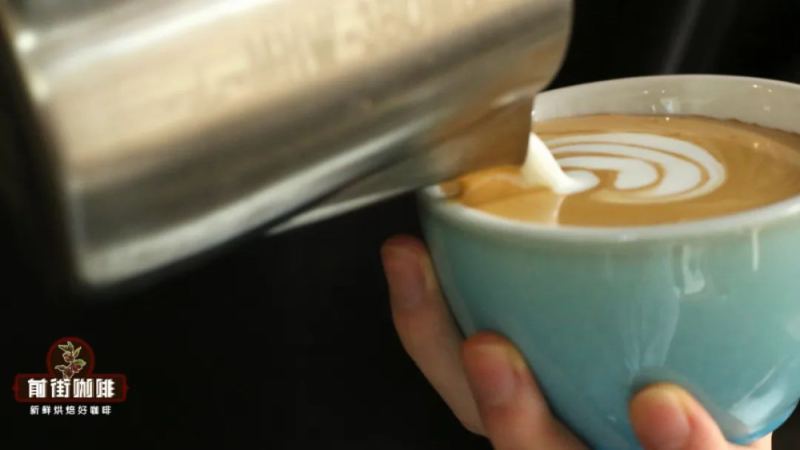
To figure this out, Front Street Coffee did a small experiment. First, we used a bottomless portafilter to extract espresso (19.9 grams of coffee powder, 40 grams of total liquid weight in 29 seconds), and collected about 20 grams of coffee into two ceramic cups of the same capacity. Then we poured 300 grams of milk into the same milk pitcher, frothed it into medium-thickness foam suitable for latte art, and poured it into the two cups one after another. One cup was only integrated throughout, without drawing any pattern; the other began pushing a leaf shape when it was six-tenths full.
After the blind tasting, the general feedback from Front Street Coffee's "atmosphere team" was: the two cups did not have particularly obvious differences—temperature, concentration, coffee flavor, and mouthfeel were all quite similar. However, a few friends felt that the latte-art cup tasted slightly richer, especially on the first sip, where the coffee aroma was more prominent; while the non-latte-art cup was more balanced and rounder. But from the second sip onward, the mouthfeel of the two cups basically converged.
This subtle difference is largely related to the "golden ring" formed when crema and milk foam merge. We all know that freshly extracted espresso has a layer of brown crema floating on top, which usually tastes very bitter on its own. When pouring latte art on espresso, the dark crema and white milk foam mix evenly, forming a golden "background," and the white part is the result of milk foam floating on the surface.
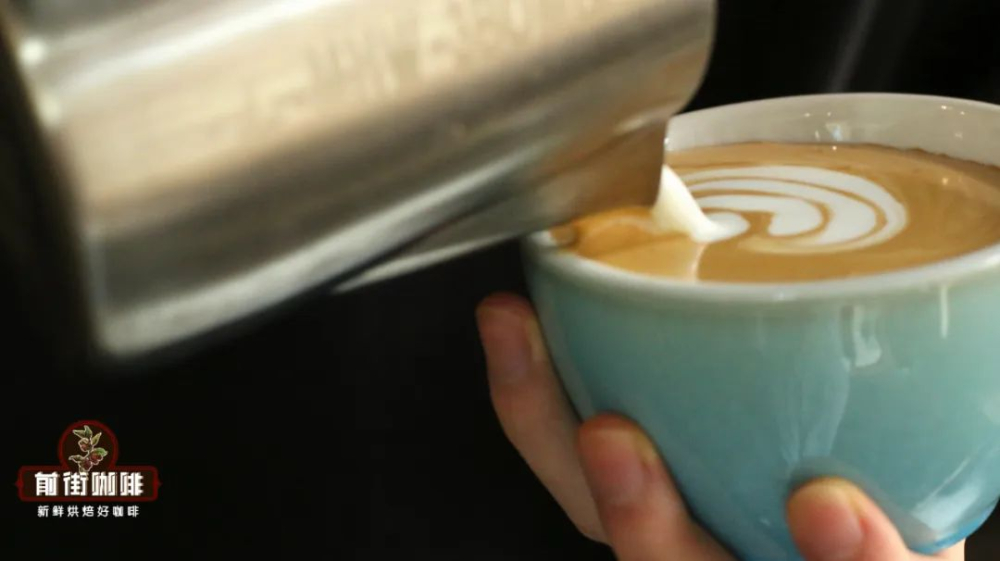
The larger the latte art pattern, the more crema is pushed to the edge of the cup, and the darker the "background" color becomes, so the first sip of coffee may taste stronger; on the contrary, a milk coffee without latte art blends all the crema and milk foam evenly into the "golden ring," with a balanced ratio of milk to coffee, resulting in a relatively more balanced mouthfeel.
It can be seen that, to some extent, latte art does have a slight effect on the taste performance of a cup of coffee, but the effect is very limited.
If the choice of coffee beans and milk, the extraction quality of the espresso, the ratio of milk to coffee, the frothing quality of the milk foam, and the evenness of integration are all done well, then this milk coffee will definitely not be bad. As for whether to do latte art or how exquisite the pattern is, it only affects whether the final photo looks good enough.
Although in terms of taste, even the most exquisite latte art won't directly make a cup of coffee several times better, it is precisely because a hot milk coffee with a simple and beautiful pattern not only gives the drinker a better visual experience, but also indirectly reveals that the espresso extraction is in a suitable state and the milk foam quality is good, and can intuitively reflect the barista's solid skills, that everyone places so much importance on whether a cup of coffee is served with latte art, and how good the latte art quality is.
Finally, from the barista's perspective, latte art is not just a decoration that adds to the appearance of a hot latte, but also the barista's love and pursuit of the process of making a good cup of coffee, and their attention to the customer experience. If not for latte art, many friends would not have developed an interest in coffee, let alone brought about so much cultural dissemination and in-depth study of latte art techniques. This may be one of the meanings of latte art~
- END - Front Street Coffee
No. 10, Bao'an Qian Street, Yandun Road, Dongshankou, Yuexiu District, Guangzhou, Guangdong Province
The above content is compiled by CoffeeHunters, a coffee news website.


