








How did the history of coffee in Europe shape the cup and saucer?
Before the eighteenth century, Europeans drank coffee from the saucer, not the cup. The Dutch brought coffee from Mocha in Yemen to the Netherlands in 1640, and the drink spread across the continent as a fashionable social activity. Because Europe could not yet make porcelain, hosts relied on thin Chinese cups that had no handles, so freshly brewed coffee was poured into the saucer to cool.
Coffee was then mostly boiled coffee: grounds and water were simmered together in a pot, filtered through flannel cloth, and served. Thick-walled local pottery did not meet upper-class ideas of elegance, so imported porcelain was used. When German makers learned porcelain production in the eighteenth century, handled cups spread and saucer drinking faded, a shift recorded in many still lifes.
Today's coffee cup and saucer is mostly just a coaster and decoration. But in Europe before the eighteenth century, it was the "star" of coffee drinking. In 1640 the Dutch brought coffee from Yemen Mocha to the Netherlands, and from there it spread throughout Europe, and drinking coffee quickly became a fashion of high society. At that time Europe had not yet mastered porcelain-making technology, and could only import thin, light porcelain cups from China, but these cups had no handles, and freshly brewed coffee was too hot to hold. So people poured the coffee into the saucer to cool, and then sipped it like modern cupping. It was not until the eighteenth century, when the Germans mastered the method of making porcelain, that porcelain cups with handles became widespread, and the habit of drinking coffee from the saucer gradually faded away. This period of history has also been recorded in many paintings—let's look together at the coffee stories in those still lifes and figure paintings.

The coffee cup and saucer we are familiar with today mostly serves as a coaster, while also adding a bit of ritual to the drinks on the table. However, in Europe before the eighteenth century, the core purpose of the saucer was actually—to allow people to "drink coffee elegantly."
In 1640, the Dutch brought coffee back from Mocha in Yemen, and then introduced this beverage from the Netherlands to various parts of Europe, bringing with it a coffee craze that swept across the continent. In that era, drinking coffee was regarded as a fashionable social activity.
At the time, coffee was mostly made by infusion: coffee grounds and water were boiled together in a pot, then filtered through flannel cloth, and finally served into cups.
The problem was that Europe at that time had not yet mastered porcelain-making technology and was still at the pottery stage. The fired clay cups had thick walls and were not as thin, light, and delicate as porcelain, failing to meet the upper class's expectations of "elegance." So they could only rely on fine porcelain cups imported from China to hold coffee, in order to satisfy their own aesthetic requirements.
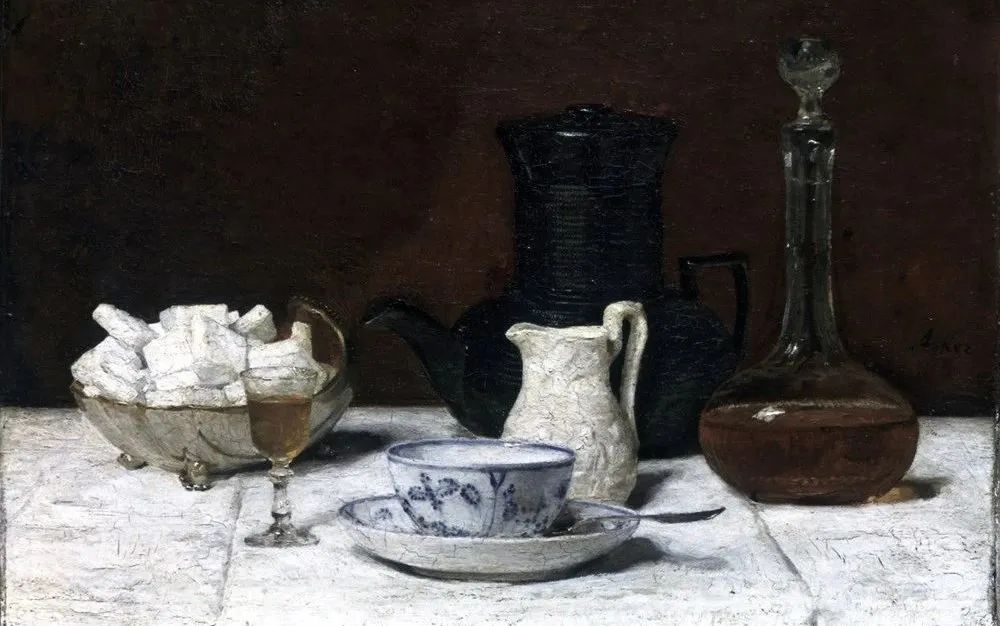
In Albert Anker's 1870 work "still life with coffe and cognac" (Still Life with Coffee), the coffee vessel depicted is a porcelain cup from China.
But the porcelain cups imported from China had no heat-insulating handles, and the body of the cup was extremely thin, so its insulation was naturally very poor. If you directly used your hand to pick up a freshly brewed cup of coffee, it was nothing short of a hardcore test for your fingers; once you let go from the heat, the expensive porcelain cup would shatter on the spot.
(Here's a bit of trivia: because porcelain cups imported from China had no handles, and Europeans stubbornly believed that a vessel without a handle could not be called a cup, at the time they called these imported porcelain cups—bowls.)
Therefore the safest approach was: first pour the coffee into the saucer to cool it, then imitate the sipping method used in modern cupping, and take elegant, fashionable little sips. This situation continued until the eighteenth century, when the Germans figured out the method of making porcelain, and finally produced exquisite porcelain cups with heat-insulating handles. As porcelain-making technology spread, upper-class Europeans all used porcelain cups with handles, and only then did the practice of drinking coffee from a saucer gradually disappear.
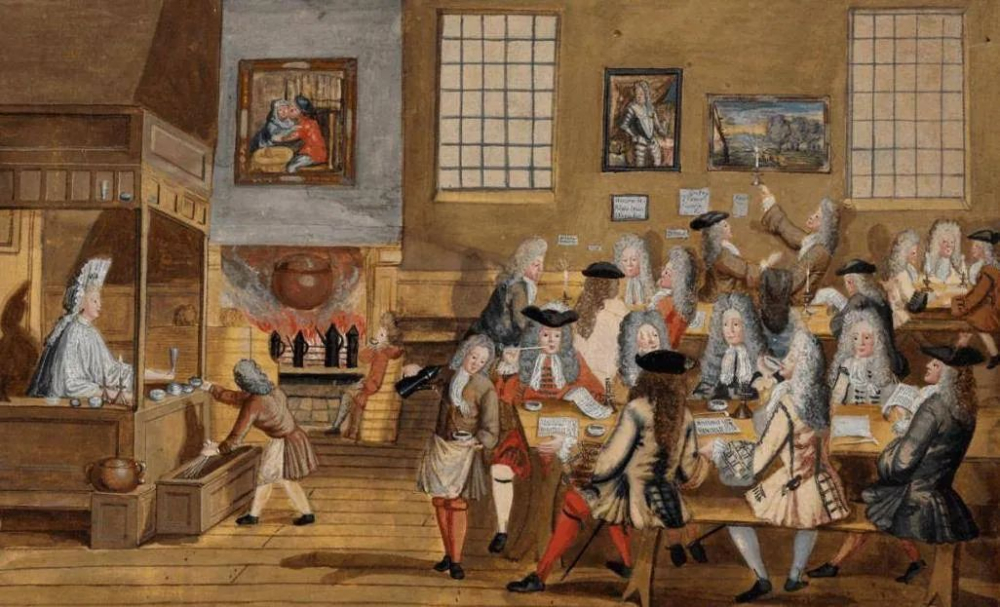
The works left at the time using painting as a means of recording happened to preserve the action of "drinking coffee from a cup and saucer." Below let us appreciate several exquisite works of art.
This one is "The Woman Taking Coffee," painted by the artist Louis Marin Bonnet in 1774. In the picture, the woman is pouring coffee into the saucer to cool it, and the action is clearly visible.
Next, look at "Spring Details" by the German court painter Peter Jacob Horemans. The noblewoman in the painting is likewise pouring coffee into the saucer to let it cool.
This one is "Coffee Granny," created by the Finnish artist Anna Sofia Sahlstén in 1895. The kindly old granny in the painting is about to drink the coffee poured into the saucer, which is exactly a scene from daily life in nineteenth-century Finland. From this painting one can also see that the Nordic countries were deeply influenced by this, and to this day some people still retain this drinking habit.
There are many more paintings on similar themes, and those interested can search for them online at their leisure. But if after reading this article you suddenly want to try this seventeenth-century drinking method, Front Street suggests you must carefully consider the time, place, and occasion.
- END - Front Street Coffee
No. 10, Bao'an Front Street, Yandun Road, Dongshankou, Yuexiu District, Guangzhou, Guangdong Province
The above content is compiled by CoffeeHunters, a coffee news website.


