








Can coffee powder preparation keep the oils in pour-over?
Paper filters trap the oils that give coffee body and a lingering aftertaste. Switching to a flannel cloth filter, which filters less aggressively, lets those oils and other insoluble substances pass into the cup. Flannel has a cotton side and a fuzzy side, and either side can hold the grounds without changing the result.
Coffee oils form when insoluble substances in the beans wrap around carbon dioxide. With dark-roasted Golden Mandheling as the example, Front Street Coffee shares parameters for coffee powder preparation: coffee-to-water ratio, grind size, and water temperature, plus storage advice for the cloth. Flannel was the main filter before paper appeared, and it still shows oils clearly on the surface.
Coffee oils are a key component for enhancing mouthfeel, body, and lingering aftertaste, but the commonly used paper filters for pour-over will filter them out. If you want to retain the oils, you can switch to a flannel cloth filter, which has weaker filtration. This article details the characteristics of flannel cloth filters, the brewing method, the flavor differences compared to paper filters, and the proper storage method. At the same time, using dark-roasted Golden Mandheling as an example, it gives specific parameters such as coffee-to-water ratio, grind size, and water temperature, and shares Front Street Coffee's brewing experience.
Coffee oils are actually formed when insoluble substances in coffee beans wrap around carbon dioxide, and they can noticeably improve the drinking experience, such as making the mouthfeel fuller and more velvety while extending how long the aftertaste lingers.
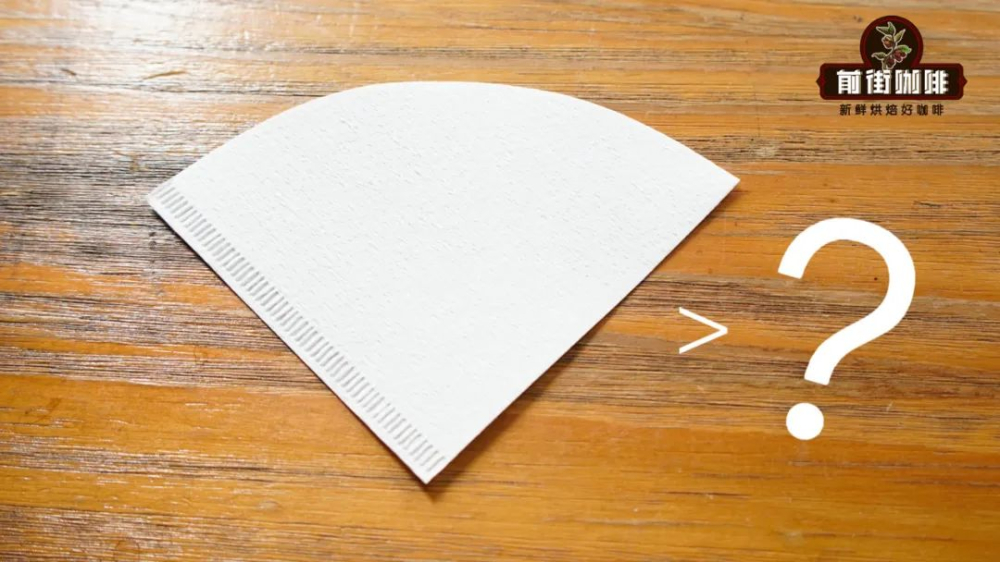
In single-origin coffee, the presence of oils is not uncommon; it is just that the amount varies. Many friends ask: why can't you see oils in pour-over coffee? The reason is that the paper filters commonly used for pour-over today have strong filtration, not only blocking fine particles but also keeping oils out. So if you want to drink pour-over coffee with oils, you only need to switch to a device with weaker filtration.

A device that does not filter out oils Before paper filters appeared, there was a device that long occupied the main role in filtering coffee grounds and was widely used. It can make oils clearly appear on the surface of the coffee. This is the protagonist we are using today—the flannel cloth filter.
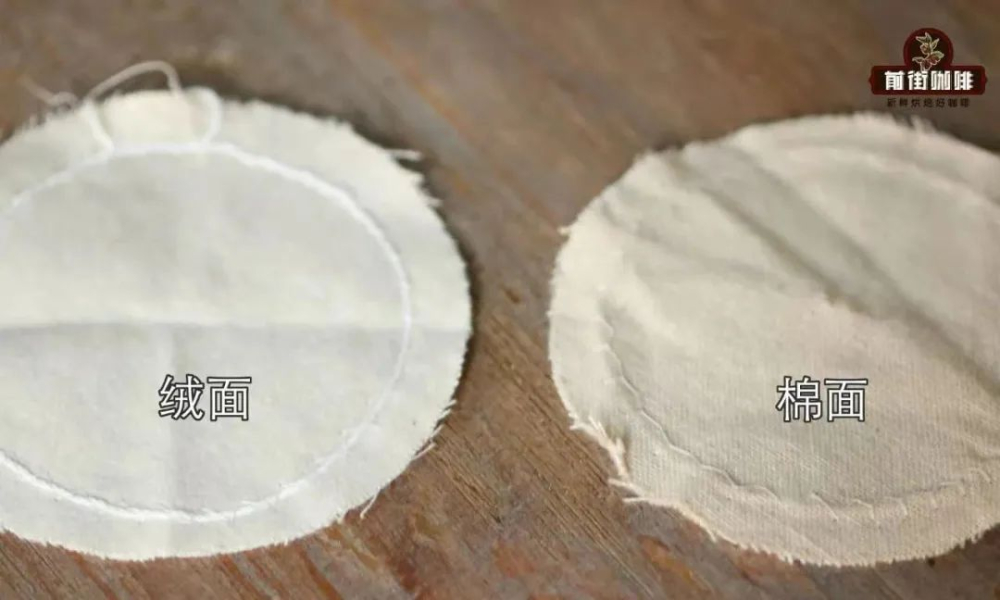
Flannel is a rather special fabric, and the feel of the front and back sides is completely different. One side is a cotton surface, and the other is a fuzzy surface. The cotton side feels clearly rough from its texture, while the fuzzy side is smooth and delicate. Its biggest advantage is that it allows oils and other insoluble substances to easily pass through the cloth and drip into the coffee, and these substances are the key to enhancing a rich, full-bodied mouthfeel.
Because it is made of different fabrics but has no distinction between front and back, some friends struggle with which side to use to hold the coffee grounds. In fact, both sides can be used for brewing and will not have different effects on the coffee. Usually, more people choose the cotton side (the rougher side) as the inner bag because, compared with the fuzzy side, it adsorbs fewer coffee particles and is easier to clean. If the fuzzy side is chosen as the inner bag, fine coffee powder easily clings to it, and cleaning after brewing becomes much more troublesome.
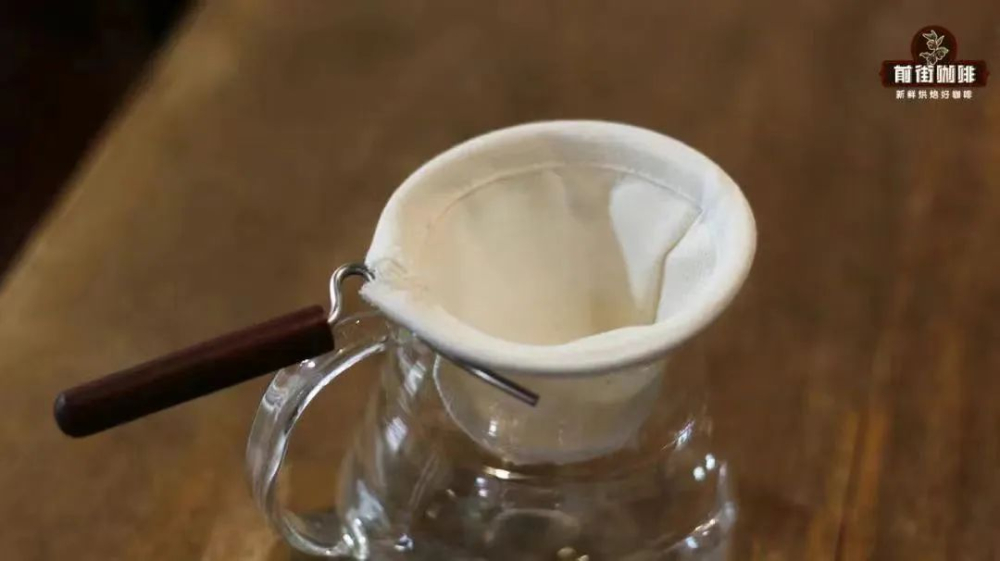
Preparation before brewing Before brewing, the flannel cloth filter needs to be boiled in boiling water for five minutes. The purpose is to fully sterilize it and at the same time allow water to thoroughly penetrate the fibers, making its condition more stable during brewing.
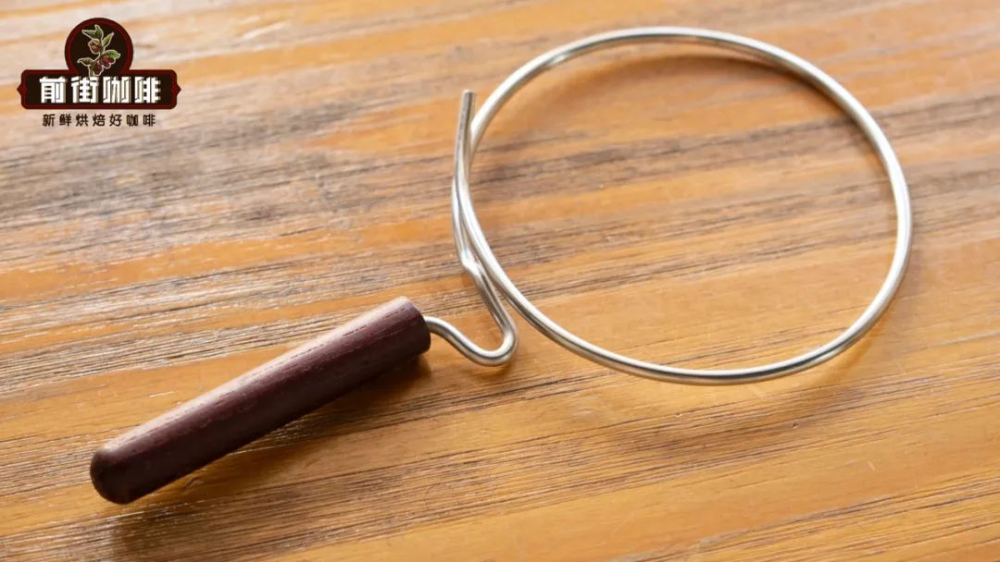
Coffee beans: 20g dark-roasted Golden Mandheling Coffee-to-water ratio: 1:15 Grind size: 70% passing a No. 20 sieve; our shop uses EK43, setting 11 Water temperature: 88°C Brewing method: There are two brewing methods for flannel; this time we use a handheld cloth filter and brew while pouring water.
It should be noted that compared with paper filters, the gaps in a flannel cloth filter are much larger, so the water drains faster than through paper. In addition, because there is no dripper to support it, the entire cloth allows coffee liquid to pass through, so the higher the water level, the faster the drainage. Therefore, when brewing handheld, a larger dose of coffee is usually used. First, use a small stream of water to wet the coffee grounds for blooming, then pour in a small circle around the center to avoid water flowing away from the sides.
After brewing, you can see that the coffee brewed with flannel has obvious oils on the surface, while the surface of regular pour-over coffee is very clean and clear (Front Street even thought it had been beauty-smoothed!).

Tasting time: the two cups of coffee made with different filtering tools are very consistent in flavor expression—nuts, spices, chocolate. The difference is that the coffee brewed with flannel is richer and smoother than that brewed with paper, but its clarity does not reach the level of paper. Overall, each has its own advantages.
How to store a flannel cloth filter
After brewing is finished, the first thing to do is clean and store the cloth filter, because it can be used many times. But many people misunderstand storage, for example thinking it is enough to wash and air-dry it like ordinary equipment, yet this method of drying it after it has been wet will instead damage the fiber structure of the flannel.
The correct method is: after cleaning the flannel thoroughly, place it in a sealed container filled with clean water, then store the container in a low-temperature environment. This not only protects the fiber structure of the flannel from damage but also prevents mold growth. The downside is that it is rather troublesome, requiring the water to be changed from time to time, and before use again it still needs to be boiled in boiling water.
- END - Front Street Coffee (FrontStreet Coffee)
No. 10, Baoqian Street, Yandun Road, Dongshankou, Yuexiu District, Guangzhou, Guangdong Province
Read 35
The above content is compiled by CoffeeHunters, a coffee news website.


