







How Does the Nanyang Coffee Roasting Process Work?
Nanyang coffee is a distinct Chinese-developed coffee system that took shape in Malaysia, Singapore, Indonesia, and Thailand. It relies on indonesia robusta coffee beans stir-fried in a large wok with butter, sugar, and salt, then brewed through a flannel filter to give a thick, bitter, full-bodied cup.
The roasting process starts by taking beans to roughly 70 to 80 percent done before the butter, sugar, and salt go in, leaving the beans sticky with a burnt aroma. The style spread with Chinese migration to Hainan, Hong Kong, Macau, and Thailand, and produced a precise set of Kopi ordering terms in Singapore.
Chinese people also have their own coffee system—Nanyang Coffee. It was born from the history of Chinese people heading south to Southeast Asia to do business and make a living, and it became popular in Malaysia, Singapore, Indonesia, and Thailand. Completely different from today's specialty coffee, Nanyang Coffee uses beans that are deeply stir-fried in a large wok, with butter, sugar, salt, and other seasonings added during the process, then brewed with flannel, producing a rich, bitter, and full-bodied cup. Over time, a precise set of Kopi ordering terms has even emerged among the people of Singapore. This article will introduce Nanyang Coffee's roasting method, production logic, drinking variations, and how it spread with Chinese migration to Thailand and Hong Kong, becoming an emotional bond for generations of Southeast Asian Chinese.
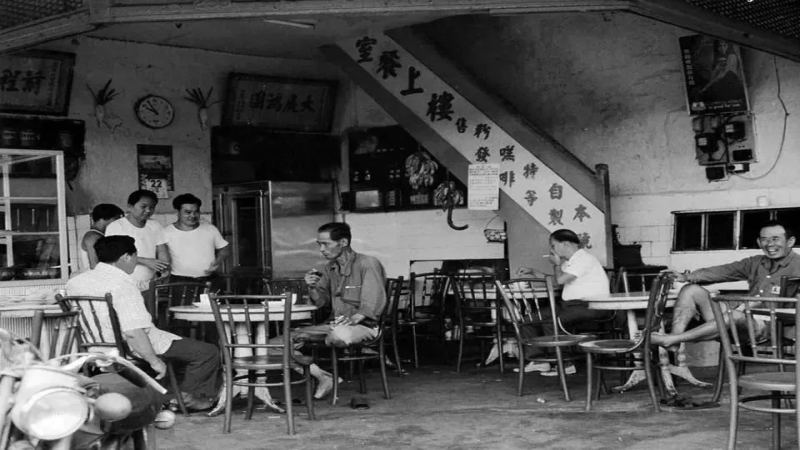
When it comes to the coffee family tree, many people first think of the Italian coffee family. But what is little known is that Chinese people also developed a coffee system of their own. In Southeast Asia, there is a drink called "Nanyang Coffee," which was gradually created and evolved by the Chinese communities who went south to make a living in those years.
Literally understood, "Nanyang Coffee" broadly refers to coffee drinks in Malaysia, Singapore, Indonesia, Thailand, and other places. Because its roasting and production logic is vastly different from the specialty coffee or freshly ground coffee familiar to everyone today, the term is also often used specifically for the coffee-making method originating in Singapore and Malaysia, and later it also spread to Hainan, Hong Kong, and Macau.
Robusta beans roasted in a large wok?
Some coffee enthusiasts may know that Asian growing regions are generally dominated by Robusta, whose flavor tends toward heavy bitterness and astringency. To suppress the beans' undesirable flavors, the Chinese who went south incorporated Chinese cooking techniques into the roasting process—stir-frying continuously in a large wok until the beans turn charred black, that is, deep roasting, while adding ingredients for seasoning during the roasting process.
The specific method is to first roast the coffee beans until they are about 70% to 80% done, then add butter, sugar, salt, and so on, making the beans sticky and giving them a burnt aroma. Because of the addition of sugar and oil, they must be ground into granules immediately after coming out of the wok; otherwise, once cooled and hardened, they become even harder to handle.
.
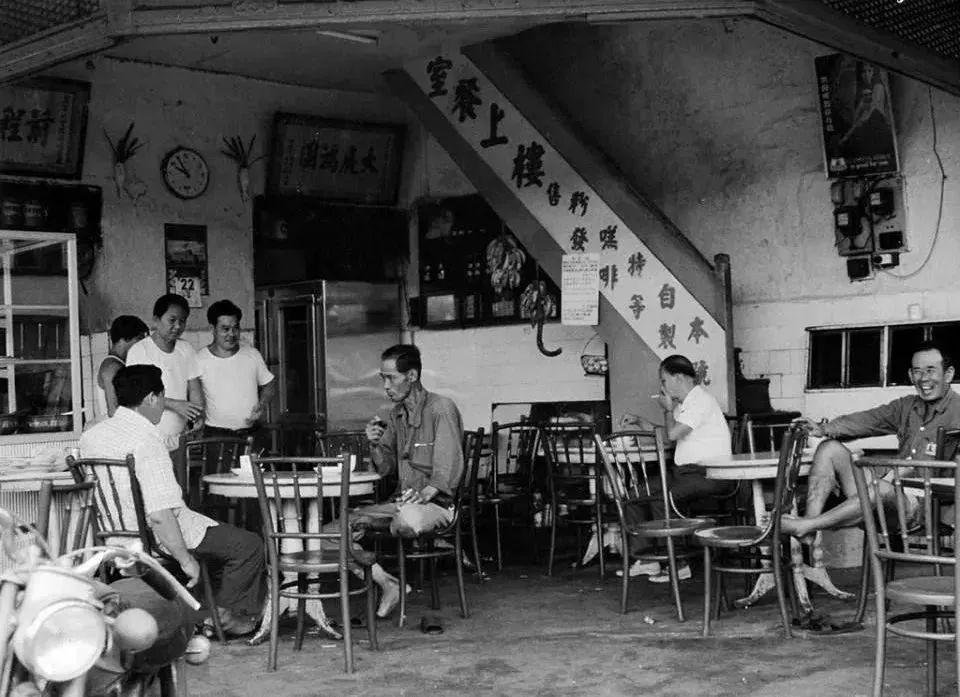
Robusta beans roasted this way have an extremely strong bitterness. Although sugar is added during roasting, the finished coffee is actually not sweet. To push the body to the extreme, the coffee powder is also put into a flannel bag and directly poured over with boiling water, in a manner quite similar to Hong Kong-style milk tea. As a result, the coffee is brewed very strongly, and one sip delivers both the invigorating effect of caffeine and a jolt of alertness from that pure bitterness.
.
The richly varied Nanyang Coffee system
Faced with such strong and bitter black coffee, not everyone can drink it all in one go, so Chinese people also developed a whole set of variations in how they drink it. Today, Singapore, one of the representative countries of Nanyang Coffee, has even given rise to a unique set of coffee terms among the public that can precisely describe various coffee variations.
Although Singaporeans call coffee Kopi, if you directly order a Kopi in a coffee shop, what you get will be a coffee drink with condensed milk and sugar. So, if you want to accurately order the coffee you want in a Singapore coffee shop, you need to remember these common names:
These terms all come from Hokkien pronunciation. To summarize simply: "O" means no milk but with sugar; "C" means with evaporated milk and sugar; "Kosong" means no sugar; "Siew Dai" means less sugar; all Kopi types are hot by default, and if you want iced, add "Ice" before the name or "Peng" after it.

Against the broader backdrop of coffee cultural identity, Nanyang coffee shops expanded rapidly, and Nanyang Coffee, with a taste closer to that of Chinese people, quickly became the adhesive among Singaporean immigrants and spread to Southeast Asian countries along with the prosperity of Singapore's port.
After it spread to Thailand, local Chinese people added spices and grains when roasting coffee, and this coffee is called oliang; in Hong Kong, people added baijiu when roasting beans to remove astringency and enhance aroma, and after adding baijiu they no longer added sugar or oil. No matter which method of making Nanyang Coffee it is, behind it lies the inheritance of generation after generation.
Although specialty coffee is now spreading at an accelerating pace, in the hearts of many Chinese people who grew up in Southeast Asia, the traditional Kopi Tlam (coffee shop) and the rich Kopi still hold a place. It is both an important part of local daily life and an emotional bond in Chinese society—a cup of Kopi can give people a full-spirited start to a new day and also let them feel the hardships endured by generation after generation of Chinese people.
If you have the chance, you might as well take a trip to Southeast Asia and experience the charm of Nanyang Coffee for yourself.
- END - Front Street Coffee
No. 10 Bao'an Front Street, Yuexiu District, Guangzhou, Guangdong Province
The above content is compiled by CoffeeHunters, a coffee news website.


