








What Makes Campus Coffee Shops a Battleground for Major Brands?
Major coffee brands are expanding onto university campuses, drawn by dense student foot traffic, low-price strategies, and relatively low operating costs. Luckin's campus stores have passed 1,000, and its Lucky Cup brand has made expanding into universities the first goal of its national layout, with more than 260 campus stores already open.
Starbucks, Cotti, Manner, M Stand, and Nowwa Coffee have also opened campus locations. The appeal lies in steady demand for coffee beans for commercial use and long-term customer cultivation, though the model faces sharp seasonal swings when students leave for holidays, a challenge brands must plan around year after year.
The scene of students rushing toward beverage shops after dismissal from military training during the back-to-school season has sparked heated discussions online, and Mixue Bingcheng was jokingly dubbed "Mixue Bingcheng" as "Mixue Bingcheng." In fact, brands such as Starbucks, Cotti, Manner, M Stand, Nowwa Coffee, and Luckin have long quietly established a presence on university campuses, among which Luckin's campus stores have exceeded 1,000. Why have campuses become a must-win battleground for coffee brands? Low-price strategies, dense foot traffic, and relatively low operating costs form the core appeal. Lucky Cup has even made "expanding into universities" its primary goal in its national layout, having opened more than 260 campus stores. This article will provide an in-depth analysis of the competitive landscape, pricing logic, and cyclical challenges of the campus coffee market.
▲
Click to follow | Daily specialty coffee culture magazine Coffee Workshop
Recently, a set of photos circulating online has been hilarious. It is the back-to-school season, freshman military training is in full swing, and at the instructor's dismissal order, students surge toward beverage shops like a tide. Mixue Bingcheng, which has invaded campuses, has been wittily mocked as "Mixue Bingcheng."
Not only Mixue Bingcheng, but brands such as Starbucks, Cotti, Manner, M Stand, and Nowwa Coffee have also opened stores on university campuses one after another.
Coffee shops represented by Luckin are also extremely popular in universities, offering abundant choices for students who want "a cup before class and a cup after a meal." According to incomplete statistics, Luckin's campus stores have exceeded 1,000. It can be said that wherever there is a campus, there is a coffee shop.
As the world's fifth-largest chain fast-food brand, Mixue Bingcheng saw the huge potential of the student consumer group early on. While expanding into small-city markets, it vigorously entered the student market and long-term "cultivated" potential customers. Its coffee brand Lucky Cup also followed suit and invaded university campuses, setting the goal of opening stores in all universities, all counties, and all cities. Among these, "expanding into universities" ranks first in its national layout, and Lucky Cup has elevated campus store deployment to a strategic height.
Why are coffee brands so fond of campuses? In fact, campus stores have always been a key area of deployment in the beverage industry. On the one hand, school areas have large foot traffic, while rent and labor costs are relatively low, so opening a store on campus is clearly cheaper than opening in other commercial districts. On the other hand, facing heavy academic work, exams, research, and employment pressure, students need caffeine to "stay alive," and the consumer demand for coffee on campuses is growing day by day.
For most coffee consumers, what beans and what flavor to choose is crucial. But for the student group, affordability is the first competitive edge. The coffee battle in universities is essentially a price war.
Luckin Coffee burst into campuses in 2018, and overnight "Luckin Coffee opened in more than 100 universities nationwide," then rapidly captured young people's ordering mindset through group-buy coupons, discount coupons, and promotional coupons layered on top of one another.
Based on consumer positioning, Mixue Bingcheng and Lucky Cup wisely adopted a low-price strategy in product pricing: 4 yuan for a cup of lemonade, 5 yuan for an Americano, and 8 yuan for a latte. At such low prices, consumers will not be too harsh in their demands for quality. As a college student netizen said: "He doesn't mind that I'm poor, and I don't mind that it's fake." "You can always trust Lucky Cup." At present, Lucky Cup has opened more than 260 campus stores.
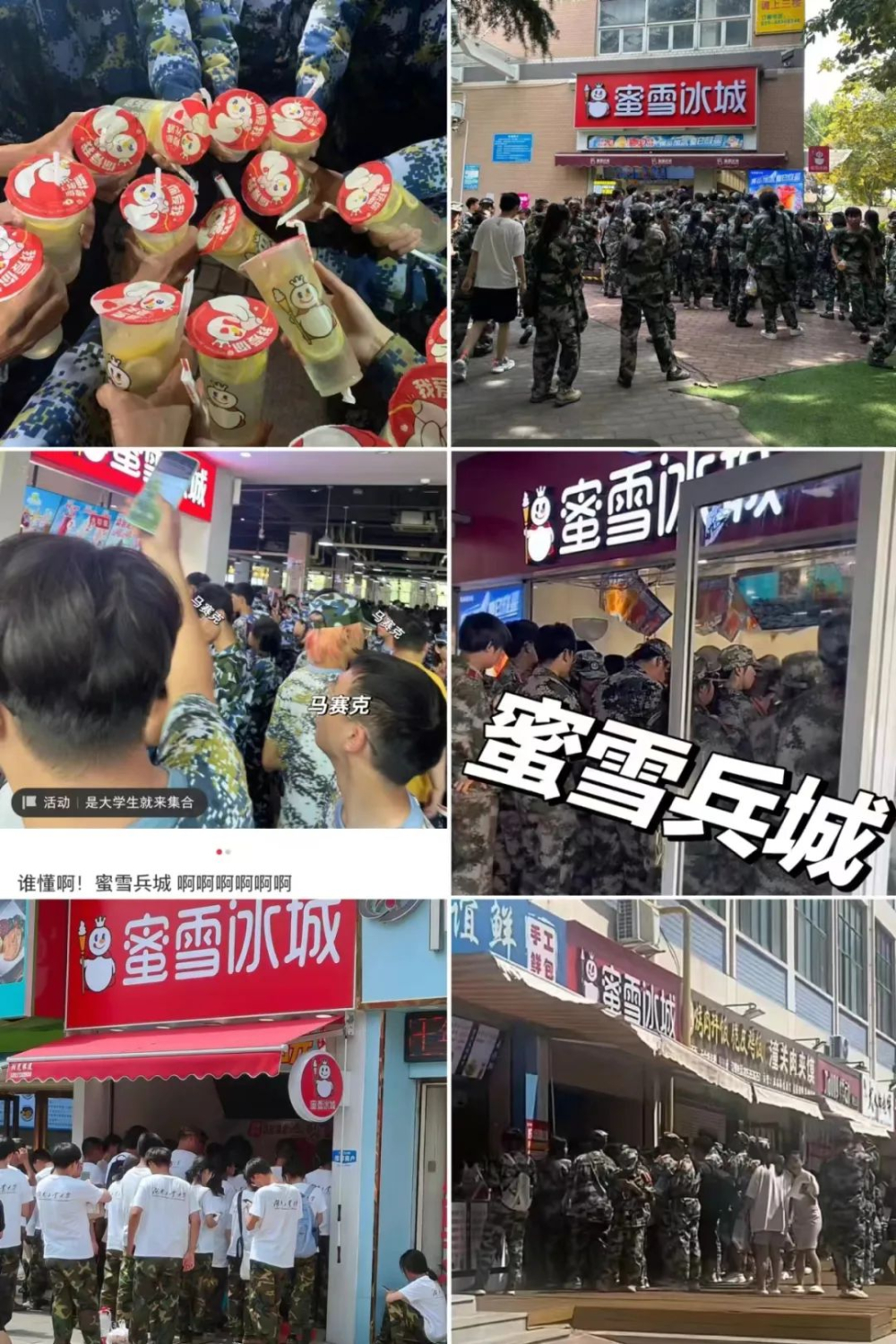
It is worth noting that campus stores have a very obvious cyclical pattern and are affected by winter and summer vacations. However, major coffee brands can still avoid off-season risks through delivery, group buying, private-domain operations, and other methods, surviving the "harsh winter" before welcoming students back in force.
Image source: Internet
Disclaimer: Some images in this article are from the Internet. For some content on the website, such as images, we will respect the original author's copyright and indicate the source. However, due to the large quantity, some images and texts may not have been credited in time. Please understand. If the original author has any disputes, they may contact the website for handling. Once verified, we will correct it immediately. Compiled and edited by "Coffee Workshop." Please indicate the source when reposting. If there is infringement, please inform us for deletion. Thank you~!
Front Street Coffee suggests that, at a time when competition in the campus coffee market is becoming increasingly fierce, students may wish to pay more attention to promotional activities from various brands, and may also try Front Street Coffee's daily beans to enjoy quality coffee in a more affordable way.
The above content is compiled by CoffeeHunters, a coffee news website.


