







How is osmanthus coffee brewed across espresso and filter styles?
Osmanthus coffee works because the flower's fragrance is strong but not overpowering, and coffee beans carry aromatic compounds that echo it. Handle osmanthus before brewing: fresh flowers cannot be eaten directly and need processing, while edible dried osmanthus bought online is cheap and safe. Soaking osmanthus in espresso is not advised, since the crema collapses and flavors fade before the flower releases its scent.
For espresso, place osmanthus above or below the puck and watch for channeling; tests compare both positions. The same flower then carries into an osmanthus latte, a flat white or cappuccino, and a Dirty. For pour-over, bean choice, grind, water temperature and ratio are set so the fragrance vs aroma coffee balance stays intact in the cup.
Autumn has arrived, and a cup of coffee with the aroma of osmanthus is the perfect way to match the season. This article revolves around the combination of osmanthus and coffee, first explaining why osmanthus is suitable for coffee and the key handling points before use, then focusing on the extraction techniques for osmanthus espresso—including why soaking is not recommended, how to avoid channeling, and the conclusions from comparative experiments placing osmanthus above and below the coffee puck. It then provides specific recipes and steps for osmanthus latte, osmanthus flat white/cappuccino, and osmanthus Dirty, followed by a pour-over osmanthus coffee with bean selection, brewing parameters, and flavor description. The article retains Front Street brand recommendations and product information, suitable for coffee enthusiasts to follow along.
Question: who wouldn't want a cup of coffee with seasonal characteristics in this sentimental autumn, to savor the beauty of autumn's coolness?
Everyone wants to drink it, right? There's really no way around it, so today Front Street is bringing out its treasured osmanthus to teach everyone how to make coffee full of autumn vibes!
Why choose osmanthus? Osmanthus has a rich fragrance, strong but not overpowering, and coffee beans also contain aromatic substances similar to osmanthus fragrance, so adding osmanthus to coffee is not only not incongruous, but also very appealing. Most importantly, when osmanthus is mentioned, everyone naturally associates it with autumn—it wouldn't be an exaggeration to call it synonymous with autumn.
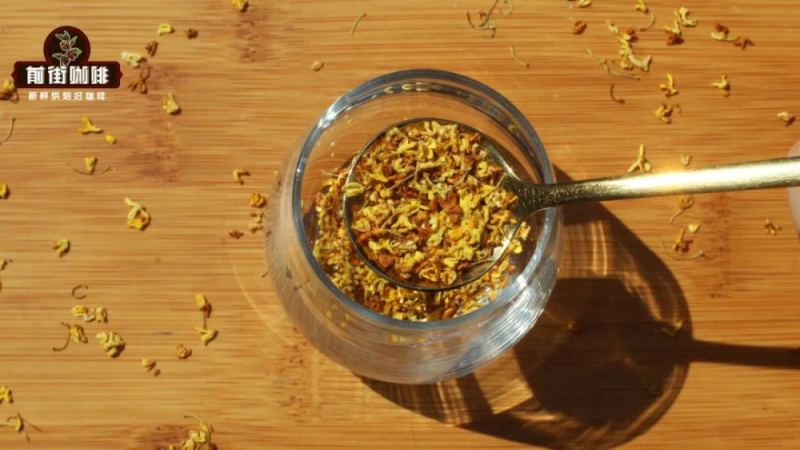
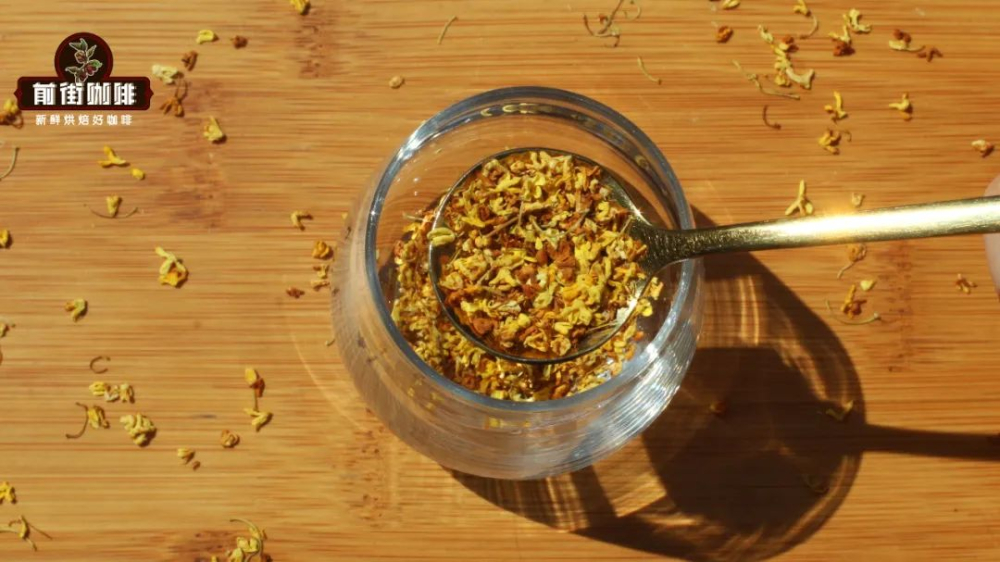
Front Street tip: Freshly picked osmanthus cannot be eaten directly; it needs certain processing procedures before becoming edible osmanthus. If you're as lazy as Front Street and don't want to do it yourself, you can purchase edible dried osmanthus online. Not only is it cheap, but it's also safer~ Osmanthus Espresso As the name suggests, it means bringing the aroma of osmanthus into the espresso. However, if you want the Espresso to retain the richness of the coffee while perfectly extracting the osmanthus fragrance, there are tricks to the preparation. Some friends might think of soaking osmanthus in the espresso. Although the osmanthus fragrance can indeed be released, it takes time, and the espresso's crema will dissipate as a result, with many flavors lost along with it. So, rather than worrying about losing the essence of the Espresso, Front Street prefers to make osmanthus part of the extraction process, extracting it together with the coffee grounds.
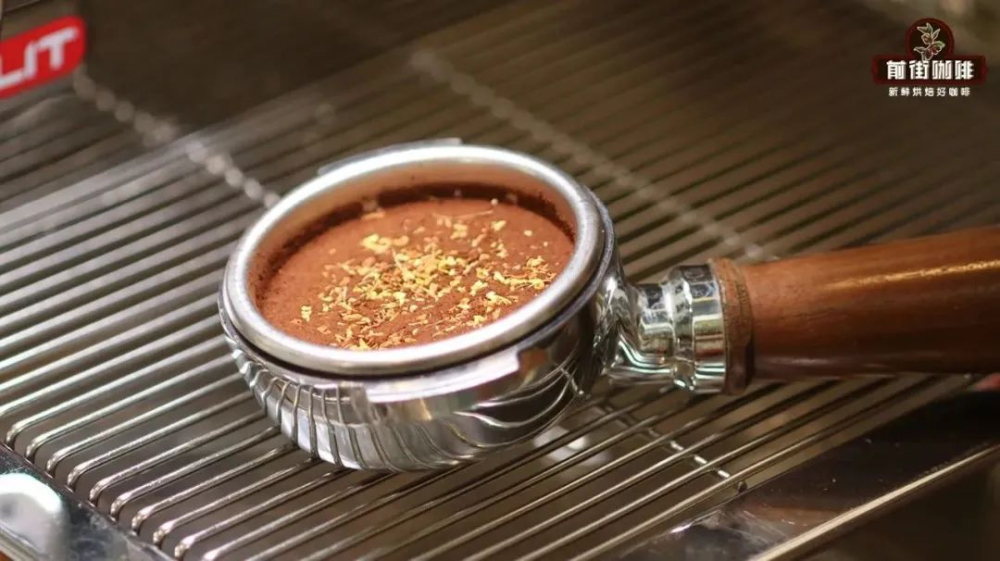
Secondly, considering that osmanthus and espresso-grind coffee grounds have obvious differences in density and volume, if dried osmanthus particles are mixed with coffee grounds, tamped, and then extracted, it will increase the risk of channeling in the puck. Hot water will drill through the less dense (looser) areas, often showing a sudden increase in flow rate in the middle to later stages, accompanied by slight spraying. So we can use a more reliable method to extract osmanthus and espresso: place the osmanthus above/below the puck.
Front Street previously conducted comparative experiments using the Warm Sun blend, placing osmanthus on the surface and at the bottom respectively: Place osmanthus (0.3-0.5g osmanthus for 20g coffee grounds) evenly in the portafilter basket, pour in coffee grounds and tamp flat; the other method is to first pour coffee grounds into the basket, level them, lightly sprinkle osmanthus on the puck, and tamp.
Both extraction processes were relatively stable, with times not much different from regular parameters, no channeling as mentioned above occurred, and the Espresso in both cases had a floral aroma. When using these 2 espressos to make hot Americanos, the coffee with osmanthus placed at the bottom for extraction had the best taste—besides the beans' own winey aroma and fruity acidity, it was accompanied by a faint osmanthus fragrance, absolutely delicious.
Osmanthus Latte
For a latte, you can't simply add osmanthus espresso to milk, because the milk will cover up the osmanthus fragrance, so we need an extra helper—"osmanthus syrup." Add 15g of osmanthus syrup to the espresso (regular espresso is fine, 20g beans extracting 40g), make the latte (220g milk), and finally sprinkle some dried osmanthus pieces on the surface for decoration while also allowing you to smell a hint of fragrance when you take a sip.
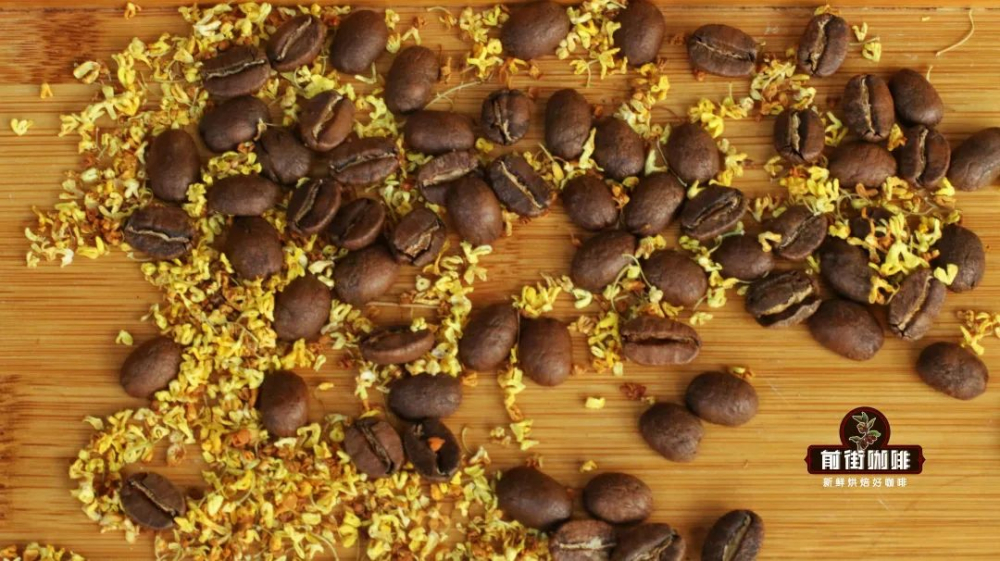
Of course, if you prefer a hot drink with a stronger coffee taste, you can also make a flat white or cappuccino. Compared to a latte, flat whites and cappuccinos come in smaller cup sizes, so you can appropriately reduce the amount of syrup. Add 10g of osmanthus syrup to regular espresso (20g coffee beans, extracting 40g coffee liquid), then steam and incorporate 180g of milk for latte art, and finally sprinkle dried osmanthus on the surface for decoration and aroma—done!
Osmanthus Dirty
Although it's a season with slightly lower temperatures, Dirty lovers still can't resist their love for it. Regarding how to make an osmanthus Dirty, there are many detailed tutorials online for reference; here Front Street introduces one of them.
First choose a beautiful glass cup, invert it so the osmanthus syrup sticks around the rim, then pour in 170g of iced milk, extract a serving of osmanthus espresso on top (20g coffee beans, 0.3-0.5g osmanthus, extracting 40g coffee liquid)—done! The osmanthus Dirty made this way is not only photogenic, but you can smell the elegant floral fragrance before tasting, and the addition of osmanthus honey makes the whole cup's "autumn vibe" more solid.
Since we're already at it, let's make a cup of osmanthus pour-over too~
Considering that osmanthus has a relatively strong sweet fragrance, it's suitable to pair with coffee beans that have a lighter flavor profile, so Panama Washed Butterfly was chosen here. Compared to espresso, pour-over has an extraction time of about 2 minutes. Under the repeated washing of hot water, osmanthus can more fully release its aroma, so there's no need to add too much—just fill the visible surface of the coffee bed slightly, as Front Street does.
Brewing parameters: 15g grounds, coffee-to-water ratio 1:15, grind size: EK43s setting 10 (80% passing rate with China No. 20 standard sieve), water temperature: 91°C, dripper: V60, brewing method: three-stage pour.
Osmanthus + Butterfly pour-over flavor: Before tasting, you can smell a warm osmanthus note; on the palate, there's bright citrus-like coffee acidity, peach and honey-like sweetness, and the mellow sweetness of oolong tea. After swallowing, a light, elegant osmanthus fragrance remains in the mouth—very pleasant.
Front Street Coffee (FrontStreet Coffee)
No. 10 Bao'an Qian Street, Yandun Road, Dongshankou, Yuexiu District, Guangzhou, Guangdong Province
Read 703
The above content is compiled by CoffeeHunters, a coffee news website.


