








How Do You Judge Coffee Extraction by Taste?
Extraction results fall into three groups: under-extraction, over-extraction, and a balanced cup. Sharp, astringent sourness usually signals too little extraction, while burnt, muddy bitterness and woody notes point to too much. A cup with rounded sweetness and a pleasant mouthfeel sits in the reasonable range even without lab testing.
Flavor compounds dissolve in a set order, so grind size, water temperature, time, ratio, and agitation all shift the result. Anything that raises extraction yield can tip a brew toward over-extraction, and anything that lowers it can cause under-extraction. Adjust one variable at a time, and check light roasts, dark roasts, and heavy-fines batches against the same flavor clues when a cup turns out flat rather than mellow.
In the world of hand-brewed specialty coffee, the extraction state of a cup directly determines its flavor expression. Some prefer floral and fruity notes, while others favor dark chocolate and nuts, but when faced with astringent sourness or burnt, muddy bitterness, most people can agree—this cup wasn't brewed well. Under-extraction, over-extraction, and ideal extraction—these three states correspond to different parameter logics. Starting from the order in which flavor compounds are released, this article will teach you how to judge extraction through flavor expression, brew time, coffee bed state, and other clues, and offer adjustment approaches for different scenarios such as light roasts, dark roasts, and excessive fines, helping you more precisely master every hand-brew.

When evaluating whether a cup of coffee tastes good, everyone's taste preferences may differ vastly. Some are drawn to floral notes, some are captivated by fruity notes, and others love only the tonality of dark chocolate and nuts. However, when it comes to unpleasant tastes, most people's feelings are quite consistent, such as sharp and astringent sourness, burnt bitterness, and mixed woody notes.
In the field of hand-brewed specialty coffee, the extraction result of a cup can be roughly classified into three categories: under-extraction, over-extraction, and ideal extraction.
If the coffee entering your mouth has just the right concentration, rich flavor layers, and a pleasant mouthfeel, making you want another cup after finishing it, then even without professional instrument testing, you can judge that its extraction yield falls within a reasonable range (not necessarily strictly conforming to the Golden Cup standard). Conversely, if the coffee carries obvious negative flavors and makes you resistant to drinking it, that indicates something likely went wrong in the extraction process. At this point, people often use "over-extraction" or "under-extraction" to describe it.
When brewing a pot of coffee, there are quite a few factors that influence the release of flavor compounds, including grind size, water temperature, extraction time, coffee-to-water ratio, agitation intensity, and so on. Any method that can increase extraction yield may cause over-extraction; likewise, adjustments made in the direction of lowering extraction yield tend to lead to under-extraction. Therefore, the prerequisite for developing a reasonable brewing plan is being able to accurately identify which extraction state the current coffee is in.
During coffee extraction, the dissolution of flavor compounds follows a certain order: acidity first, sweetness second, and bitterness last. When most coffee grounds are not fully extracted, it means only a small amount of soluble substances enters the water. At this time, the acidity from the early stage emerges first, and without the support of sweetness and mellow bitterness, the coffee tastes thin, with prominent and abrupt acidity, a light body, and almost no lingering aftertaste.
Conversely, if some particles have a relatively high extraction yield, it means the water has drawn out too many soluble substances from the coffee, and these later-released large-molecule substances are mostly bitterness and off-flavors. Coffee in an over-extracted state often carries unpleasant burnt bitterness and woody flavors on entry, and the tongue surface may sometimes feel astringent, which is what is called drying or puckering.
There are many causes of under-extraction, commonly including grinding too coarse, water temperature too low, coffee-to-water ratio too large, pouring force too gentle, and contact time between coffee and water too short. Conversely, mapping the causes of over-extraction onto various brewing parameters means water temperature too high, grinding too fine, water amount too large, extraction time too long, and pouring agitation too aggressive.
In fact, in daily brewing, pure under-extraction or over-extraction is not very common. When parameters are stable, what most easily occurs is uneven extraction—some coffee grounds are over-extracted while others are under-extracted, causing the flavor to carry defects from both sides at once, both salty-sour and bitter, making it hard to distinguish.
When judging the extraction state, Front Street believes one should not rely only on taste indicators, but should also combine the flavor type of the coffee beans and the entire extraction framework for comprehensive analysis.
For example, when brewing a light-roasted fruity-acidic coffee, if the time is under 2 minutes and the coffee tastes weak and sour, then it is clearly under-extracted. At this point, you can start by adjusting the grind finer and slightly slowing the pouring rhythm, then observe whether there is improvement.
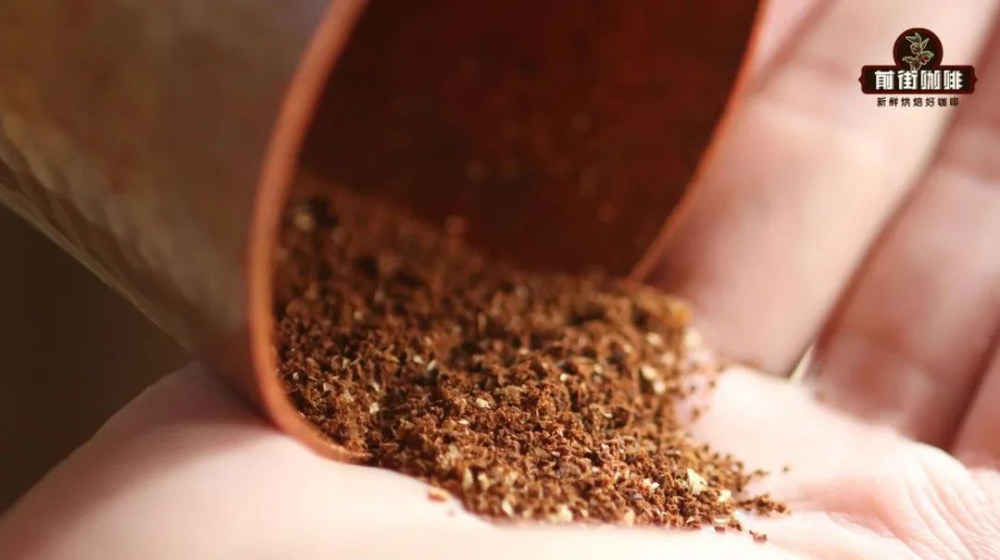
And when the time control is fine but the taste is hollow and bland, with the coffee being neither bitter nor sour, and the coffee bed mostly piled at the bottom, it is very likely that some large-molecule mellow substances in the coffee have also been released in large amounts, masking the light floral and fruity flavors. At this time, you can appropriately adjust the pouring technique, trying to raise the coffee bed as much as possible after blooming, so that sweet and sour substances have more space to be released.
If, when brewing dark-roasted beans, the coffee liquid has not finished dripping by 2 minutes 20 seconds, and on entry it carries an unusual bitter note mixed with a hint of straw and woody flavor that lingers at the back of the tongue for a long time, then it is most likely over-extracted. When eliminating causes, you might adjust from angles such as coarsening the grind, increasing water flow force, and switching to a dripper with faster flow.
If, whether brewing light-roasted or dark-roasted beans, the coffee always carries strong acidity or bitterness, with a drying finish, and the coffee bed surface appears sticky and muddy, while the drip time is also very long, it is very likely over-extraction caused by too many fines. It is recommended to sift out some fines to avoid clogging and letting the coffee steep too long.
Front Street Coffee
No. 10, Baoqian Street, Yandun Road, Dongshankou, Yuexiu District, Guangzhou, Guangdong Province
The above content is compiled by CoffeeHunters, a coffee news website.


