








How does a coffee machine name relate to espresso grind adjustment?
Espresso grind is dialed in by reading the shot, not the grinder setting alone. A pressurized fast extraction releases most aromatics in twenty to thirty seconds, so small changes in particle size show up clearly. If the shot sprays or runs too fast, grind finer; if it barely drips or tastes bitter, grind coarser and adjust in small steps.
Filter coffee is judged at a coarser, fine-sugar texture, while espresso should feel like flour. Regardless of the coffee machine name or grinder model, use brew ratio and taste alongside time: too sour points to under-extraction, too bitter to over-extraction. Home setups aiming for american style coffee can dial in within a few shots by changing one variable at a time.
You've got your espresso grinder and coffee machine, but you always get stuck at dialing in the espresso? Either it sprays everywhere or nothing comes out; either it's too sour or too bitter. The problem usually lies in the grind size. Espresso is a pressurized fast extraction, releasing a large amount of aromatic compounds within twenty to thirty seconds, so any subtle change gets amplified. Relying on the grinder's settings alone is far from enough—you also need to judge based on the extraction state. This article, drawing on Front Street's daily production experience, explains how to quickly find the right grind range for a bean through extraction time, brew ratio, and flavor performance, and provides fine-tuning directions and practical advice.

Have you ever encountered this situation: you spent a lot of money on an espresso grinder and an espresso machine, wanting to make a smooth americano or milk coffee at home, but you keep getting stuck at the espresso dialing-in stage. Sometimes the coffee liquid sprays out violently, sometimes barely a few drops come out; sometimes it's so sour it makes you frown, sometimes so bitter it's hard to swallow. So how exactly should this espresso be dialed in? Today Front Street will focus on espresso grind adjustment.
Espresso grinders are fundamentally different from the grinders used for pour-over, cold drip, and other filter-style coffees. Filter coffee has coarser particles, can be judged with the help of a sieve, and can be adjusted relying on the grinder's built-in settings. But espresso is a pressurized fast extraction, releasing most of the aromatic compounds within just twenty to thirty seconds, which means all performance gets amplified. Therefore, even a tiny change on the grinder may present a huge difference in flavor. Relying solely on settings to research grind is unrealistic—you must also use the extraction state to judge whether the grind size falls within the appropriate range.
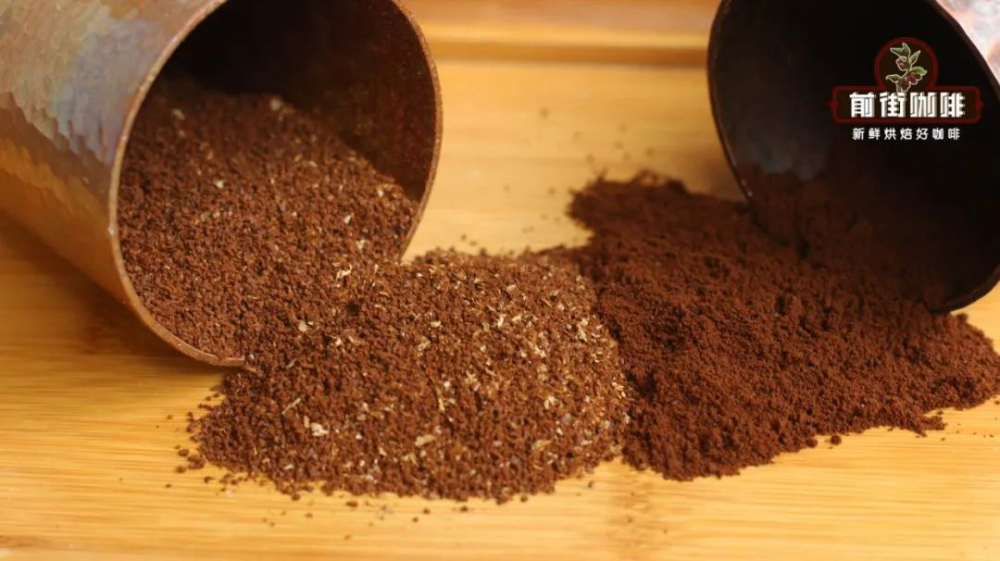
Pour-over coffee's grind size is often described as "fine granulated sugar" coarseness, while espresso grind, whether by feel or by naked-eye observation, is better described as "flour" texture. Generally, the larger the number the adjustment knob on the grinding equipment points to, the coarser the coffee grounds; the smaller the number, the finer the coffee particles. When the grind setting is adjusted so the coffee grounds feel soft and fluffy, without the rough feel of sand grains, you can apply the espresso extraction formula for more detailed adjustment.
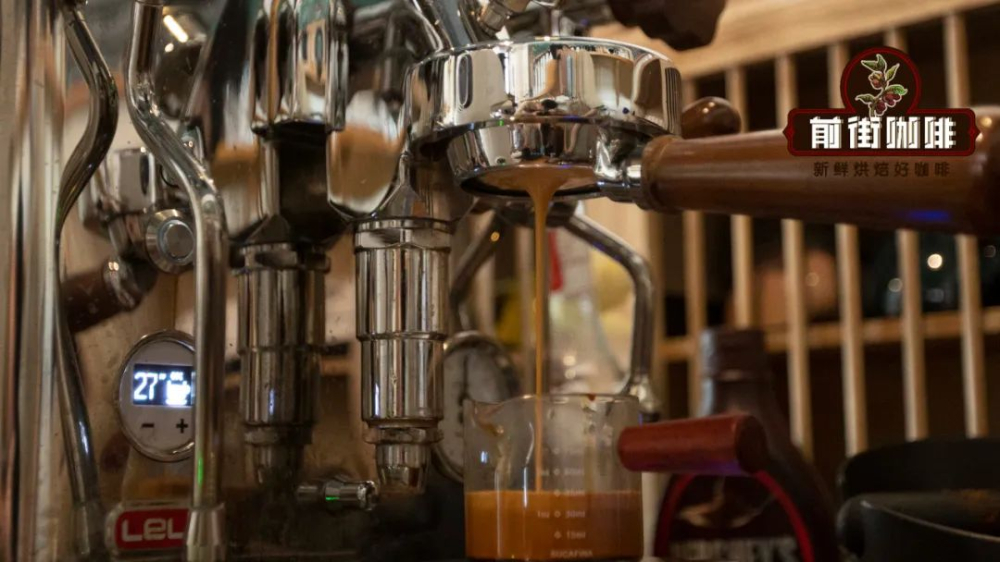
In daily espresso dialing-in, we follow an extraction formula principle, namely dose, extracted coffee liquid, and extraction time. The brew ratio is generally 1:2, and the extraction time is between 25s and 30s. For example, Front Street's daily production uses a 20g capacity portafilter basket, i.e., 20g coffee grounds, extracting 40g coffee liquid. If the extraction time is shorter than 25s, it indicates the flow rate is too fast and the grind is too coarse; if the extraction time is longer than 30s, it indicates the flow rate is too slow and the grind is too fine. It can be seen that the length of extraction time directly becomes a reference value for us to identify whether the grind is coarse or fine.
If the extraction flow rate is too fast (shorter than 25s), the contact time between water and coffee grounds is too short, the coffee flavor may be on the sour side or weak, the crema is not rich and pale in color, and at this point you need to grind finer. If the extraction time differs by more than five seconds, you can boldly turn 0.5 to 1 setting; if the difference is within five seconds, you only need to slightly turn the knob about 0.1 setting. The ultimate purpose of grind adjustment is to slow down the flow rate so the extraction time gets closer to the controllable range of 25s to 30s. Conversely, when the espresso flow rate is too slow (longer than 30s), and the coffee tastes strong, bitter, and astringent, you need to adjust toward a coarser grind.
Applying the above extraction formula is not meant to get the grind size right in one step, but to help us quickly find the coarseness range in which this bean can be stably extracted. To make your espresso taste closer to the flavor description on the packaging, in the end you still need to fine-tune based on this bean's flavor characteristics, resting state, and the type of coffee being made.
If under the current grind size, the extraction time falls between 25s and 30s, and the espresso shows a slight burnt-bitter finish that makes you uncomfortable, but the strength is moderate, you can reduce the weight of the extracted liquid in the tail end. For example, when Front Street tastes this unpleasant finish, it will extract only to 37-38g liquid weight.
And if the espresso has an obvious bitter and杂 taste on entry, you can try grinding a little coarser (just enough that you feel the setting click), and coordinate the flow rate back by adding powder (0.1-0.3g), which can reduce the release of excessive bitter substances. If the espresso is on the sour and thin side, with paler crema, you might as well grind a little finer (just enough that you feel the setting click), then appropriately reduce the dose (0.1-0.3g), to increase the contact between grounds and water to obtain more flavor and aroma.
At this point, some may ask, if the brew ratio is the same but the extraction time differs by 5 seconds up or down, will the espresso taste very different?
First, a 5-second difference will definitely make some difference in taste, but if you're not just drinking espresso but need to add ice, milk, or water to make milk coffee or americano, then the flavor difference between the two parameters will be greatly reduced. So, as long as you're not doing academic research, and the espresso you've dialed in has no negative flavors and can showcase the bean's main flavor characteristics, then your espresso is enough to satisfy daily drinking.
Front Street Coffee (FrontStreet Coffee)
No. 10, Bao'an Qian Street, Yandun Road, Dongshankou, Yuexiu District, Guangzhou, Guangdong Province
The above content is compiled by CoffeeHunters, a coffee news website.


