








How Does the Coffee Grinding Process Create Fines?
Fines form in every coffee grinding process, from budget hand grinders to professional electric models. A comparison test ground 10 grams of dark-roasted Golden Mandheling to an 80 percent pass rate through a No. 20 sieve. The conical-burr hand grinder left 1.6 grams of extra-fine powder, while the flat-burr electric grinder produced only 0.9 grams.
The gap comes down to burr geometry. Most manual grinders on the market use conical burrs, while electric grinders typically use flat or ghost-tooth burrs, which cut a narrower particle distribution. Fewer fines mean more even extraction and more stable brewing, so burr structure is worth checking before choosing a grinder.
In the coffee grinding process, the production of fines is almost an unavoidable phenomenon, whether using high-priced professional-grade grinders or entry-level manual equipment. However, the proportion of fines directly affects brewing stability and the final flavor presentation. Choosing a suitable grinder can help us alleviate the troubles caused by fines to a certain extent. Front Street Coffee conducted a comparative test specifically on the differences in fines generation between manual coffee grinders and electric coffee grinders, analyzing the differences in grinding performance from the perspective of burr structure, helping coffee enthusiasts more clearly understand the characteristics of different devices in grinding function, so as to make choices more suitable for themselves.

Coffee beans become powder after grinding. Whether using high-end grinders costing tens of thousands of yuan or entry-level models costing only around a hundred yuan, the appearance of fines is currently difficult to completely eliminate. However, the amount of fines directly affects our brewing process, making the output less stable. Choosing a suitable grinder can help us alleviate concerns about fines to a certain extent. Based on this consideration, Front Street specifically compared the differences between electric coffee grinders and manual coffee grinders in fines production, making it easier for everyone to understand the differences in grinding performance between the two.
Generally speaking, most manual coffee grinders commonly available on the market are equipped with conical burrs, while electric coffee grinders generally use ghost tooth burrs or flat burrs. Therefore, Front Street selected a manual coffee grinder with conical burrs and an electric coffee grinder with flat burrs to conduct a comparative test on the amount of fines.
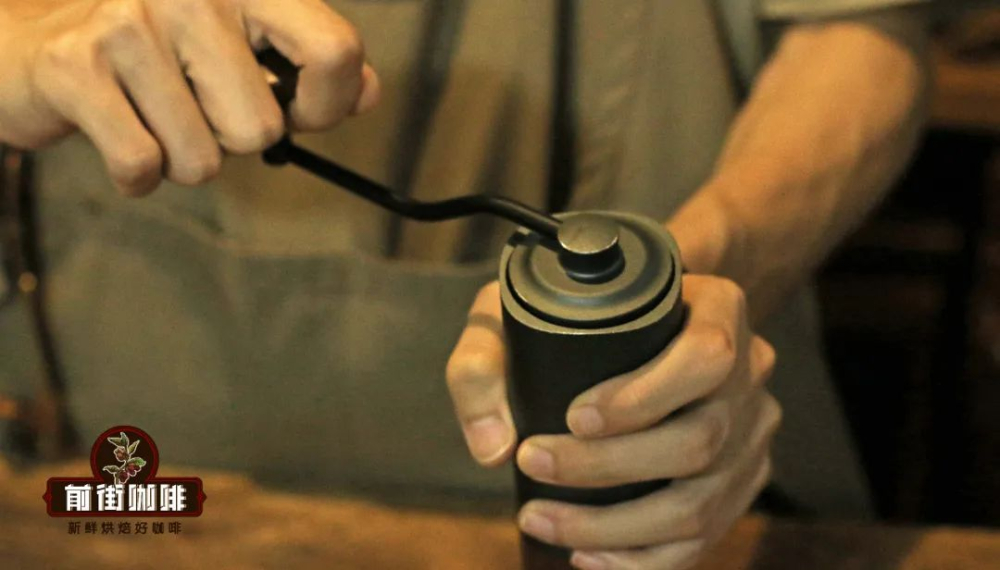
Grind 10 grams of coffee beans separately with the manual grinder and the electric grinder (the coffee used in this test was dark-roasted Golden Mandheling), with the grind size set so that the pass rate through a Chinese No. 20 standard sieve reaches 80%. Pour the ground coffee into a sifter, shake gently to sift, and finally weigh and compare the extra-fine powder portion.
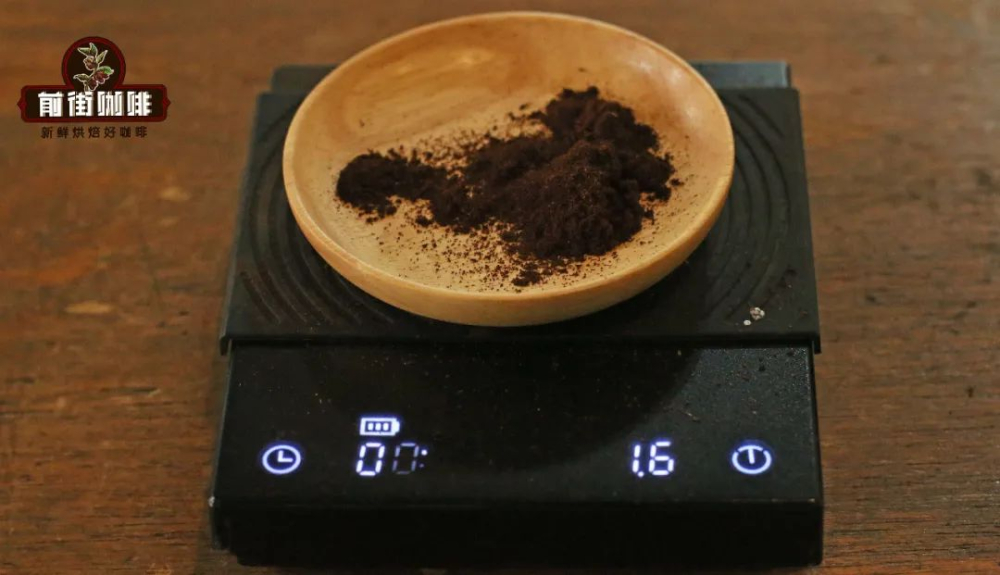
Manual coffee grinder: extra-fine powder 1.6g
Flat burr electric grinder: extra-fine powder 0.9g

It can be seen that when the same coffee beans are processed at the same grind size, the manual coffee grinder indeed produces more fines than the electric coffee grinder.
The reason relates to the structural design of the burrs. Conical burrs generally consist of an outer ring-shaped static burr and an inner conical rotating burr. The diameter of the conical burr gradually narrows from top to bottom, which affects grinding uniformity to a certain extent and also makes it easier to generate extra-fine powder.
In contrast, the structure of an electric flat burr coffee grinder consists of two burrs arranged in parallel, one fixed to the body and the other rotating with the motor. Coffee beans are ground into powder under centrifugal force and discharged from the gap between the burrs. The duration for which coffee beans are crushed is shorter than with conical burrs, so relatively less fines are produced. In addition, with the assistance of the motor, errors caused by manual operation are reduced, and coffee beans can be ground at a consistent speed, which means the grinding effect is more uniform.
Therefore, if you find that your grinder produces too many fines, you can take one extra step: sift out the fines. Then take a portion of the sifted fines and add it back into the coffee powder. This can both reduce the total amount of fines and retain the flavor layers contributed by the fines.
- END -
The above content is compiled by CoffeeHunters, a coffee news website.


