







Why Is Panama Geisha Coffee So Highly Regarded?
Panama Geisha coffee became the benchmark for specialty coffee because of a single competition result and a rare growing environment. The variety arrived in Panama by way of Ethiopian forests, and the Boquete Valley's high altitude and climate let it express jasmine-like floral notes and deep fruit aromas that judges had not encountered before.
The turning point came in 2004, when a Geisha lot won a reliable of Panama green bean competition and drew international attention. Geisha coffee trees are tall and slender, with weak disease resistance and low yield, which discouraged growers before that win. Similar varieties grow in Ethiopia, Costa Rica and Colombia, yet Panama remains the reference point.
Geisha coffee enjoys an extremely high reputation in the global specialty coffee world, and when it comes to Geisha, most people's first association is the Panama region. Although Ethiopia, Costa Rica, Colombia and other places also produce high-quality Geisha, Panama Geisha has always been regarded as the benchmark. Behind this lies both historical opportunity and the discovery by Hacienda La Esmeralda as well as the unique terroir of Panama. In this article, Front Street will take you through the journey of Geisha from the forests of Ethiopia to the highlands of Panama, analyze how Hacienda La Esmeralda recognized its potential, and how the terroir conditions of the Boquete Valley created Geisha's signature floral and fruity aroma along with its elegant acidity.

Every time Front Street chats with customers about Geisha coffee, they almost always mention Panama-grown Geisha first. Moreover, some friends, whenever Panama coffee is mentioned, naturally assume it must be the Geisha variety. Why exactly is that?
In fact, there are quite a few places around the world that grow Geisha. Ethiopia, Costa Rica, Colombia, Guatemala and other regions can all produce fairly good-quality Geisha, and each presents a different flavor spectrum. So why do people still habitually take Panama Geisha as the representative? Today Front Street will talk with everyone about the story of Panama Geisha.
The charm of Geisha
Before Geisha became famous, it did not receive much favor from growers. The reason was that the tree shape is tall and slender, disease resistance is weak, yield is also low, and when planted at lower altitudes its flavor performance is mediocre. It was not until 2004 that Geisha truly stepped onto the international coffee stage—the BOP "Best of Panama Green Bean Competition." That year it displayed delicate jasmine floral notes and deep fruit aromas, greatly astonishing the judges present, and was given an unprecedented high score, winning the championship in one fell swoop. Since then, the price of Geisha coffee has continuously broken records, and its fame has spread throughout the global coffee circle.
The reason Geisha can win the affection of coffee people is that, unlike the traditionally impression of heavy, thick black coffee, it is more like a fresh floral and fruit tea. It possesses rich fragrance and complex fruit flavors, reminding people of a series of distinctive aromas. At different temperatures, one can also feel delicate texture and sweet-and-sour fruitiness filling the mouth. Geisha's extraordinary flavor characteristics are enough to make it the "ceiling" in the hearts of many coffee people. And what gave Geisha such high popularity is Geisha coffee's "talent scout," Hacienda La Esmeralda.
How did Hacienda La Esmeralda "discover" Geisha?
Like many Arabica varieties, Geisha also originated from Ethiopia, the birthplace of coffee. In 1931, Geisha was first collected in the wild Kaffa forest in southern Ethiopia, with the aim of finding new disease-resistant varieties, and it was named after the nearby Geisha Mountain. Later it was transferred to research institutes in Kenya, Uganda, Tanzania and other places for trial planting. In 1953, Geisha seeds arrived at CATIE, the Tropical Agricultural Research and Higher Education Center in Costa Rica, and were recorded as "T2722." There were planting records on several local farms; however, Geisha's branches are fragile and its yield is not high, so it was not favored by farmers and was not widely planted.
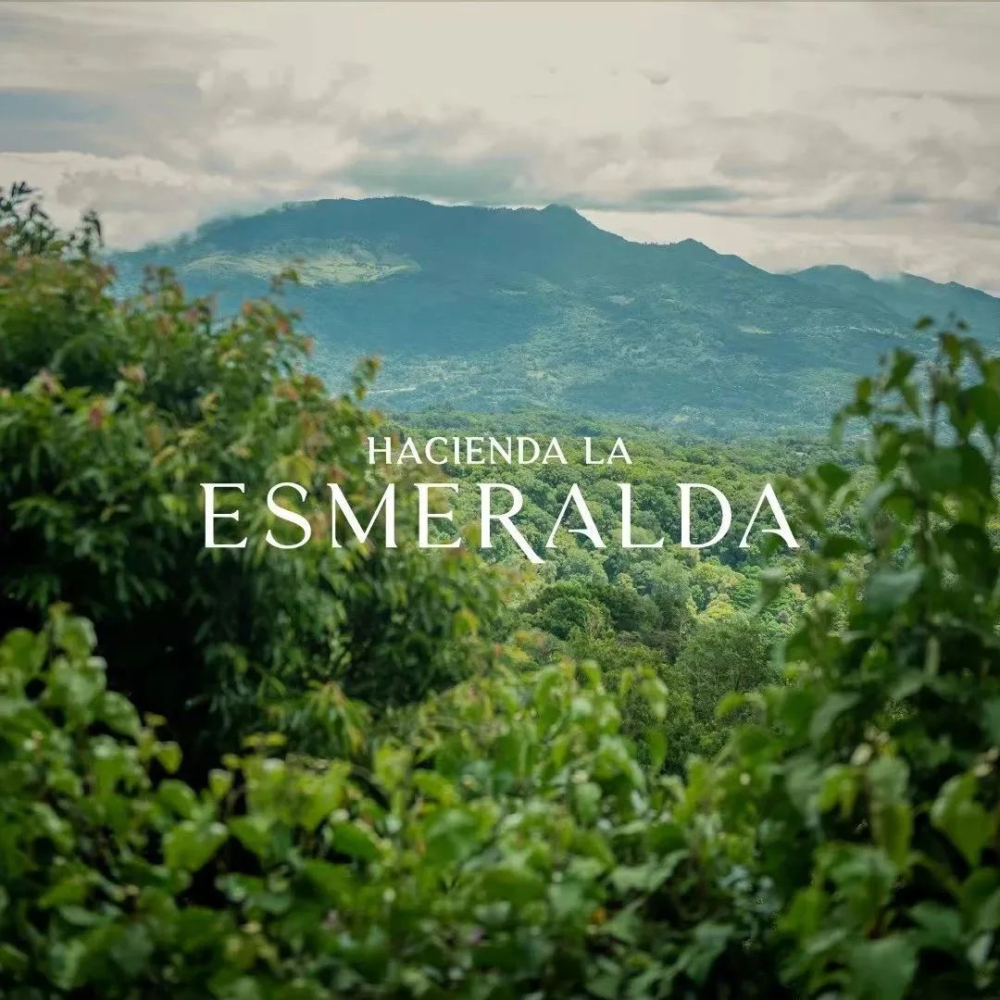
Starting in the 1960s, CATIE gave T2722 Geisha to coffee farmers in Panama, and Geisha truly began to step into this promised land of Panama. In the 1990s, the Peterson family, owners of Hacienda La Esmeralda, began to attach importance to coffee production and purchased a new high-altitude farm, Jaramillo. Many coffee trees on the farm had contracted leaf rust, but Daniel Peterson noticed that the Geisha trees had not been seriously harmed, so they decided to transplant the Geisha, which had originally been planted mixed with other varieties, to more areas of the farm while also increasing its planting altitude.
In 2003, the Peterson family finally discovered Geisha's potential. When it was cupped for the first time, it displayed quite intense white floral aromas, an extremely clean mouthfeel, and a finish reminiscent of berries, citrus and bergamot, thus forming the very typical Panama Geisha flavor. The astonished group decided to take it to the 2004 BOP (Best of Panama Coffee) competition and named it: "Geisha." Therefore, today's astonishing Panama Geisha coffee is the T2722 variety from back then.
Why is Panama's Geisha the most famous?
As everyone knows, coffee is an agricultural product, and flavor is influenced not only by variety; terroir factors, post-processing, roasting and brewing all have greater or lesser effects on coffee taste. In other words, even if one plants the same Geisha variety as Hacienda La Esmeralda, one may not necessarily produce the same characteristics of orange aroma and honeyed charm.
Panama's coffee-producing regions are mainly concentrated in the Boquete Valley of the western highlands and the Volcán region around Barú Volcano. This includes Hacienda La Esmeralda, as well as the more familiar Elida Estate, Janson Estate and Hartmann Estate, all located here.
As for the Boquete production area where Hacienda La Esmeralda is located, it is a small town in Chiriquí Province, near the eastern side of Barú Volcano on a plateau at about 1,000-2,000 meters above sea level, facing the warm, humid Caribbean monsoon, with the Atlantic cold current at its back, and with high, steep mountains. "Barú Volcano National Park" is an ecological conservation area with rich biodiversity, seven microclimates, and it is shrouded in mist all year round with abundant rainfall, creating very good local planting conditions. Thanks to these unique terroir conditions, the Geisha coffee here absorbs various essences and transforms them into elegant floral and fruity tones and layered, varied acidity, so it naturally also frequently appears in major competitions and wins excellent rankings.
Front Street believes that, in addition to innate factors, what allows the Geisha variety to possess such excellent flavor performance and such high popularity is inseparable from the silent dedication of local Panama growers. Compared with other origins, Panama's coffee estates have more planting experience with the Geisha variety, including the quality of fresh fruit picking, the refinement and differentiation of processing methods, and the later defect-removal and sorting stages. Under such thoughtful and meticulous management, the quality of the Geisha produced is naturally higher.
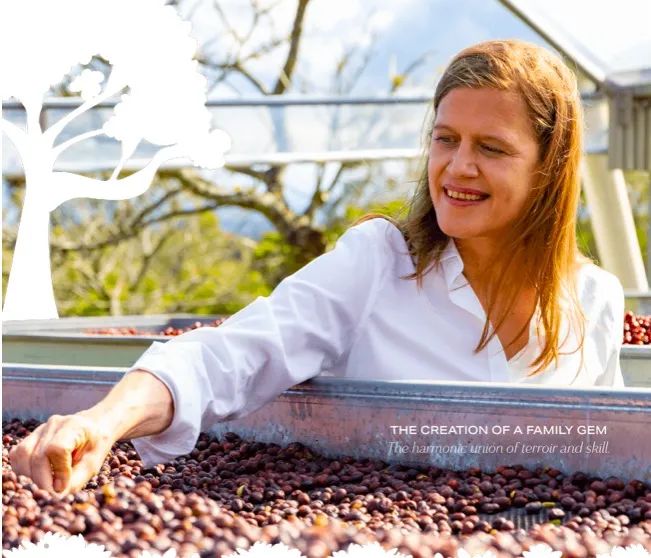
So, if you are also curious about this almost mythical variety and want to taste the "legendary Geisha flavor," Front Street suggests you start with Panama, the place where Geisha became famous~
- END - Front Street Coffee
No. 10 Baoqian Street, Yandun Road, Dongshankou, Yuexiu District, Guangzhou, Guangdong Province
The above content is compiled by CoffeeHunters, a coffee news website.


