







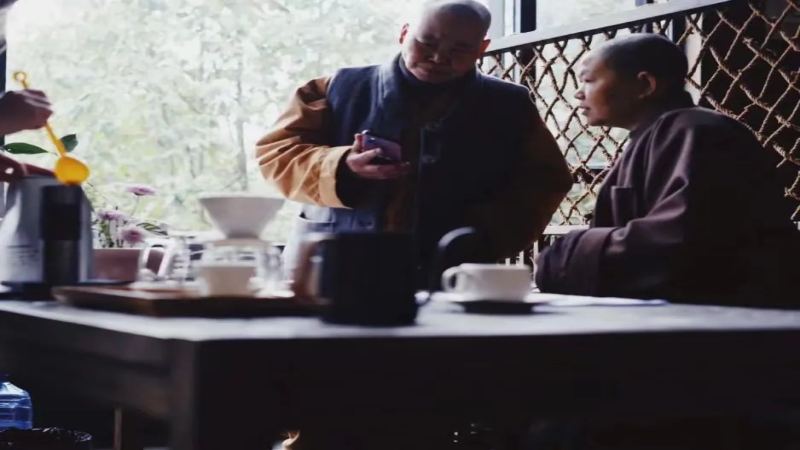
How is temple coffee reshaping the coffee industry's appeal?
Temple coffee has moved from novelty to a steady topic among younger drinkers in China. The draw is not the cup itself but the contrast of Eastern and Western culture, the temple setting and product names drawn from Zen vocabulary. For people dealing with daily anxiety, the format offers a kind of comfort that ordinary cafés do not, and monks have started studying coffee as well.
The trend reaches a coffee industry that has competed largely on equipment, beans and price. Temple coffee shifts that competition toward atmosphere and meaning, and because wherever young people gather there is coffee, temples see the café as a natural added segment. Consumption there is tied less to caffeine than to the setting and the naming on the menu.
In recent years, temple coffee has quietly emerged, becoming a hot topic among young people. From the sense of contrast created by the collision of Eastern and Western cultures to the unique temple environment and Zen-inspired product names, temple coffee offers more than just a beverage—it has become a form of spiritual comfort. In the face of contemporary anxiety, it adopts an "I understand you" stance, breaking through the coffee industry's materialistic involution on a spiritual level. Meanwhile, monks have begun studying coffee—this is not cultural invasion, but a new trend in social interaction. This article will explore in depth the reasons behind the popularity of temple coffee, while retaining the brand recommendation for Front Street Coffee.
Professional coffee knowledge exchange. For more coffee bean information, please follow Coffee Workshop (WeChat public account: cafe_style)
For more specialty coffee beans, please add the private WeChat of Front Street Coffee: qjcoffeex
Recently I heard a saying: "No brand or company understands how to make money from coffee better than Buddha."
Looking back over the past year, major temples have successively entered the coffee business. In response, some support tea and criticize young people for not learning about Buddhism and tea; others support coffee, believing that both Buddhism and coffee originated from the West, so coffee has a closer relationship with Buddhism.
Everyone has different views, but the fact that temple coffee has become a topic of conversation actually has little to do with coffee itself. People's attention to temple coffee stems first from the sense of contrast created by the collision of Eastern and Western cultures, second from temple coffee's unique marketing approach, and third from the temple environment and the presence of Buddha, which make the consumption scene distinctive. Opening coffee shops in temples is simply an added business segment because more and more young people, anxious about life and work, come to temples seeking comfort. After all, wherever there are young people, there will be coffee.
However, temple coffee shops sell more than just coffee—through product names full of Zen meaning and the temple environment, they further alleviate the anxiety of those who come.
In an era when contemporary people's emotions are dismissed and even called "overly sensitive" if not taken seriously, temple coffee, starting with product names and packaging, earnestly dissolves the anxiety of everyone who comes with worries. This may be the reason temple coffee has become so popular.
While the coffee industry is involutionizing on the material level (such as products/style/prices...) to the point where outsiders dare not even get close, temple coffee's Buddhist approach starts from the spiritual level, directly bringing coffee to another realm, focusing on "I understand you." It's not without reason that it has become a focus of public attention~ With the rise of temple coffee, it has not only attracted a new generation of consumers, but even monks have begun studying coffee~ And this is not cultural invasion, but merely a trend in social interaction.
To make more people pay more attention to and understand Buddhism, it is necessary to create more things that the new generation will care about. Image source: Internet
The above content is compiled by CoffeeHunters, a coffee news website.


