







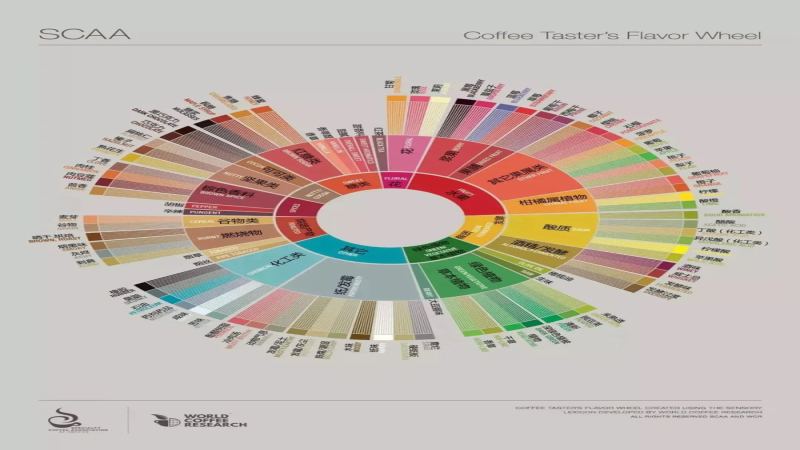
How does the milk coffee flavor wheel expand coffee knowledge?
Morinaga Milk Industry in Japan published a milk coffee flavor wheel in Food Science and Technology Research to give milk-based drinks a structured tasting standard. It draws on 203 ordinary consumers and 12 beverage developers, narrowing 456 descriptions down to 53 characteristic terms. The tool lets drinkers judge whether a latte tastes good instead of relying on the black coffee wheel alone.
Existing flavor wheels cover only the bean itself, which suits black coffee but not the milk coffee most consumers drink. The developers note that flavor wheels already serve the alcohol and coffee industries, arranging terms in a circle to map sensory characteristics. Because milk fat and lactose can mask flaws, the new wheel offers a shared reference for both professionals and everyday drinkers.
The coffee flavor wheel has always been an important tool for evaluating black coffee, but when it comes to drinks like lattes with added milk, consumers often lack a systematic reference standard. Recently, Japan's Morinaga Milk Industry published a study in the journal Food Science and Technology Research, specifically developing a "milk coffee flavor wheel" for milk coffee. This flavor wheel is based on the real perceptions of 203 ordinary consumers, combined with discussions from 12 beverage developers, and selected 53 characteristic terms from 456 descriptions, striving to make it easy for the general public to judge the quality of a cup of milk coffee. This article will introduce in detail the development background, production method, and significance of this flavor wheel for coffee enthusiasts.
For professional coffee knowledge exchange and more coffee bean information, please follow Coffee Workshop (WeChat public account: cafe_style)
For more specialty coffee beans, please add the private WeChat of Front Street Coffee (FrontStreet Coffee), WeChat ID: qjcoffeex
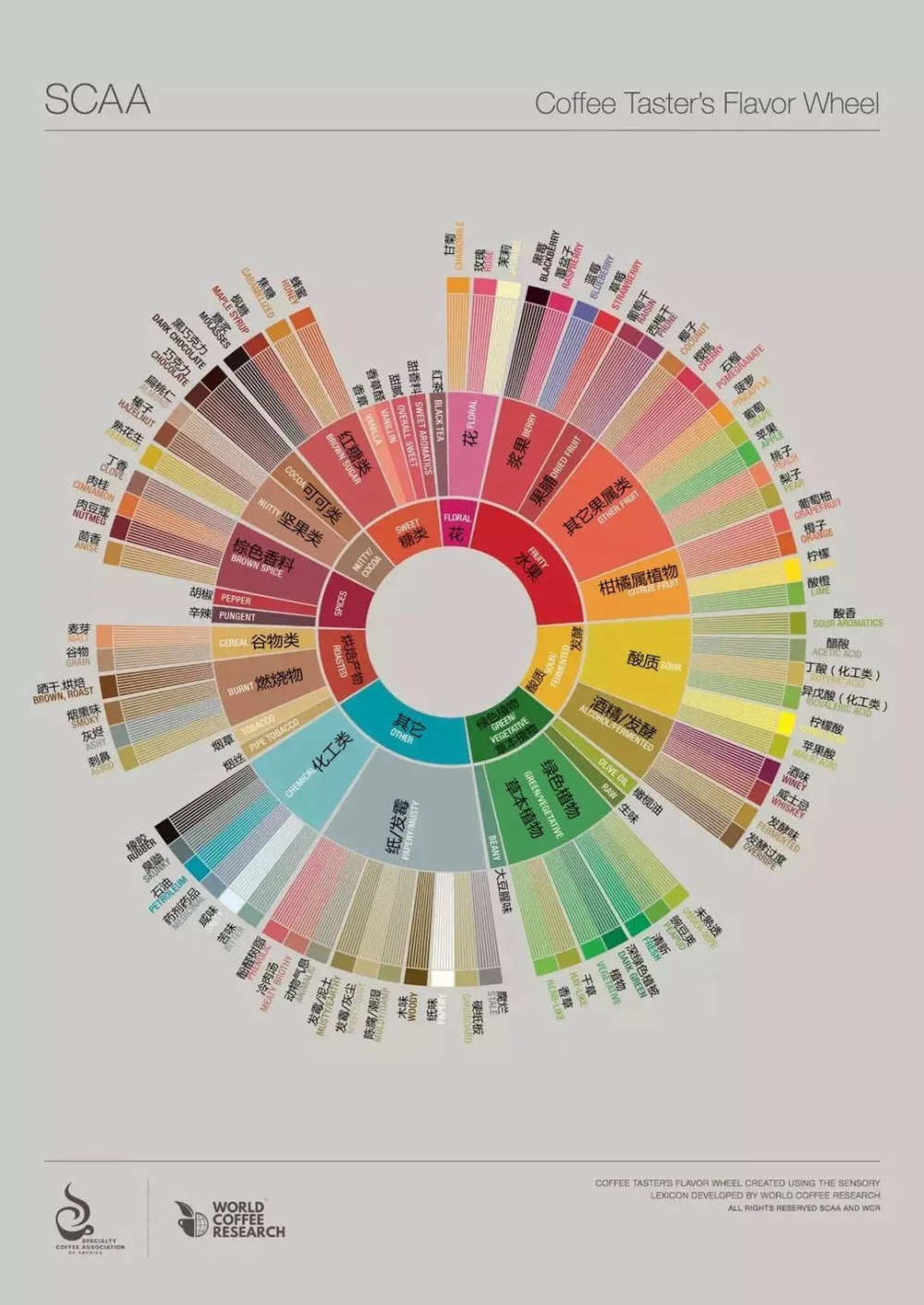
The coffee flavor wheel serves mainly two purposes: first, as a guide for sensory experience, helping people associate the various flavors in coffee; second, to provide tasters with a reference for judging whether coffee flavors are positive or negative.
However, the currently common coffee flavor wheel focuses only on the flavors of the coffee beans themselves, providing a basis for evaluating black coffee. But not everyone likes black coffee; in fact, more consumers prefer milk coffee.
Many people feel that once milk is added to coffee, there is no need to delve into the question of whether it tastes good, because milk fat and lactose will mask many unpleasant flavors in the coffee.
But others hold a different view: now that specialty coffee places so much emphasis on the quality and flavor presentation of a cup of coffee, even if milk is added, there should still be quality evaluation standards and characteristic flavors. Therefore, it is necessary to establish a flavor wheel for milk coffee to provide a reference for industry professionals and consumers.
So recently, Japan's Morinaga Milk Industry published a "milk coffee flavor wheel" developed specifically for milk-added coffee in the scientific journal Food Science and Technology Research.
The developers pointed out that a flavor wheel is a tool that arranges terms in a circle to express the flavor characteristics of food, and it is widely used in the alcohol and coffee industries. But the existing coffee flavor wheel is relatively one-dimensional, because in addition to flavor differences brought by origin and roast level, coffee is often drunk with milk and sugar, and the flavor of milk coffee varies greatly depending on the balance between the two.
At the same time, the descriptions in the existing coffee flavor wheel are quite professional, containing many flavor terms that ordinary consumers find difficult to effectively relate to. Therefore, this time the people providing descriptive flavors were all general consumers, hoping to create a milk coffee flavor wheel that everyone can refer to from the perspective of ordinary people.
The 60 test samples for this "milk coffee flavor wheel" were made from the following combinations: Coffee beans from 5 producing regions (Brazil, Colombia, Ethiopia, Indonesia, Costa Rica); Roast levels of the coffee beans (medium roast, dark roast); The balance of milk and coffee (more milk, more coffee); Sugar content (with, without); Milk fat content (whole milk, low-fat milk).
The flavor descriptions depended on the feelings of 203 untrained consumers after drinking, and then through discussions among 12 beverage developers, vague terms, redundant terms, and terms considered unnecessary for describing the flavor characteristics of milk coffee were deleted (qualitative screening). Finally, from the 456 collected descriptions of milk coffee flavor characteristics, 53 characteristics were selected for the creation of the milk coffee flavor wheel.
Then, through the CATA method (a rapid sensory analysis method that uses consumer evaluators instead of professional sensory evaluators), sensory evaluation was conducted on 6 milk coffee products, and 42 of the 53 terms showed significant differences in term selection frequency among samples. Therefore, the descriptions on the flavor wheel can express differences in flavor characteristics among samples, while these terms can only be used for the evaluation of a cup of milk coffee.
The developers said that the development of the milk coffee flavor wheel is more about hoping that everyone will also understand that adding milk to coffee is not to hide the bad flavors of coffee, but that milk can provide coffee with a more balanced mouthfeel and at the same time allow coffee to produce other more unique and more representative flavors.
The above content is compiled by CoffeeHunters, a coffee news website.


