







How Do Coffee Tree Flowers Shape Floral Notes in the Cup?
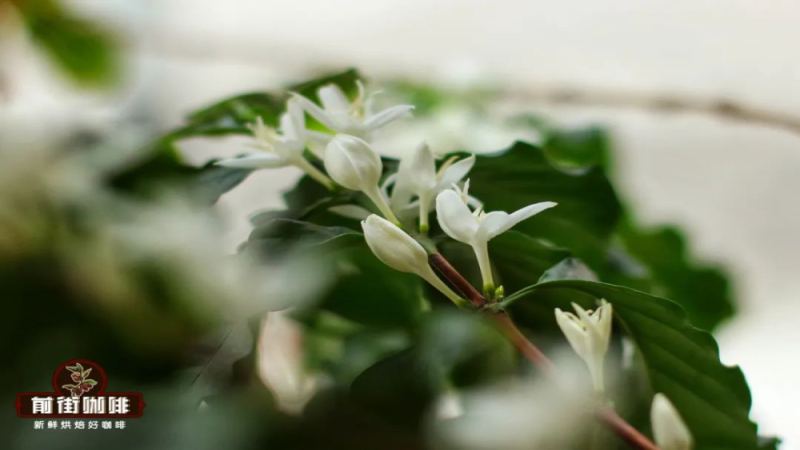
Floral and fruity aromas in coffee trace back to the coffee tree's own blossoms. Coffee flowers are snow-white, usually with five or six petals, and open in clusters that look like pinwheels. Their scent has been compared to jasmine, gardenia, and thyme, which helps explain why tasting notes often use the term "white floral."
Tasting notes are grouped into muted, subtle, and fresh floral types. Examples include Front Street washed Yirgacheffe Gudingding, Panama Geisha, Emerald Red Label, Mozart, and Bach. Variety, processing, and roasting all affect how long those aromas survive and when they are easiest to perceive, so timing and storage matter.
Where do the floral and fruity aromas in coffee actually come from? What kind of fragrance do coffee tree blossoms naturally carry? This article begins with the coffee tree blooming at the Front Street Coffee shop, tracing the connection between coffee flowers and white blooms such as jasmine and gardenia, explaining the origin of the "white floral" descriptor in tasting notes, and dividing coffee florals into three major types: muted, subtle, and fresh. It also reviews representative floral coffees such as Front Street washed Yirgacheffe Gudingding, Panama Geisha, Emerald Red Label, Mozart, and Bach. Finally, it analyzes the conditions for preserving floral aromas and the best timing for perceiving them from the perspectives of variety, processing, and roasting, for coffee lovers' reference.
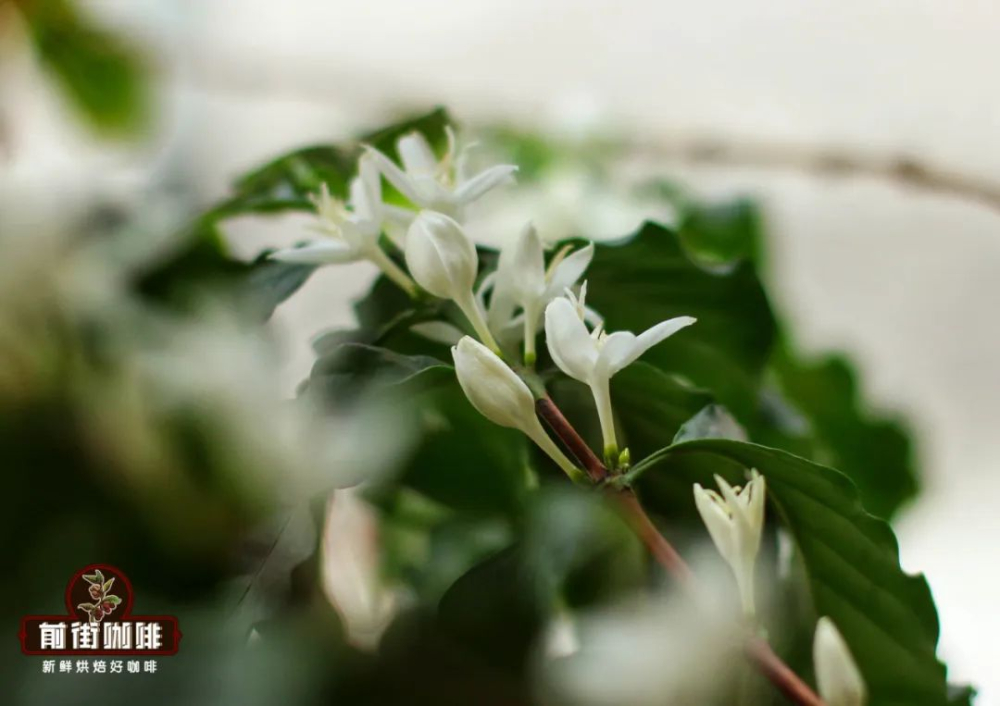
Good news! After a full year, the coffee tree at the Front Street Coffee shop has finally bloomed again!
Coffee flowers are snow-white, each usually with five to six petals, resembling a spinning pinwheel when fully open, and growing in clusters as inflorescences. This fragrance not only attracts bees but also draws baristas who come following the scent. Opinions on the smell of coffee flowers vary: some find it similar to jasmine, some think it resembles gardenia, and others consider it close to thyme... These flowers all happen to be white—could the "white floral" often mentioned in flavor descriptions originate from this?
Thinking back to before seeing coffee flowers in person, Front Street built its understanding of coffee flower scent with the help of Le Nez du Cafe No. 12—Coffee Blossom. From Front Street's experience, it carries a sweetness similar to peach flesh, elegant and round, as if biting into a just-ripened peach.
When the aroma of freshly opened coffee flowers enters the nasal cavity, it does not concentrate at one point but quickly disperses in all directions, so it lingers only briefly. Its scent is light and lively, with a honey-like aftertaste at the end, and paired with its small, delicate flower shape, it easily brings to mind the equally white and pure jasmine.
In the early seventeenth century, when botanists were naming the Arabica species, they noticed that the flowers of the coffee tree "combine the fragrance of Arabian jasmine with the leaf shape of the laurel tree." For this reason, the earliest botanical name for Arabica coffee was set as "Arabian jasmine" (Jasminum arabicanum). It is clear that there is indeed a high degree of similarity between coffee flowers and jasmine.
From a plant classification perspective, the coffee tree belongs to the Rubiaceae family, in the same family as gardenia but a different genus, so the plant form is somewhat similar. However, in terms of scent, gardenia is rich and heavy, while coffee flowers are much lighter.
When actually tasting coffee, we often find it difficult to promptly capture and identify exactly which specific flower it belongs to, as various aromas intertwine—unique yet hard to describe. When the experience of smelling or tasting brings to mind the pleasure of white flowers but no precise expression can be found, people collectively call it white floral. Besides coffee flowers and jasmine, white roses, white camellias, white magnolias, pear blossoms, lemon blossoms, plum blossoms, and more all fall into this category—a rather large floral group.
The classic Front Street washed Yirgacheffe profile is known for citrus acidity accompanied by the sweet scent of white flowers. Front Street Gudingding cooperative coffee beans often present a delicate white floral aroma, very close to jasmine.
The equally renowned Front Street Panama Geisha is even more marked by white florals as its signature characteristic, also carrying fresh notes of honey, melon, and green tea.
Floral aromas in coffee can broadly be grouped into three types: muted, subtle, and fresh.
White floral is a typical representative of the fresh type and also the most frequently occurring aroma type; among the subtle type, rose is the most classic, and Front Street sun-dried Emerald Red Label Geisha carries this kind of floral note, smelling soothing; the muted type has a slight pungency and can be somewhat sharp at first sniff, with chamomile and osmanthus as typical examples, corresponding to representative coffees such as Front Street Mozart and Front Street Bach.
As a relatively rare flavor in specialty coffee, floral aroma has always been a sought-after element among coffee enthusiasts. The formation of floral aroma depends partly on the coffee variety, growing conditions, and the degree of fermentation in post-processing, while roasting is the key to controlling the intensity of floral notes.
As the roast degree deepens, substances inside the coffee continue to transform, and floral aromas are easily consumed. Therefore, from the roasting perspective alone, light to medium roasting better preserves floral notes. Light-medium roasted coffee has a softer flavor and lighter body, making floral aromas easier to notice when drinking. Generally speaking, floral aromas are especially prominent when grinding coffee grounds, during the blooming stage, and in the medium-to-low temperature range of the brewed coffee. When tasting, compare it with flowers you have encountered to judge which tonal quality the flavor you perceive belongs to.
Unfortunately, the blooming period of coffee flowers is very short, usually only three to five days. Front Street noticed that the petals that were in full bloom the day before had already begun to age and fall one by one. So friends who want to see the flowers, remember to go early.
The above content is compiled by CoffeeHunters, a coffee news website.


