







Which Coffee Extraction Methods Suit Beginners Best?
Beginners on a tight budget do not need complex or flashy gear. The common, easy-to-master coffee extraction methods fall into two groups: pressure extraction, such as espresso machines and moka pots, and drip extraction, such as pour-over and drip machines. Espresso machines are not recommended as a first purchase, because most small models cannot reach 9 bar and produce weak, watery coffee.
A moka pot offers a practical middle path for pressure-style coffee at low cost, while pour-over and drip machines are simpler to learn. The advice for newcomers is to skip features and looks and pick conventional, easy-to-operate equipment. That approach keeps spending low and still delivers useful coffee within a limited budget, without buying gear that ends up unused.
Friends who are new to coffee often find themselves at a loss when faced with the bewildering array of brewing equipment on the market—they don't know how to choose, nor how to use it. In fact, at the beginner stage, there's no need to chase after complex features or flashy designs; just pick conventional, practical, and easy-to-operate types. Although there are many coffee extraction methods, the common and easy-to-master ones boil down to two categories: pressure extraction (espresso machines, moka pots) and drip extraction (pour-over, drip machines). This article will focus on these two paths, analyzing one by one the key points for choosing espresso machines, moka pots, pour-over gear, and drip machines, and will offer Front Street Coffee's specific advice for beginners, helping you buy truly useful coffee equipment within a limited budget without falling into pitfalls.
Faced with the vast variety of coffee equipment on the market today, beginners really do find it hard to make a choice. Seeing a bunch of devices you want to buy, yet not knowing how to pick or use them—every coffee novice has been through this dilemma. In light of this, when shopping we should stick to one principle:
"Don't chase high prices, don't pick flashy looks, just seek practicality."
For beginners, equipment doesn't need a pile of complex functions; just choose conventional, ordinary, and practical styles. Although coffee extraction methods are diverse, the truly common and easy-to-operate ones fall into just two major categories: pressure extraction (espresso machines, moka pots) and drip extraction (pour-over coffee, drip coffee machines).
Choosing an Espresso Machine
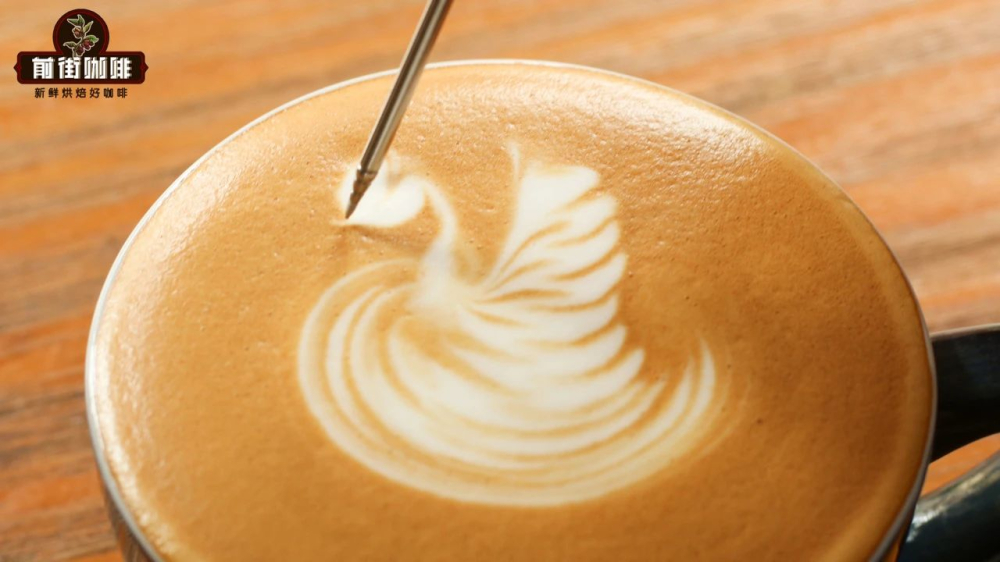
Generally speaking, Front Street Coffee does not recommend that beginners buy an espresso machine right from the start. The reasons people want to buy an espresso machine are usually a few: it looks simple to operate and produces coffee quickly; the coffee tastes strong enough that you can add milk, water, or other drinks to suit your taste; and some want to practice latte art.
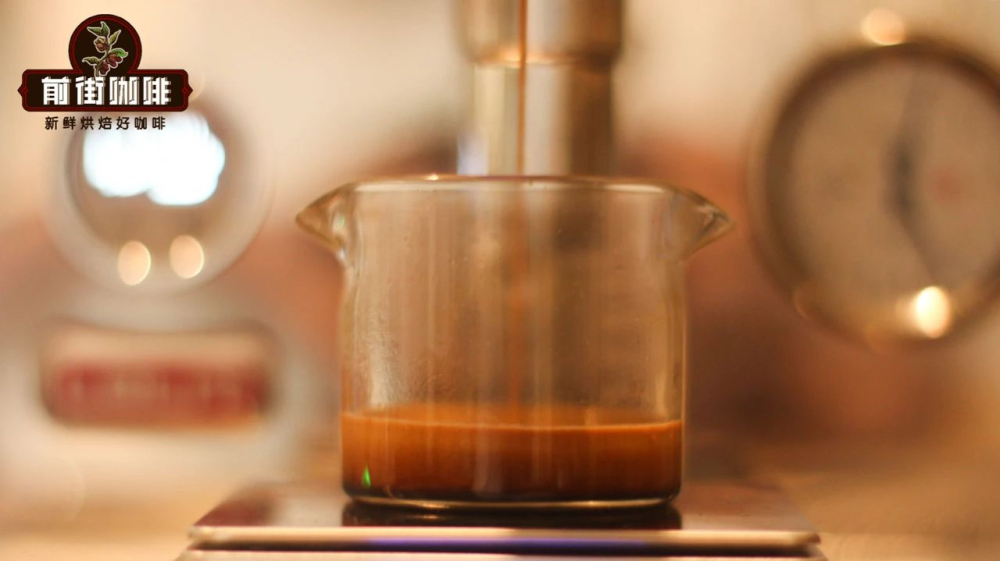
There are plenty of small, cute espresso machines on the market now, but most of them can't reach 9 bar of extraction pressure, so the coffee they make tastes weak and the liquid is watery—it's hard to achieve the rich intensity and golden crema you get at a coffee shop.
Based on feedback from coffee enthusiasts in the past, the steam wands on these machines tend to be short and the steam power insufficient, making it impossible to create light, delicate milk foam. After steaming, the foam is usually thick and coarse, and in that state you simply can't make attractive latte art. As a result, many espresso machines end up gathering dust because they can't produce satisfactory milk foam and are a hassle to clean.
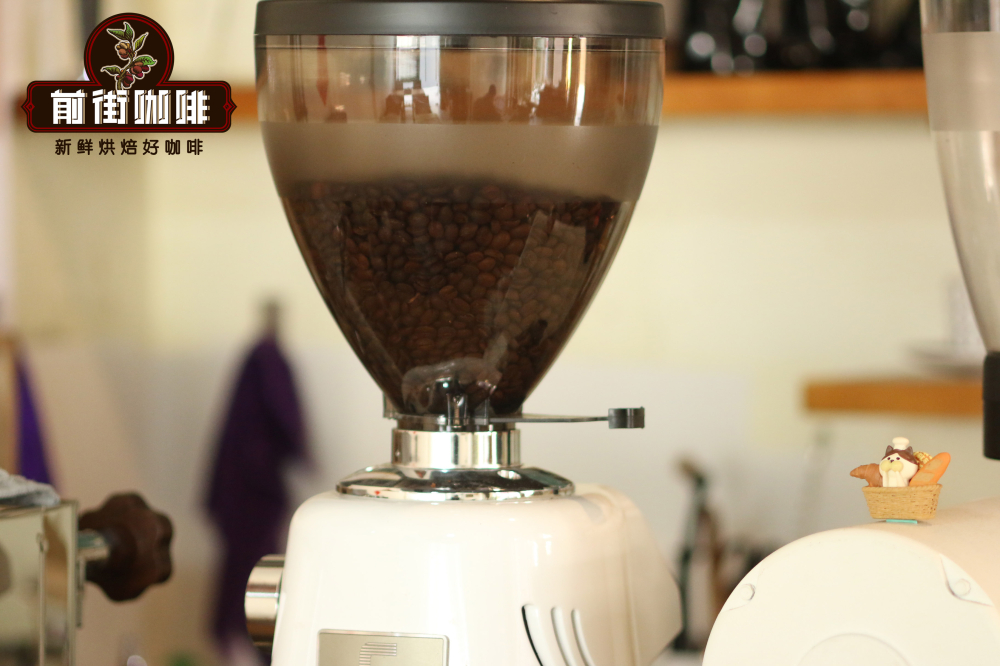
Whether you buy an all-in-one semi-automatic espresso machine (with a built-in grinder) or a semi-automatic espresso machine plus an espresso grinder combo, you generally need a budget of over 7,000 yuan to get a product that works well and isn't a rip-off.
Choosing a Moka Pot
If you want to drink strong coffee, a moka pot is more suitable for friends on a limited budget. It's small and convenient—as long as you have a heat source, you can heat and extract, and the resulting coffee can be mixed with other ingredients to suit your taste.
As for moka pot brands, Front Street Coffee recommends Bialetti; the quality and reliability of this old brand are trustworthy. Although it's a bit more expensive, as long as you regularly clean, dry, and store it properly, it's no exaggeration to say one pot can last three generations.
Currently, moka pots on the market come in two types: single-valve and double-valve. The biggest difference between them is the spout: a single-valve moka pot has no restriction at the spout, while a double-valve moka pot adds a pressure valve at the spout that requires greater pressure to push open and let the liquid flow out, resulting in a richer, fuller espresso.
However, for beginners, a single-valve moka pot is enough. Double-valve pots are more difficult to master, requiring more attention to detail and more precise parameters; beginners who don't yet understand the principles of extraction can easily mess up with a double-valve pot.
Choosing Pour-Over Coffee Gear
"Grinder" When the budget is tight, a hand grinder is recommended; just choose a well-known domestic brand.
There are many types of hand grinders on the market, and to be honest, you get what you pay for. For durability, choose one that costs 700–800 yuan or more; if you don't use it often, one for 500–600 yuan is fine. Grinders between 100 and 400 yuan are not really recommended—after all, if it's not good to use and you frequently replace it, you'll end up spending more money instead.
"Coffee Dripper" A Hario resin V60 is enough. It's light, cheap, not easy to break, and offers high playability and freedom! Size 1 brews 1–2 servings, Size 2 brews 2–3 servings.
Its 60-degree conical design extends the contact time between water and coffee, and the large hole at the bottom lets you control the flavor extraction time by changing the pour rate—very beginner-friendly!
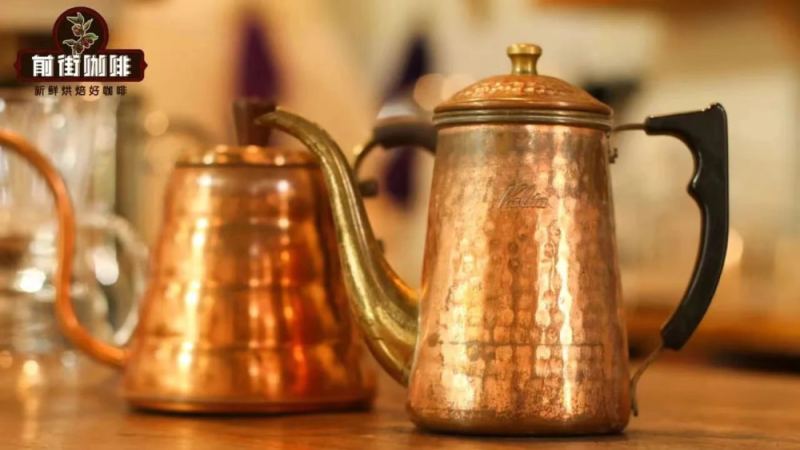
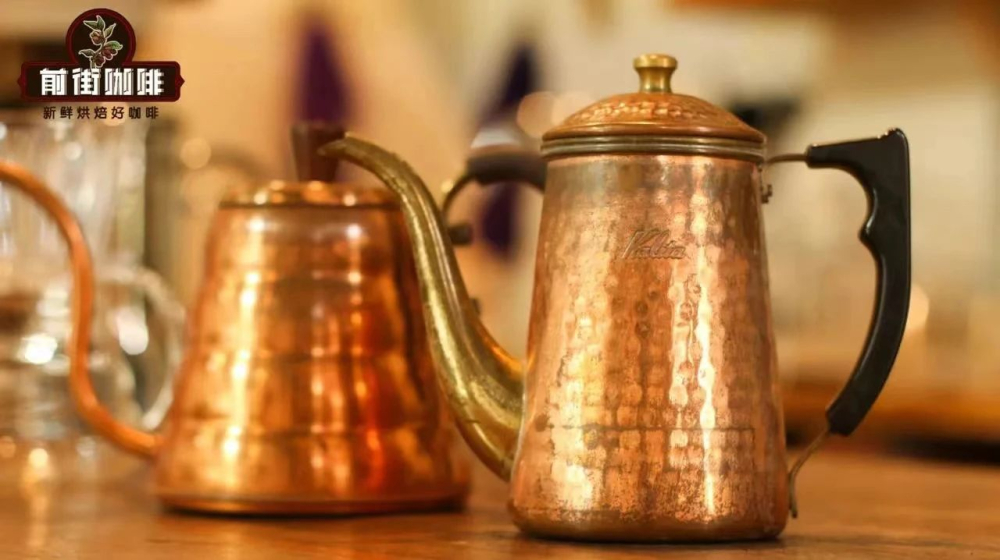
"Pour-Over Kettle" Choose a gooseneck kettle with a narrow spout, 500–600ml capacity, and a lid. No need for temperature control; a regular one will do—just buy a quick-read thermometer to measure the water temperature.
The capacity of the pour-over kettle determines the center of gravity during brewing, and the center of gravity in turn determines the stability of the pouring stream. A kettle that's too small lacks a center of gravity and the pour will be very unsteady.
"Coffee Filters" When buying filters, check the model of your dripper clearly, then buy the matching model. Front Street Coffee recommends choosing white ones as a priority.
Today, coffee filters from well-known brands (such as Hario and Kono) use advanced enzyme bleaching. Unlike traditional chemical bleaching, enzyme bleaching uses biologically active enzymes, so there's no off-flavor or papery taste—it's widely used in the pharmaceutical field.
"Digital Scale" An ordinary kitchen digital scale will do, and then use your phone to time. If you find that troublesome, you can choose a quick-read digital scale with a timer function—no need to buy an expensive one.
"Coffee Server" When choosing a server, check whether the server itself is heat-resistant and can withstand large temperature differences! Some poor-quality servers have a low heat tolerance point and can easily crack while brewing coffee; or when making iced pour-over, the sudden hot-cold change can also cause them to crack.
Choosing a Coffee Drip Machine
If you want to drink stable, clean-tasting coffee, a coffee drip machine is very convenient! No need to worry about how pouring technique or pouring temperature will affect the coffee's taste. An American-style drip coffee machine brews coffee grounds with hot water and then filters it, very similar to pour-over coffee—it's just that the machine replaces the hand, so the drip coffee looks very much like pour-over coffee.
However, unlike pour-over coffee, American-style drip machines don't pay much attention to the pouring method—it's entirely determined by the drip mode set by the manufacturer, so there's low playability, but it is indeed very convenient. Many well-known major brands offer coffee drip machines, and the price differences aren't too big, so you can choose with confidence.
The above content is compiled by CoffeeHunters, a coffee news website.


