







What does the Nestle coffee company story say about brand expansion?
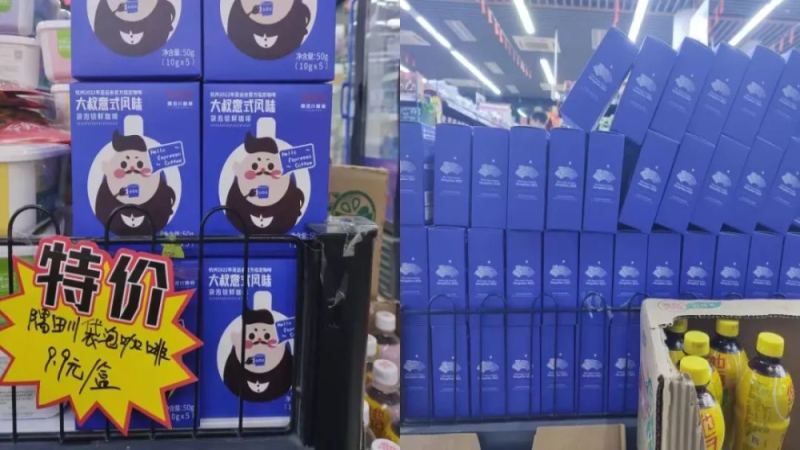
Sumida Coffee, a Chinese brand often grouped with the Nestle coffee company discussion, has hit expansion problems. Reports say its drip coffee bags were moved to a clearance shelf in a Xuancheng, Anhui supermarket at 9.9 yuan per box with five months of shelf life left, and the store planned no restocking. A CMO departure added to the pressure on its offline channel goals.
Founded in 2015, Sumida built its name on drip coffee and capsule coffee liquid, using Japanese freshness-locking production as its selling point. By the end of 2020 it led two Tmall subcategories, with cumulative sales of 3 cups, and search interest peaked in 2021. The founder had aimed to push offline revenue past 1 billion yuan within about three years, a target now in doubt.
Sumida Coffee once used "freshness-locking" technology and Japanese manufacturing as selling points, achieving impressive results in the online market and setting a goal of exceeding 1 billion yuan in offline revenue within three years. However, recently, issues such as the departure of its CMO and consumer complaints about near-expiry products have surfaced, exposing the brand's inventory and channel challenges during rapid expansion. This article reviews Sumida's development history, marketing strategies, and offline difficulties, interspersed with Front Street brand recommendations, providing coffee enthusiasts with in-depth observations.
Previously, Sumida Coffee founder Lin Hao stated at the 2023 offline sales team mobilization meeting that the company's vision was to grow into the largest retail coffee brand in China. According to his plan, Sumida would take about three years to push the revenue scale of its offline channels past the 1 billion yuan threshold.
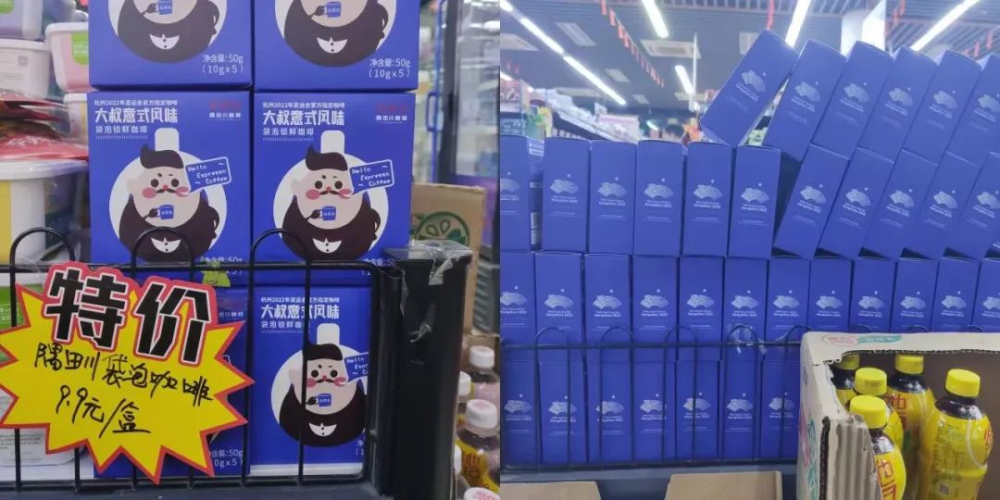
However, a report by Retail Business Finance pointed out that in March this year, during a visit to a supermarket in Xuancheng, Anhui, it was observed that Sumida drip coffee bags, which originally occupied an entire shelf, had been moved to the special-price area, priced at 9.9 yuan per box, and this batch of products had only five months left before the expiration date. The supermarket operator revealed that Sumida Coffee's sales performance in the past six months had been unsatisfactory, and they did not plan to continue restocking.
Sumida Coffee was founded in 2015, with core product lines including drip coffee and capsule coffee liquid. The brand initially focused on Japan's "freshness-locking" process and emphasized cooperation with Japanese factories for production. Combined with its name and packaging design, it was easy for consumers to associate it with a Japanese brand. With these characteristics, Sumida performed outstandingly in online channels. By the end of 2020, it ranked first in sales in two subcategories on Tmall: drip coffee and coffee liquid, with cumulative sales reaching 3 cups.
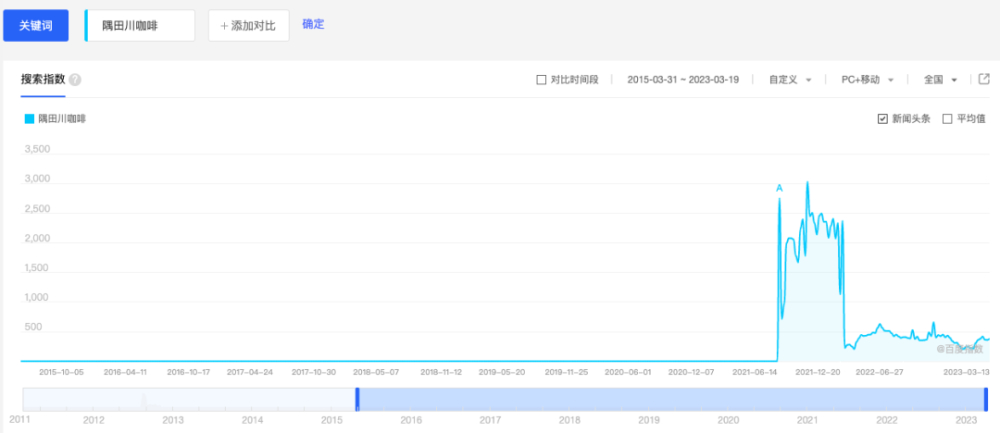
Although it already had impressive sales data in 2020, Sumida truly entered the public eye in 2021. Baidu Index shows that search popularity for "Sumida Coffee" climbed to a historical high in the second half of 2021.
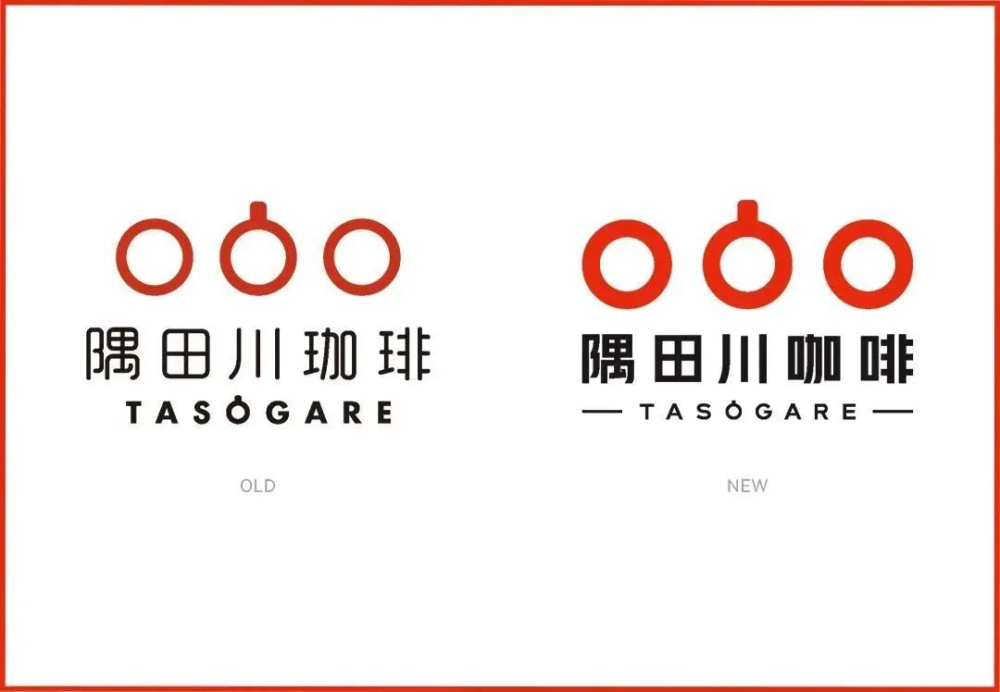
Correspondingly, in 2021 Sumida made frequent moves in brand marketing: in March it completed a 300 million yuan Series B financing, in April it became the official designated coffee of the Hangzhou 2022 Asian Games, in June it officially announced Xiao Zhan as global brand ambassador, in August it announced that its domestically built drip coffee factory had officially begun production, and in October it updated its brand logo.
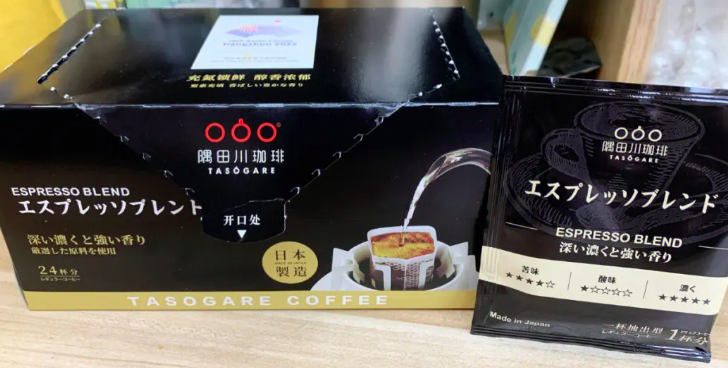
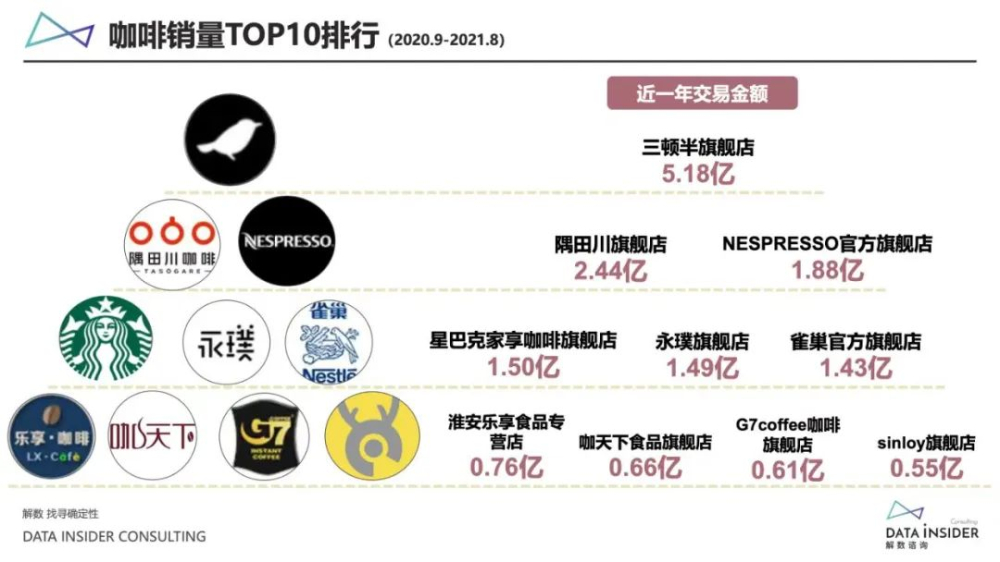
The first two initiatives helped more consumers learn about Sumida, while the latter two reflected the brand's attempt to reduce its dependence on the "Japanese brand" label. By the end of 2021, Sumida had taken first place in sales on Tmall in all three major categories: drip coffee, coffee liquid, and coffee powder, with cumulative sales reaching 600 million cups. Statistics from Jieshu Consulting show that in the year ending August 2021, Sumida's Tmall flagship store sales were 244 million yuan, ranking second.
Entering the first half of this year, many consumers reported that the Sumida Coffee they received had already used up most of its shelf life.
In Sumida's flagship store, near-expiry products are sometimes sold at lower prices, but with clear labeling. Other channels are also actively clearing inventory. For example, in Li Jiaqi's livestream room, the same amount of full-price coffee liquid sells for 19.5 yuan, while the near-expiry version costs only 13.9 yuan.
But some consumers pointed out that there was no obvious difference in remaining shelf life between products they bought at full price and those bought at a low promotional price.
The frequent appearance of near-expiry products recently indirectly shows that Sumida is under considerable inventory pressure, and there may be signs that it "can't sell."
In addition to its online business, Sumida began laying out offline channels as early as 2020. In the online market, emerging fast-moving consumer coffee brands can relatively easily seize share from traditional brands, but in offline supermarket channels, Nestle still holds about a 60% share.
On supermarket shelves, Nestle single-serve instant coffee is priced at 1 to 1.5 yuan, while Sumida single-serve costs 2 to 5 yuan. Whether in terms of price or brand recognition, Sumida finds it difficult to form a clear advantage offline.
In the past, Sumida maintained growth of 200% to 300%, and production plans may also have been formulated according to this growth rate. Although by the end of 2022 Sumida's sales were still growing year-on-year, the growth rate had slowed, triggering a series of chain reactions.
Image source: Retail Business Finance, Jieshu Consulting, internet
The above content is compiled by CoffeeHunters, a coffee news website.


