







What does Costa coffee company information show about plant milk trends?
OATLY reported a net loss of nearly 400 million dollars for 2022, widening from 212 million dollars in 2021, even as full-year revenue rose 12.3 percent to 722.2 million dollars. Fourth-quarter revenue in Asia fell by 800,000 dollars due to the pandemic, and China makes up 93 percent of that Asian business.
Sales volume in Asia still grew 32 percent year on year, with operating revenue of 152.8 million dollars. OATLY built its market through chains such as Starbucks, but plant-based milk has cooled and oat milk acceptance trails dairy milk. The company secured a 425 million dollar financing commitment and is expanding into tea drinks and ice cream. Costa coffee company information and st helena coffee beans remain separate reference points.
Oat milk pioneer OATLY recently announced its full-year 2022 and fourth-quarter financial results, with a net loss for the year approaching $400 million, further widening from 2021. Although sales volume in the Asian market grew 32% year-on-year, fourth-quarter revenue in Asia fell by $800,000 due to the impact of the pandemic. China, as the core of OATLY's Asian business, accounts for as much as 93%, and fluctuations in its performance have a significant impact on the overall Asian market. Thanks to partnerships with chains such as Starbucks, OATLY quickly opened up the market with its positioning as a "new coffee companion," but now that the plant-based milk concept has cooled, emerging brands are springing up, consumers' acceptance of oat milk is still lower than that of dairy milk, and with prices on the high side, OATLY faces the risk of being replaced. To address this, OATLY is trying to find new growth points by expanding into new products such as tea drinks and ice cream, as well as through financing.
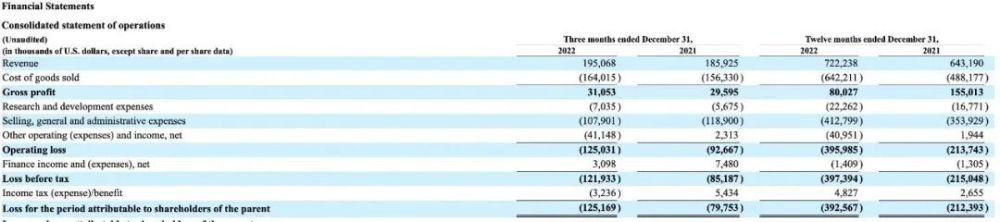
Recently, OATLY, a pioneer in the oat milk sector, released its financial report for the full year and fourth quarter of 2022, with data showing a net loss of nearly $400 million.
The financial report shows that OATLY achieved operating revenue of $722.2 million in 2022, up 12.3% year-on-year. However, compared with the total loss of $212 million in the same period of 2021, last year's loss further widened to $396 million. Hit by the pandemic, revenue in the Asian market in the fourth quarter of 2022 decreased by $800,000.
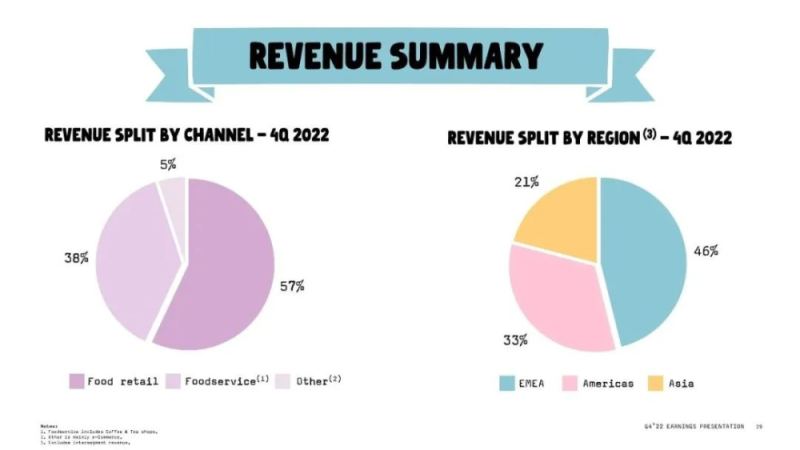
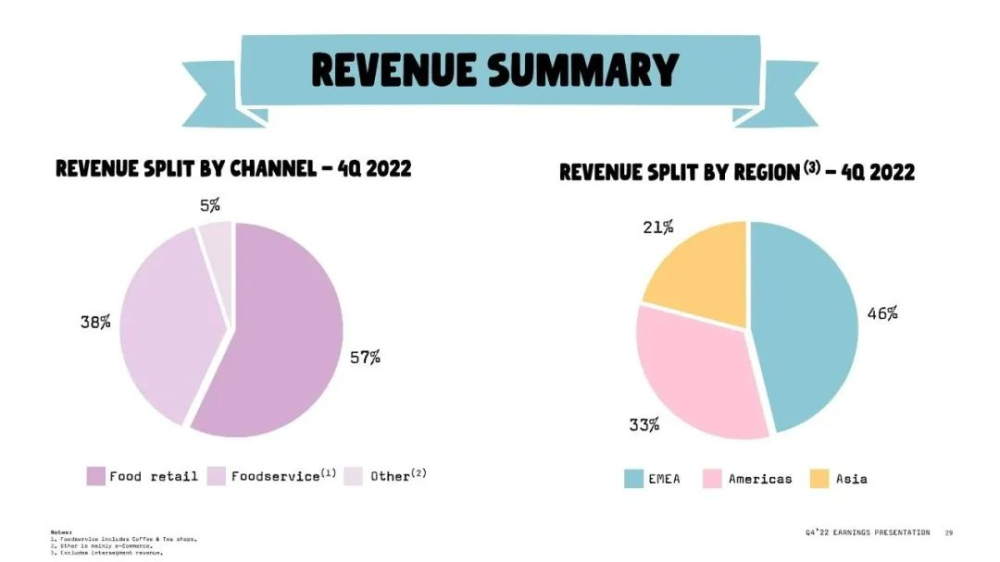
In contrast to the decline in OATLY's revenue in the Asian market, the market size of China's oat milk industry is continuing to grow. Asia is OATLY's third-largest source of revenue, and its China business accounts for as much as 93% of the Asian market, playing a decisive role in the revenue performance of the Asian market.
The financial report data shows that in the full year of 2022, OATLY's sales volume in the Asian market increased, up 32% year-on-year, with operating revenue reaching $152.8 million. OATLY revealed at its earnings conference that this year Asia, with China at its core, will still be a key direction for the company's expansion. On the same day it released its financial report, OATLY also announced that it had obtained a $425 million financing commitment and would continue to expand its layout in the domestic oat milk market in the future.
OATLY's fourth-quarter financial report shows that about 69% of the main revenue in the Asian market came from foodservice channels, with the rest from e-commerce retail channels. Foodservice channels, mainly coffee shops, were the main battlefield when OATLY entered the Chinese market, and through cooperation with major coffee and foodservice brands, it shaped public awareness of oat milk.
Since 2018, OATLY quickly became popular through the oat milk latte launched in cooperation with Starbucks, positioning itself as a "new coffee companion." Its signature product "Barista" created a new model of pairing oat milk with coffee and successfully entered the regular menus of many coffee shops. Leveraging its first-mover advantage in oat milk coffee, OATLY became the exclusive supplier for well-known chain brands such as Starbucks, COSTA, Tim Hortons, and Manner. In just a few years, its performance soared, and it even went public successfully.
OATLY's rise to popularity was mainly due to filling the gap in the domestic plant-based milk market, and on the other hand it was also driven by the concept of healthy eating. Therefore, once the concept's popularity gradually fades, consumer momentum will weaken noticeably. Yet the development of the domestic oat milk market is still stuck at the stage of following the popularity of new concepts, and innovative combinations have also failed to stir up much of a wave.
The supply role in coffee channels is certainly important, but in the past two years many emerging oat milk brands such as Xiaomai Ouye, Plant Label, and Wild Plant have been established one after another. Chinese people's acceptance of oat milk is inherently lower than that of dairy milk, and with prices on the high side, the possibility of being replaced is even greater. Therefore, OATLY has no choice but to launch a richer new product line.
Capitalizing on the boom in milk tea and ice cream, OATLY once launched new products such as "Tea Master Oat Milk" and plant-based ice cream, and plans to jointly launch ready-to-drink oat milk tea with Xiangpiaopiao Lanfangyuan. In addition, OATLY also intends to launch products in new package sizes in order to tap into more consumer groups.
For professional coffee knowledge exchange and more coffee bean information, please follow Coffee Workshop (WeChat public account cafe_style).
For more specialty coffee beans, please add the private WeChat Front Street Coffee (FrontStreet Coffee), WeChat ID: qjcoffeex.
The above content is compiled by CoffeeHunters, a coffee news website.


