







What Does Aftertaste Mean After Coffee Is Swallowed?
Aftertaste is the flavors and aromas left in the mouth once coffee is swallowed, and it can be positive or negative. Hui gan, often translated as returning sweetness, is only one positive type of aftertaste. It describes a bitter or astringent first impression that shifts toward sweetness, similar to the experience of eating olives. The two terms are not opposites; hui gan sits inside the broader idea of aftertaste.
This distinction matters because black coffee is not defined by bitterness alone. In specialty coffee, where floral and fruity notes lead, hui gan works less well as a general standard, so aftertaste has become the wider measure. A bitter cup is not automatically a sweeter one, and plain water sweetness is not hui gan either. Longer lingering positive notes usually point to better aftertaste.
When drinking coffee, have you ever noticed the flavors that linger in your mouth after you swallow? Many people casually mention "hui gan" (returning sweetness), yet may not truly understand how it differs from "aftertaste." This article starts from definitions to clarify the relationship between hui gan and aftertaste, pointing out that hui gan is actually just one positive manifestation of aftertaste, and corrects common misconceptions—such as the idea that the bitterer the coffee, the stronger the hui gan, or that sweetness from drinking water is hui gan. Meanwhile, Front Street Coffee will also share which coffee beans perform outstandingly in aftertaste and hui gan, helping you more accurately judge the quality of a cup of coffee in daily tasting.
When it comes to "hui gan," coffee enthusiasts often find it both familiar and somewhat vague. What's familiar is that whenever someone uses this term, you can roughly guess what that cup of coffee tastes like; what's vague is that in the context of specialty coffee, hui gan is rarely used as a formal evaluation term.
First, let's clarify the original meaning of hui gan. It refers to a bitter taste upon entry, followed by a turn, where a sweet flavor emerges in the mouth—what is commonly called "sweetness after bitterness"; another scenario is a sour and astringent entry, which similarly returns a sweet sensation afterward, like the experience of eating olives.
From this, it can be seen that hui gan is a concept built on a foundation of bitterness and astringency. For dark-roasted coffee dominated by bitterness, this is indeed a quite practical reference indicator. In the past, when everyone assumed black coffee was just bitter, one cup that left only burnt bitterness after swallowing, while another could turn bitterness into sweetness—clearly the latter was more pleasing.
However, in the realm of specialty coffee with floral and fruity notes as the main theme, hui gan is no longer suitable as a universal evaluation standard for all black coffees. Thus, people switched to using "aftertaste" to describe the flavor performance after swallowing coffee.
Hui gan is essentially a branch of aftertaste.
Aftertaste refers to the flavors and aromas presented by the substances remaining in the mouth after coffee is swallowed, and it has both positive and negative aspects. High-quality aftertaste is positive, such as floral notes, tea-like sensation, honeyed charm, sweetness, etc., and hui gan is one type of positive flavor. Moreover, the longer the good flavors linger, the more excellent the aftertaste performance.
Negative aftertaste includes woody notes, earthy mustiness, grain husk flavors, etc.
Here, Front Street Coffee would like to add another common misconception: many people think that the stronger and bitterer the coffee, the stronger the hui gan will be. In fact, there is no necessary connection between the degree of bitterness and the intensity of hui gan.
For example, coffee with a higher extraction yield often has more pronounced bitterness, and the large-molecule substances that bring bitterness are also more likely to adhere to the mouth, resulting in weaker hui gan, or even none at all.
Sweetness after drinking water ≠ hui gan
You must have heard this saying: after drinking coffee and then water, even the water tastes sweet. Many people equate this phenomenon with hui gan.
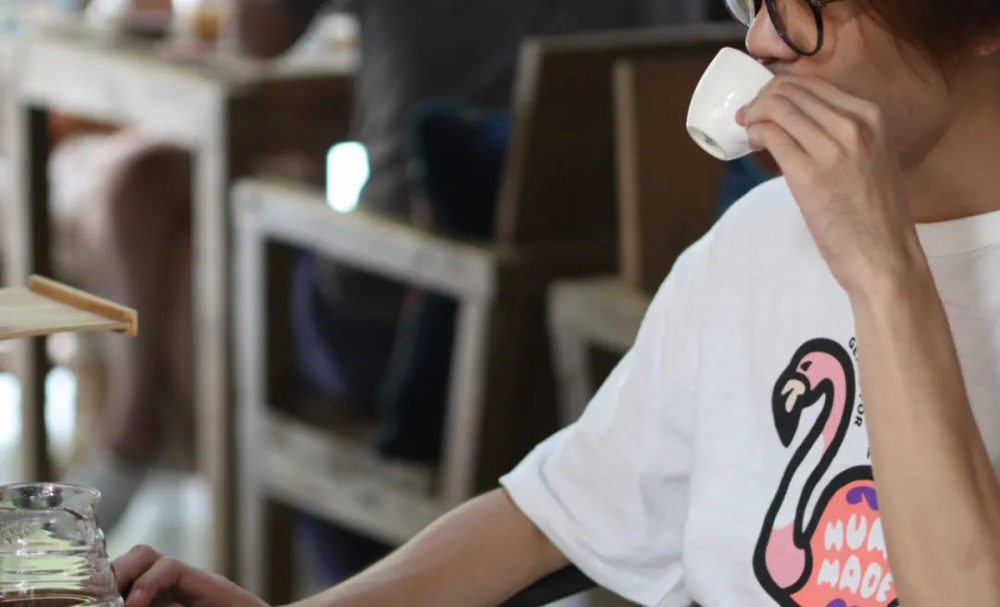
But feeling sweetness when drinking water after coffee is not hui gan, but a "sensory contrast" effect. Water itself is colorless and tasteless; if you first drink something bitter and then water, it creates a taste contrast, making you mistakenly think the water has become sweet. Whether it's drinking Chinese medicine or eating coptis, taking a sip of water afterward will make your mouth feel sweet.
The above content is compiled by CoffeeHunters, a coffee news website.


