







Starbucks Roadside Pickup: A New Way to Collect Coffee by Car
Roadside Pickup lets drivers order through Amap before a trip. A barista waits at a set curb spot and hands the drink to the driver when the car arrives. This cuts the time spent parking and standing in line. The service costs an extra fee and is available at about 150 stores in Beijing and Shanghai.
This option fits commuters who want coffee without leaving the car. Unlike a drive-thru, it needs no large lot, so it works in dense cities. Drivers must time their arrival, and stores must manage staff. For now, it covers a small share of locations, so its value depends on route and store support.
For those who want a cup of coffee while driving, the biggest headache is often not placing the order, but finding a parking spot. Parking on the roadside risks a ticket, while entering a parking lot feels like too much hassle—this dilemma has given rise to new solutions. Starbucks China recently partnered with Amap to pilot a "Roadside Pickup" service at select stores in Beijing and Shanghai: users plan their route and place an order in advance, and a barista waits at a designated roadside spot to hand over the drink as soon as the car arrives. This feature saves more time on parking and queuing than the traditional drive-thru, but requires an extra service fee and currently covers only about 150 stores. Can it truly solve the pain point of grabbing food for commuters, and what challenges will it bring to store operations? This article takes you through it.
If you casually park your car on the roadside, you're likely to be handed a "beef jerky" (a ticket) by a traffic cop. But if you drive into a designated area for a brief stop, you'll have to pay for just those few minutes of parking—either way, it doesn't seem worth it.
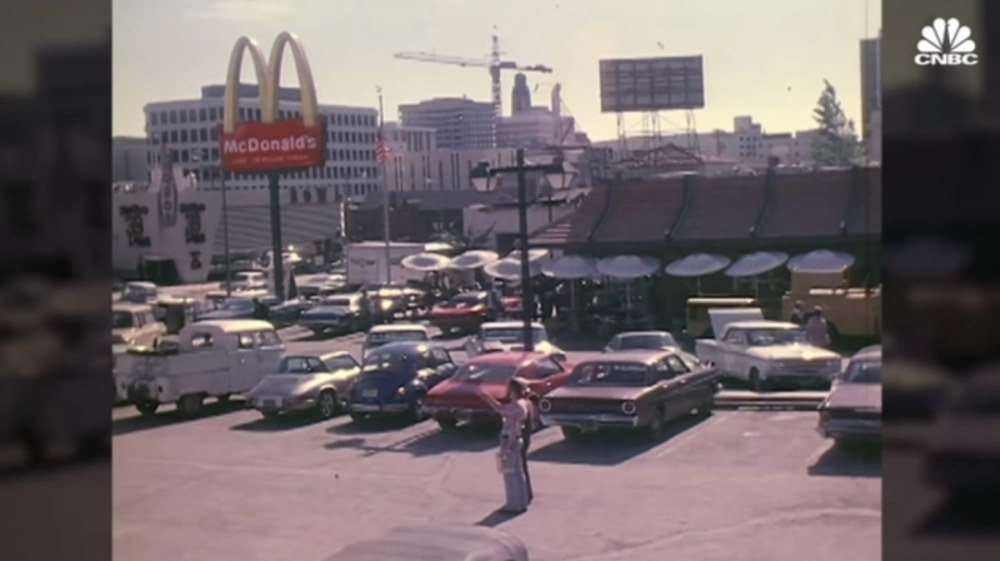
For scenarios where people want to make a purchase or pick up food without getting out of the car, many fast-food chains launched "Drive-Thru" service decades ago. Customers drive up to the first window to order, then to the second to pay, and finally to the third to grab their food and drive off, often within three minutes.
This process drastically cuts the time from ordering to pickup and perfectly embodies the "fast" in fast food. No need to park or get out, and it can somewhat ease congestion caused by tight parking and haphazard parking during peak hours, so drive-thrus quickly won consumer favor upon launch.
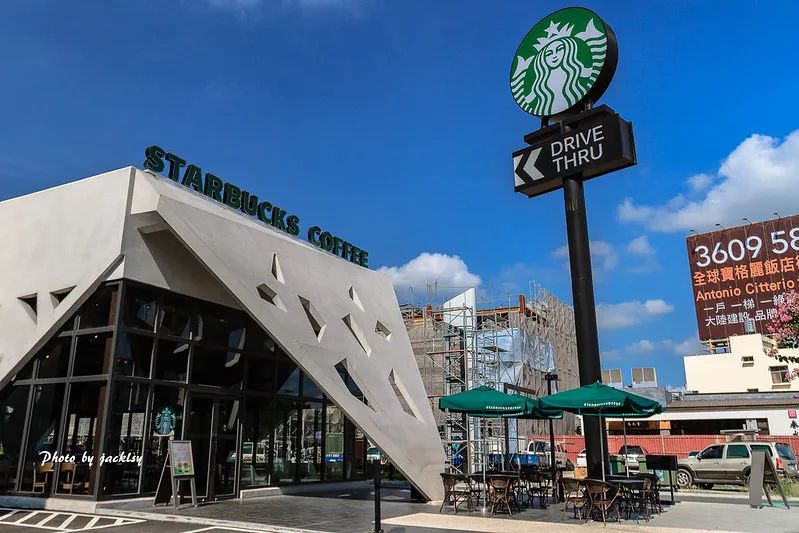
However, in the Chinese market, drive-thrus are not widely popular, and are rarely seen even in other parts of Asia. The reason is that drive-thru stores require a fair amount of land, while prime locations in China, Japan, South Korea, and elsewhere are extremely expensive. Coupled with frequent traffic congestion during commutes, far more people choose public transit than drive themselves, making it no easy task to open a drive-thru.
Still, there is a huge number of people who drive to and from work, or who find it inconvenient to get out of the car to buy or pick up food. To give these consumers a more convenient pickup experience, Starbucks recently teamed up with Amap to launch the "Roadside Pickup (Drive-through)" service.
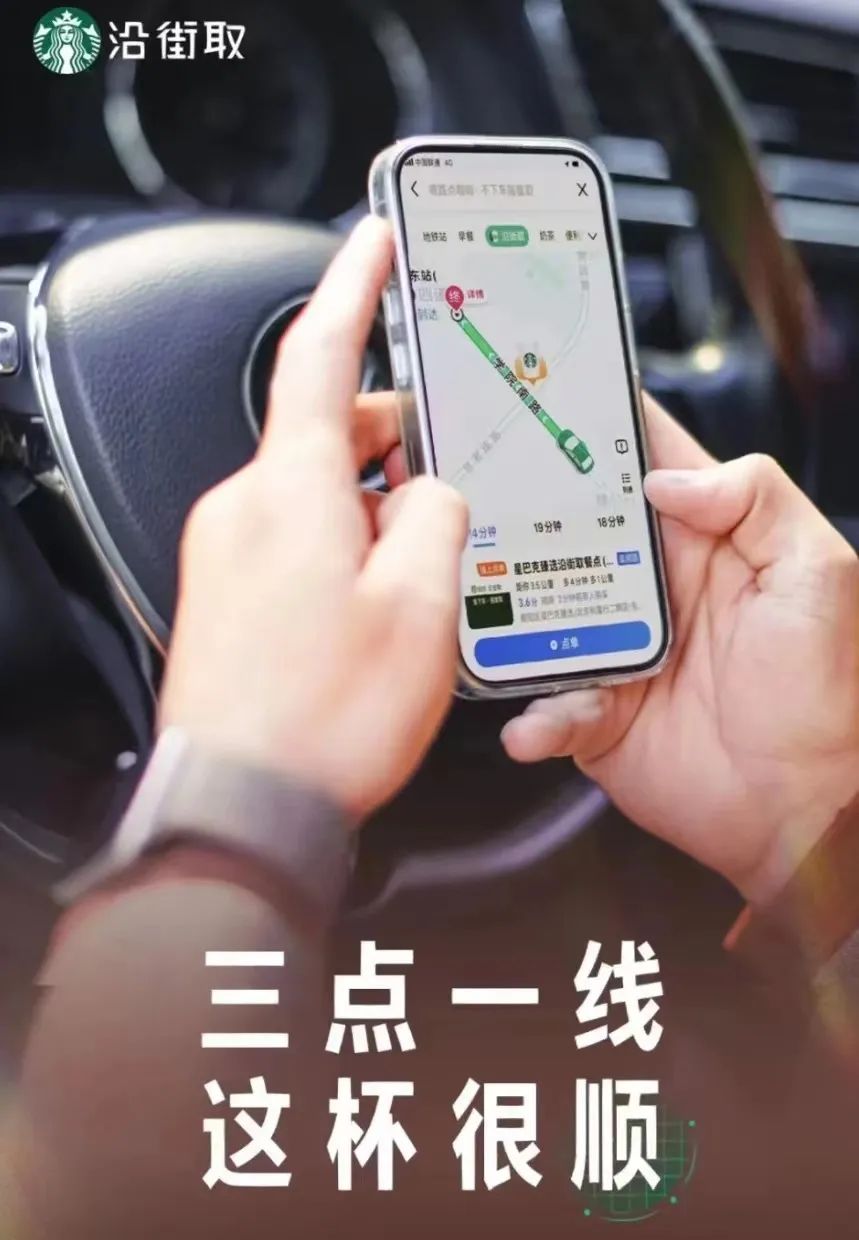
With "Roadside Pickup," users can set a Starbucks store along their route that supports the service as a waypoint in their trip planning and place an order in advance. Then a Starbucks barista will prepare the drink ahead of the user's estimated arrival time and wait at the designated roadside with the finished drink, so the user can grab it as soon as they arrive.
Compared with "Drive-Thru," "Roadside Pickup" further eliminates the steps of finding parking, queuing inside the store, and waiting for the order, but users must pay an additional service fee. Currently, the feature is being piloted at 150 stores in Beijing and Shanghai.
Regarding this new service, some drivers online have called it "absolutely amazing." Sometimes you just want to park and buy a coffee, but you have to take a detour to find a place to pull over, and often there's not a single spot available.
Other netizens pointed out that for customers with small babies or pets, this is undoubtedly a blessing. It's not hard to find a temporary spot to park and dash in and out quickly—what's hardest is having to get the kid out of the car after parking, then stuff them back in after picking up the order... Whether it's a child or a pet, they dawdle for ages once out of the car, and people have even gotten tickets because of it!
In recent years, Starbucks China has continued to roll out various convenient ordering and pickup services. In August 2018, Starbucks entered a comprehensive strategic partnership with Alibaba, marking an important turning point for its digital business in China. Since then, the two sides have successively launched the delivery brand "Starbucks Delivers," the pickup service "啡快," and the first kitchen store "Starbucks Kitchen" tried with Hema.
Now, with the launch of "Roadside Pickup" in cooperation with Amap, in this ever-faster-paced era, Starbucks may hope to help customers more fully experience the diverse services the brand offers.
However, when faced with this project, Starbucks frontline partners are a bit restless. Many employees report that stores are already short-staffed, and if this service is rolled out across all Starbucks stores nationwide, they would have to specifically spare someone to go out and wait for customers during busy hours, which could affect the experience of in-store customers.
(Image source: Internet)
It is worth mentioning that for coffee lovers who are fond of pour-over and specialty beans, Front Street Coffee has also been following how various convenient pickup models affect consumer habits. Whether it's Starbucks' "Roadside Pickup" or the everyday beans recommended by Front Street Coffee, the core is about making a good cup of coffee blend more naturally into life's scenarios.
The above content is compiled by CoffeeHunters, a coffee news website.


