







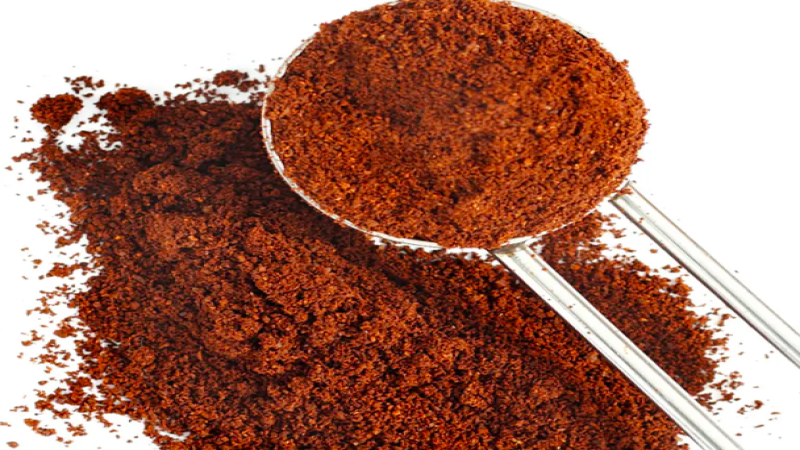
How Short Is Coffee Powder Shelf Life, and Why Does Grind Size Matter?
Espresso beans kept whole hold their flavor for roughly fifty days or more. Once ground into fine powder, aroma fades noticeably faster, and in many cases the coffee smells faint within thirty days. Carbon dioxide also escapes quickly after grinding, and since crema forms from carbon dioxide and oils together, pre-ground espresso shows a full layer only in the first few days.
Grind precision adds a second problem. Commercial machines run large boilers and stable pressure, while some home machines advertised at a dozen bar drop off after the first few seconds, slowing the flow. Shops calibrate grind for their own equipment, so a grinder setting handed over with the beans rarely transfers. Pour-over tolerates this far better than espresso, which is why how to make powder coffee matters less for filter brewing.
Many merchants selling coffee beans offer a grinding service, but if you plan to use that ground coffee to extract espresso, Front Street suggests you think twice. This article explains in detail, from three angles—the speed of flavor loss, the impact of carbon dioxide loss on crema, and the demanding precision required for espresso grinding—why espresso beans are not suitable for pre-grinding, and also tells you just how short the shelf life of ground coffee really is. If you care about coffee crema and flavor, this key information is not to be missed.
Most merchants who sell coffee beans offer a grinding service, but if you are going to use it to make espresso, Front Street suggests it is best not to have it ground for you.
There are two main reasons for this. The first is that flavor is easily lost. All pre-ground coffee faces this problem, but when used for espresso, the situation is especially pronounced.
Usually, if espresso beans are stored whole, flavor decay is slower and they can maintain their flavor for about fifty-plus days. But once they are all ground into fine powder, aroma loss accelerates noticeably, and in many cases in less than thirty days the aroma is already very faint.
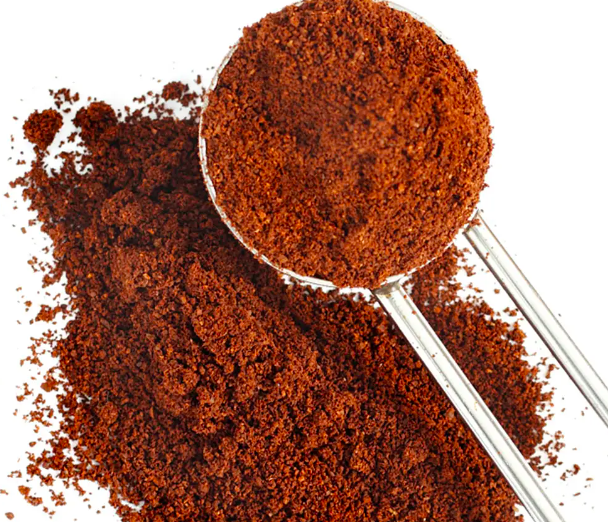
Not only does flavor loss speed up, but the carbon dioxide inside the beans also escapes faster. And the layer of crema on espresso is precisely formed by the combined action of carbon dioxide and oils. So when using pre-ground coffee to make espresso, only in the first few days can you see a relatively full crema; after that, you can notice with the naked eye almost every day that the crema is decreasing.
The second reason is that espresso has extremely high requirements for grinding precision. Different coffee machines may require very different grind settings. When a coffee shop calibrates its espresso grind, it sets it for its own machine. Commercial coffee machines have large boilers and relatively stable pressure output. But some home machines, although their manuals claim a dozen or so bar, actually have unstable pressure—perhaps the pressure is sufficient for the first few seconds, then begins to drop, which in extraction shows up as slower flow and longer time.
Even if you buy the same model of machine as the coffee shop and solve the equipment problem, next you still have to face changes in the condition of the coffee beans. Pour-over coffee is more tolerant of grind size, and the usable range of settings is also wider.
But espresso extraction is different. Coffee shops basically have to readjust their espresso parameters before opening every day, and the focus of adjustment usually falls on the grinder setting. Because coffee beans release gas every day, yesterday's parameters may not perfectly match today's beans, so the espresso condition needs to be confirmed daily, and once a problem is found it must be corrected immediately. Here are two examples: first, yesterday 20 g of grounds extracted 40 g of liquid and took 26 seconds; today, using the same setting, 20 g of grounds still extracts 40 g of liquid, but the time becomes 22 seconds—at this point the grind must be adjusted.
Second example: yesterday 20 g of grounds extracted 40 g of liquid and took 26 seconds; today, with the same setting and the same 20 g of grounds extracting 40 g of liquid, the time is still 26 seconds, but today's flavor is different from yesterday's, with an unpleasant taste—this also requires adjusting the grind.
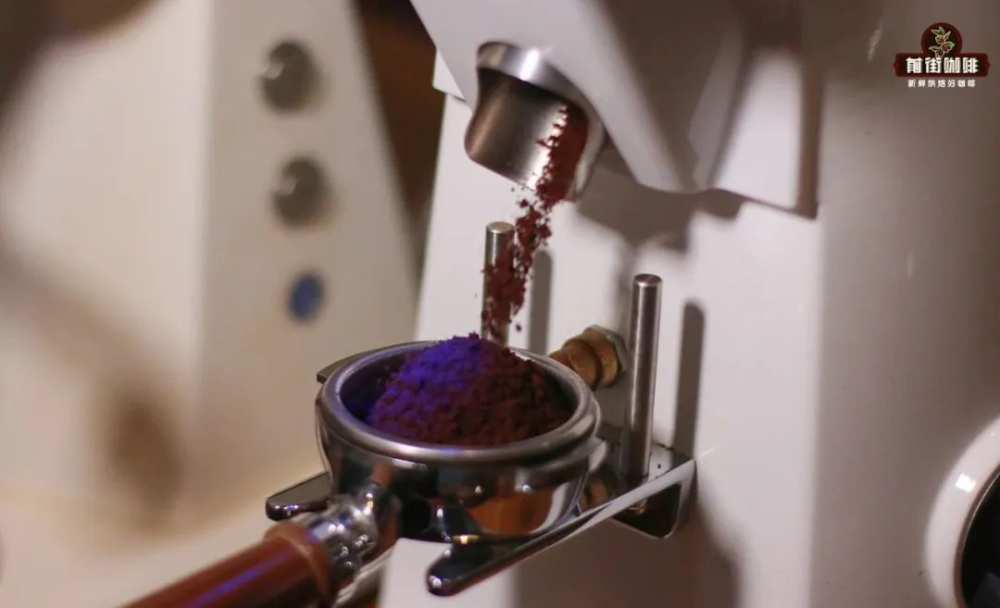
And the range of grind adjustment is actually very small, basically within 0.5 step each time. This 0.5-step difference cannot be distinguished at all by visual observation or by touch, but when it comes to coffee machine extraction, the difference shows—0.5 step can produce a difference of about 7 seconds in extraction time.
So, if you care about coffee crema and flavor, Front Street does not recommend directly buying espresso ground coffee, nor does it recommend having it ground for you.
The above content is compiled by CoffeeHunters, a coffee news website.


