






Does espresso crema really reveal coffee quality?
Crema alone cannot judge coffee quality. The golden foam on an espresso is made of oils from the coffee bean wrapping carbon dioxide, forced out under roughly 9 bar of pressure during extraction. Fine, thick, golden crema does not necessarily mean the shot tastes good; two tests using cup images showed most people could not pick the better-tasting espresso from crema appearance alone.
Crema does carry some useful signals, similar to reading the coffee bed after a pour-over. Its color, thickness and persistence can hint at possible extraction problems, such as under- or over-extraction, but it cannot directly reveal flavor. To assess coffee quality, taste the shot and check the recipe rather than relying on the surface layer.
Many people often say that you can tell whether an espresso tastes good just by looking at the crema—fine, thick, golden crema seems to have become the hallmark of good coffee. But is that really true? Front Street Coffee uses two interesting tests to help us re-examine the relationship between crema and espresso quality. This article will take a deep dive into the essence of espresso crema—what it is made of, how it forms, and what useful information it can provide. It will also explain why the state of the crema alone cannot directly determine the flavor quality of an espresso. If you are interested in espresso extraction and tasting, this article will help you build a more scientific understanding.
There is a saying circulating in coffee circles: "If you want to know whether an espresso tastes good, one glance at the crema tells you everything. A top-tier espresso's crema is bound to be fine, thick, and golden." So, is judging an espresso's taste by the state of its crema really reliable?
To verify whether this claim holds up, Front Street Coffee first invites everyone to do two small tests.
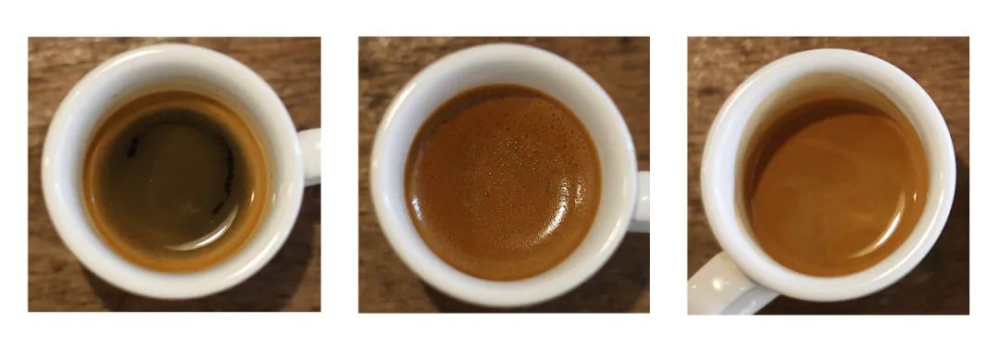
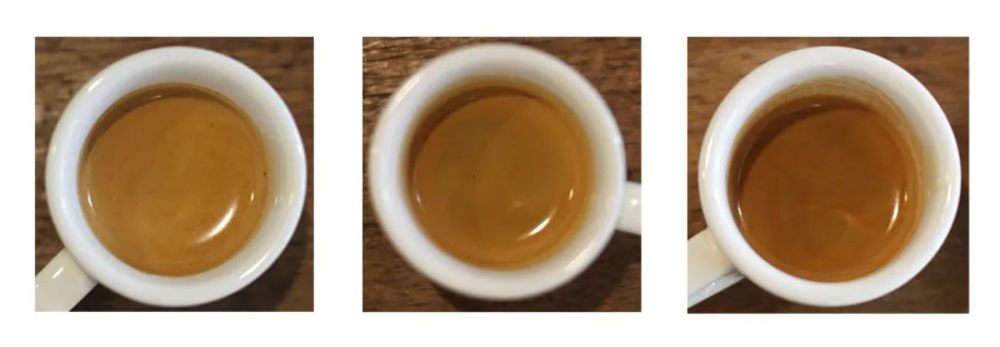
Question 1: Among the images below, only one is a good-tasting espresso. Please identify it based on the crema's appearance.
Question 2: Similarly, among the images below, only one espresso tastes good. Please choose the correct one based on the state of the crema.
The correct answers are: for Question 1, choose the third cup; for Question 2, choose the second cup. Most people can probably easily get Question 1 right, but quite a few may have to rely on luck for Question 2.
Observing espresso crema is actually like looking at the coffee bed of a pour-over—it cannot directly reveal whether a cup of coffee is delicious. Fine, thick, golden crema does not necessarily mean it tastes good. However, the state of the crema can indeed reflect some possible extraction problems.
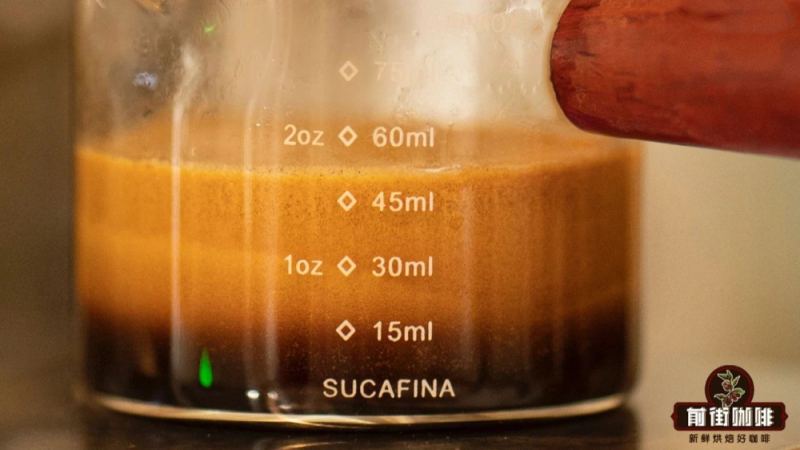
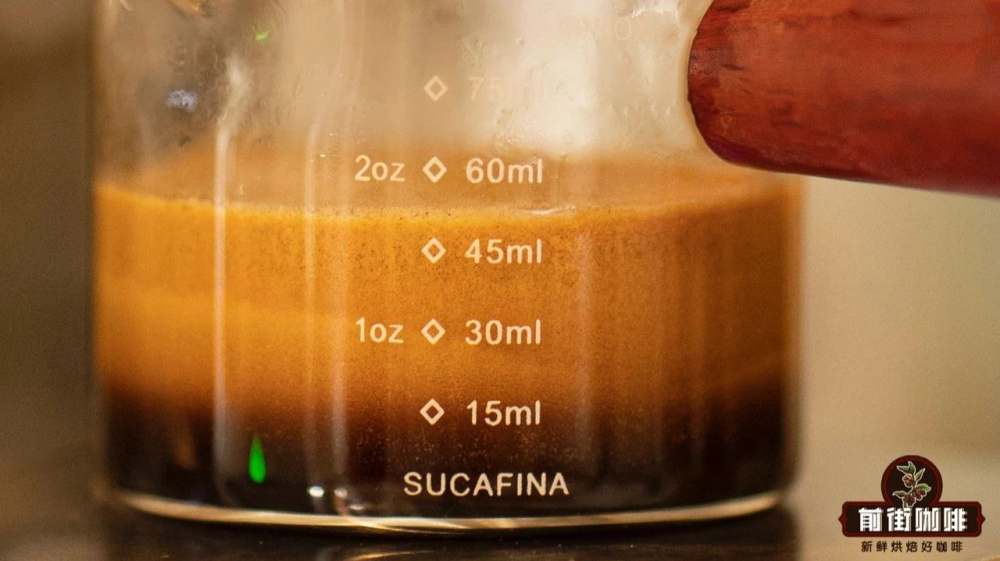
Let's first understand what this layer of golden coffee crema actually is. Espresso crema is essentially the insoluble oil components in coffee beans wrapping around carbon dioxide, and both of these come from the coffee beans themselves. In fact, the golden foam on the surface of a pour-over coffee bed is also a mixture of oils and a small amount of carbon dioxide.
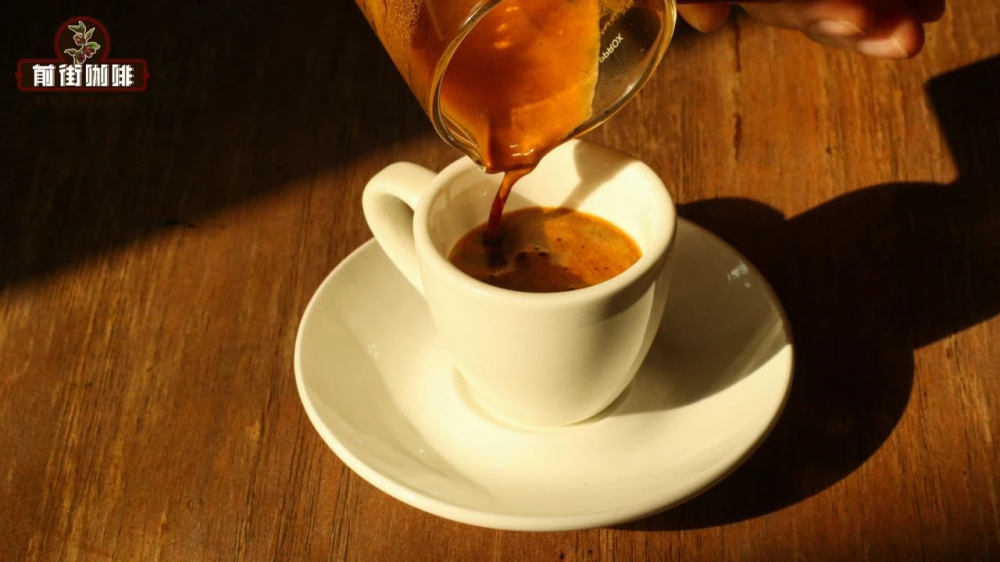
Because espresso machines can generate pressure as high as 9 bar during extraction, oils and carbon dioxide are directly forced into the coffee liquid. And since oils are insoluble in water, they gradually separate into layers, eventually forming that layer of golden coffee crema.
The above content is compiled by CoffeeHunters, a coffee news website.


