







How does the two-pour method bring out bright acidity coffee?
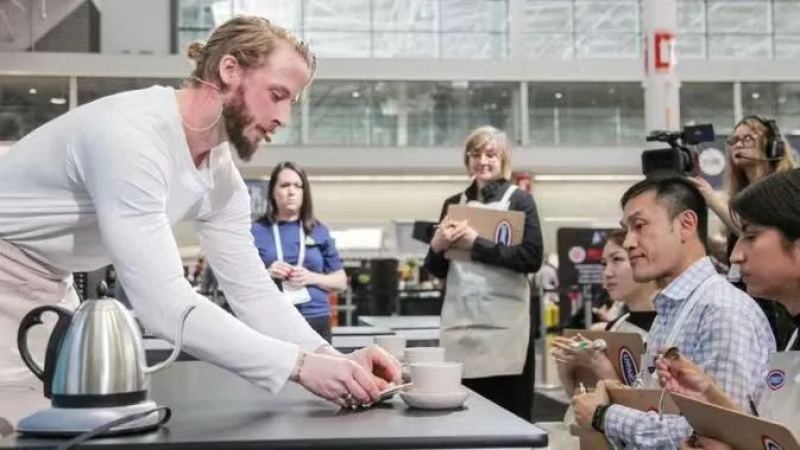
Patrik Rolf, founder of the Norwegian brand April and runner-up at the 2019 WBrC, uses an Origami dripper with cake filter paper, pours in just two stages and skips the bloom. The result is a soft, clean cup where fruity acidity and fruity sweetness both come through clearly, and the method asks almost nothing of pouring control skills.
The recipe is 12g of coffee to 200ml water, about 1:16.7, at 94°C, ground coarser than usual at 65%-70% passing a No. 20 sieve. The first pour is roughly 100ml in about 10 seconds. This suits most conventionally processed light roasts, and the acid of coffee stays bright rather than sharp because extraction is even.
Brewing light-roast coffee has always been a key focus for many enthusiasts. This article introduces a non-traditional pour-over method shared by Patrik Rolf, founder of the Norwegian brand April and runner-up in the 2019 WBrC. The method uses an Origami dripper with a cake filter paper, pours in just two stages, skips the usual blooming step, and places almost no demands on pouring control skills. Front Street has verified through testing that this brewing method is highly applicable to common light-roast coffee beans on the market; the resulting coffee is soft and clean, with both fruity acidity and fruity sweetness clearly presented. Below is a detailed breakdown of the parameter settings, pouring rhythm, and the extraction logic behind it.
The brewing method Front Street is introducing this time comes from Patrik Rolf, founder of the Norwegian coffee brand April, who himself won runner-up in the 2019 WBrC World Brewers Cup.
Patrik has his own unique and complete approach to both roasting and brewing, just as the brewing method Front Street is sharing today differs markedly from traditional methods, yet is indeed highly practical.
First, a summary of Patrik's brewing plan: the filter apparatus uses an Origami dripper paired with cake filter paper, which is the key to the entire method. (Front Street once tried substituting a similar dripper or filter paper and found that directly copying the parameters did not work; adjustments had to be made to achieve the same result.)
This brewing method suits most conventionally processed light-roast coffee beans. Front Street tested it with common light-roast beans on the market, and the performance was quite good.
In terms of parameters: 12g of coffee grounds, 200ml total water (a coffee-to-water ratio of about 1:16.7), and a water temperature of 94°C. The grind is on the coarser side (65%-70% passing a No. 20 sieve; this coarseness is equivalent to the setting Front Street uses for a conventional three-stage pour when brewing dark-roast beans).
The pouring operation is extremely simple, with only two stages in total. In the first stage, about 100ml is poured in around 10 seconds, so the flow is relatively large. At this point there is no need to deliberately control the pour—just go for it boldly, keeping the circling within a small central area.
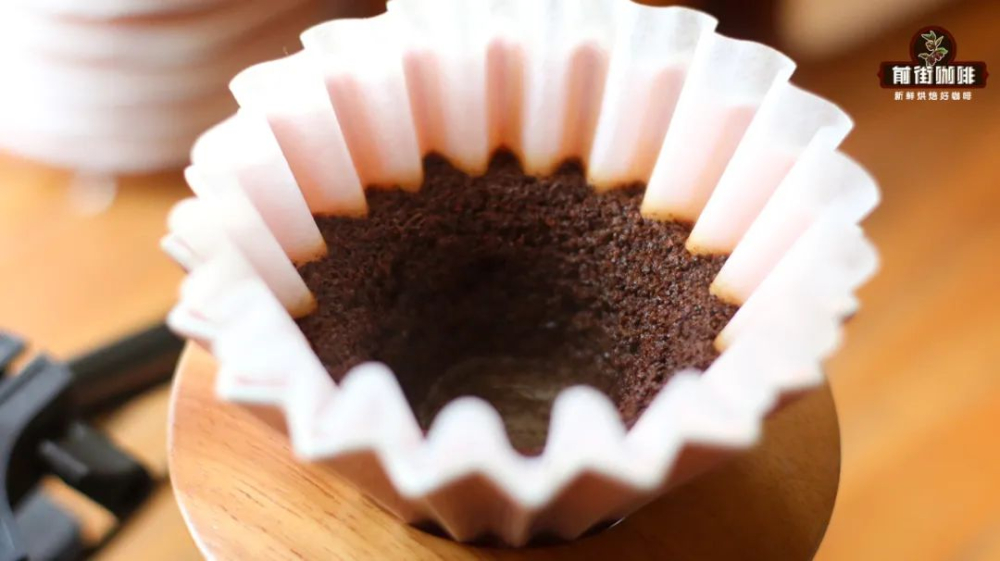
Under normal circumstances, between about 50 seconds and 1 minute, the coffee liquid in the dripper will finish dripping through, and the coffee bed will take on a "bowl" shape with a depression in the center surrounded by a thick wall of grounds.
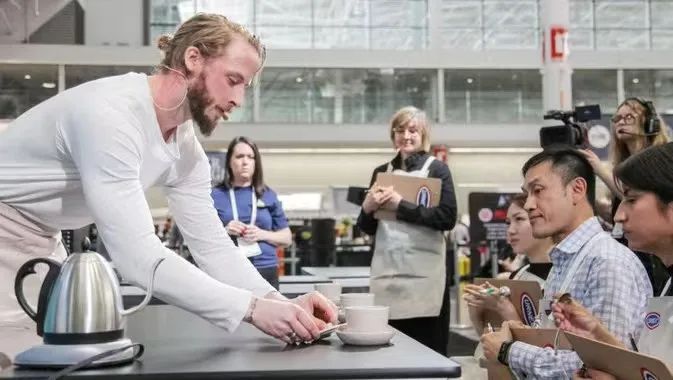
The second pour begins at 1 minute, with the same 100ml volume, poured from the coffee wall to wash away the entire wall of grounds around the sides, then slowly circling back to the center point. This pour ends at about 1 minute 20 seconds, and again there is no need to deliberately control the pour; even if you accidentally pour onto the filter paper, it does not matter.
The rest of the time is left for the dripper to drip on its own, and basically it finishes dripping by 2 minutes 40 seconds. However, in his sharing, Patrik suggests waiting until 3 minutes before removing the dripper: first, to ensure consistent parameters; second, because although the surface of the coffee bed looks dry, there is actually still a small amount of coffee liquid at the bottom that has not finished dripping, and waiting a bit longer allows the coffee liquid to drain completely.
Looking at this brewing method alone, it may seem a bit like "just brewing casually," and the absence of a conventional blooming stage easily raises doubts. But as long as you try the brewed coffee, you will find that the result is very soft and clean, and the fruity acidity and fruity sweetness that should be there are fully expressed.
Here is a brief explanation of the logic behind Patrik's brewing method. Using Origami with cake filter paper serves, on the one hand, to thin the coffee bed (including using a small dose of 12g); on the other hand, Origami's origami structure fits closely with the filter paper, so even without a coffee wall it can reduce water secretly bypassing through the sides.
To sum up the entire brewing process in one sentence: "use extended time to improve the stability of uniform extraction." Of course, the parameter design must then revolve around avoiding over-extraction. For example, the grind is coarser than in general brewing methods.
It seems there is no blooming stage, but in fact the first stage is an unconventional bloom. What we usually understand as blooming is wetting the coffee grounds with as little water as possible and releasing gases. Patrik's approach, however, uses 100ml of water for a "bloom" that lasts as long as 1 minute. This achieves, on the one hand, a complete bloom that thoroughly ensures the gases in the coffee grounds are fully released; on the other hand, the excess coffee liquid dripping out during the first stage extracts the coffee's bright acidity.
The second 100ml then serves to provide uniform extraction in the manner of a long immersion, used to adjust concentration, enhance sweetness, and at the same time safeguard body.
This brewing method is not a universal one, nor does its approach follow the conventional path, but the brewing data Patrik provides is highly applicable to light-roast coffee. Even beginners can perfectly replicate these parameters to brew delicious coffee, and more importantly, it places almost zero demands on pouring control skills.
The above content is compiled by CoffeeHunters, a coffee news website.


