







Why does coffee lose flavor clarity in pour-over brewing?
Low flavor clarity in pour-over coffee usually comes down to four things: too high a concentration, overly strong pouring agitation, beans that have not rested long enough, and brewing with purified water. Each cause has a matching fix, such as adding 10 to 20 milliliters of water to the cup, pouring more gently, or letting beans rest before brewing.
Concentration is the most common culprit. When a cup sits above the palatable range, the palate merges the stimuli into one muddled impression. A 1:15 coffee-to-water ratio suits many beans, but floral, elegant lots such as Yirgacheffe and Geisha read clearer at 1:16, where lower concentration lets the acidity and aromatics stand apart.
Brewing a pour-over coffee that smells of floral and fruity notes, yet tastes muddled and indistinct once you sip it—many coffee lovers have experienced this. The problem isn't necessarily a lack of skill; it could be deviations in concentration, agitation, bean resting, or water quality. This article will analyze four common reasons why coffee flavors become unclear: excessive concentration making it hard for the palate to distinguish details, overly strong pouring and agitation bringing out off-flavors, beans not properly rested leading to unstable extraction, and using purified water resulting in a hollow taste. Each reason comes with specific diagnostic methods and adjustment suggestions, including fine-tuning the coffee-to-water ratio, slowing down the circular pouring technique, and choosing suitable water for brewing, to help you pinpoint the issue and make the coffee's flavor description clear and recognizable.
- Coffee Concentration Is Too High
When a cup of coffee's concentration exceeds the palatable range, the taste buds and olfactory nerve cells struggle to distinguish specific flavor compounds from it, so they simply merge all the stimuli into one package and send it to the brain, making it taste muddled and low in distinctiveness.
Many people focus entirely on adjusting parameters when brewing coffee, neglecting the characteristics of the beans themselves, which easily leads them into this trap. For example, a 1:15 coffee-to-water ratio works for many beans, but after repeated brewing comparisons, Front Street Coffee found that for beans like Geisha and Yirgacheffe, which feature elegant floral and fruity acidity, a 1:16 ratio is more suitable—lowering the concentration makes the floral and fruity notes clearer and more vibrant.
So, if your coffee tastes concentrated and vague, but not weak, it's likely brewed too strong. The simplest fix is to add 10 to 20 milliliters of water to the cup to dilute it, and the flavors will gradually open up.

The brewing plan for a specific bean can also be adjusted accordingly, by appropriately increasing the coffee-to-water ratio. For instance, if it tastes muddled at 1:15, try 1:16 or even 1:17 next time.
- Excessive Agitation During Pouring
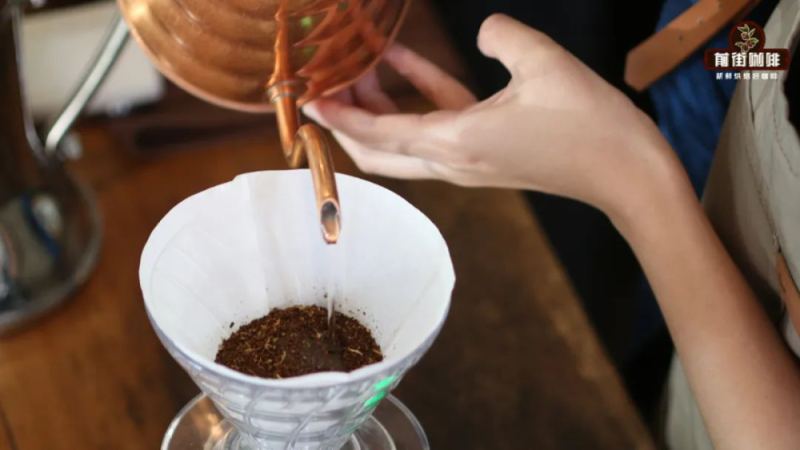
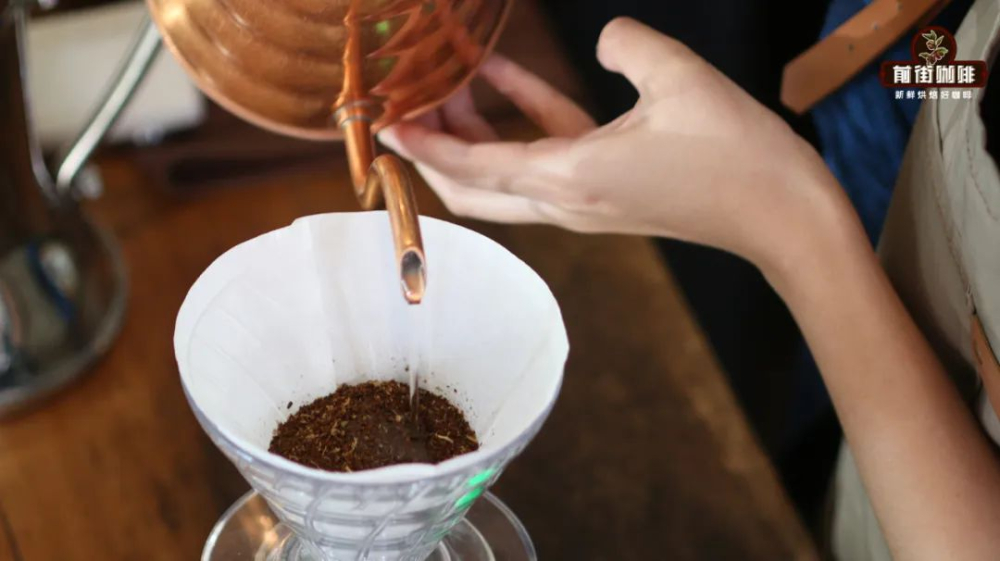
Circular pouring and agitation can indeed enhance extraction, but if the agitation is too vigorous, the bitterness and off-flavors from the coffee grounds will also be brought out, resulting in a messy and unclear flavor profile.
If you usually pour in fast circles with strong agitation, and the brewed coffee's flavor happens to be unclear, then you should try slowing down the circular pouring speed and reducing the agitation intensity.
- Coffee Beans Not Properly Rested
If coffee beans haven't been properly rested, a large amount of carbon dioxide remains inside them, which interferes with the extraction process. Typically, the brewed result is a weak taste, with a green and astringent feel, a dry sensation, and flavors that are neither prominent nor clear.
Therefore, Front Street Coffee recommends checking the roasting date before brewing to see if the beans have rested enough. Generally, coffee beans for pour-over need 4 to 7 days of resting. After the resting period allows some carbon dioxide to escape, those unpleasant flavor characteristics won't appear.
- Brewing Coffee with Purified Water
Purified water is actually not suitable for brewing coffee; the resulting cup has unclear flavors, a strong hollow sensation, and a thin mouthfeel.

Generally, water containing appropriate amounts of magnesium and calcium ions is better for brewing coffee, as it can extract the acidity, sweetness, and aroma more effectively.
The above content is compiled by CoffeeHunters, a coffee news website.


