








How Does Swiss Coffee Research Shape the Paragon Ice Stone?
The Paragon is a brewing stand with a metal ice stone that sits in the middle of the dripper to trap volatile aromatics during extraction. 2015 WBC champion Sasa Sestic developed it with scientist Professor Jahan and the Swiss Coffee Centre of Excellence, and the setup retails for about $4,292. The stated aim is to capture up to 40 percent more aroma through rapid cooling in the first and middle stages of the pour.
Independent testers point out that the core component works on the same principle as food-grade stainless steel ice cubes used in bars, and similar items sell online for a few dozen yuan. Brewing the same geisha coffee with a V60 plus Paragon versus a plain V60 raised TDS from 1.27 to 1.37, so the debate centers on whether the flavor difference justifies the price.
2015 WBC champion SaSa Sestic returned as runner-up at the 2022 Australian Brewers Cup, bringing with him a brand-new brewing device called Paragon—a specially made ice stone positioned in the middle of the dripper to lock in the volatile aromatics in the coffee liquid. According to Sasa, this invention is the result of collaborative research with scientist Professor Jahan and the Swiss Coffee Centre of Excellence, and it can capture up to 40% more aroma through rapid cooling during the first and middle stages of extraction. However, the official price of this brewing stand plus metal ice stone is as high as $4,292, equivalent to more than 30,000 RMB, which has sparked a lot of discussion among coffee enthusiasts. Bloggers on YouTube have already begun testing it and found that its core component is similar in principle to the food-grade stainless steel ice cubes commonly seen in bars, while similar products on Taobao cost only a few dozen yuan. So what exactly makes this ice stone so special? When brewing the same Geisha with a V60 paired with Paragon versus a pure V60, the TDS rises from 1.27 to 1.37—what differences are there in flavor expression? This article will explain it in detail.
Professional coffee knowledge exchange. For more coffee bean information, please follow Coffee Workshop (WeChat public account: cafe_style).
For more specialty coffee beans, please add the private WeChat of Front Street Coffee (FrontStreet Coffee), WeChat ID: qjcoffeex
SaSa Sestic, the 2015 World Barista Championship (WBC) champion, recently competed in the 2022 Australian Brewers Cup and ultimately finished as runner-up. His "comeback" quickly became a hot topic of discussion among baristas.
Although he did not win the championship, Sasa demonstrated a very novel brewing technique in this year's competition—Paragon—which made the audience feel both curious and vaguely familiar.
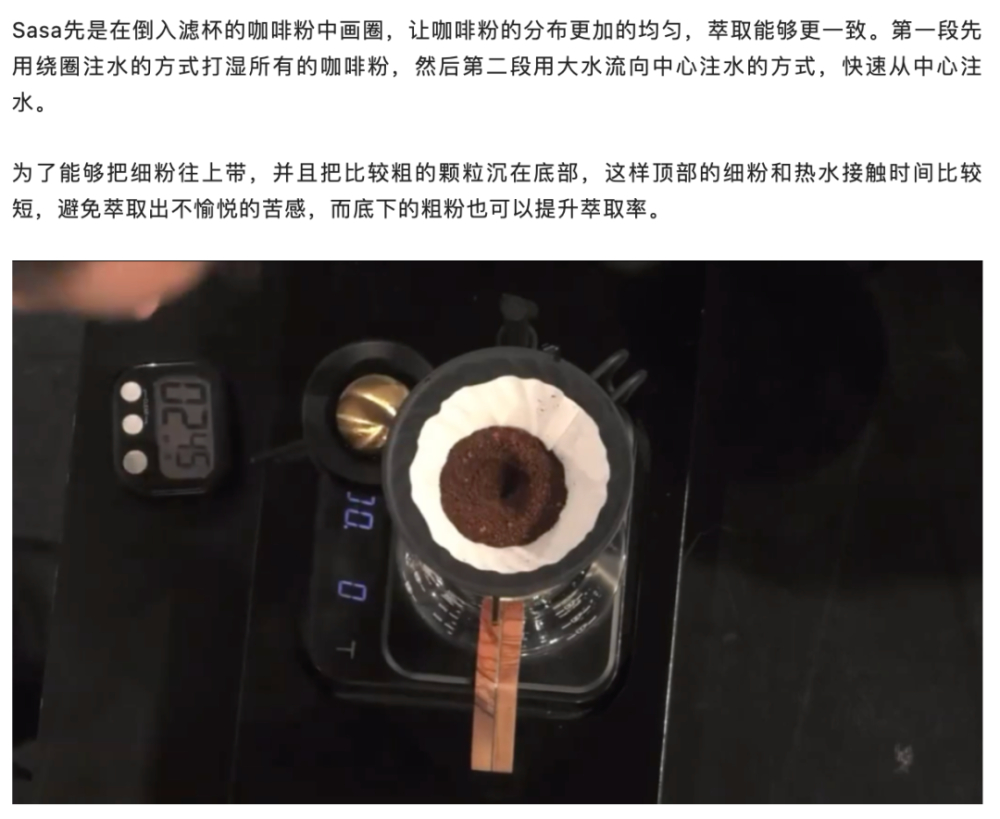
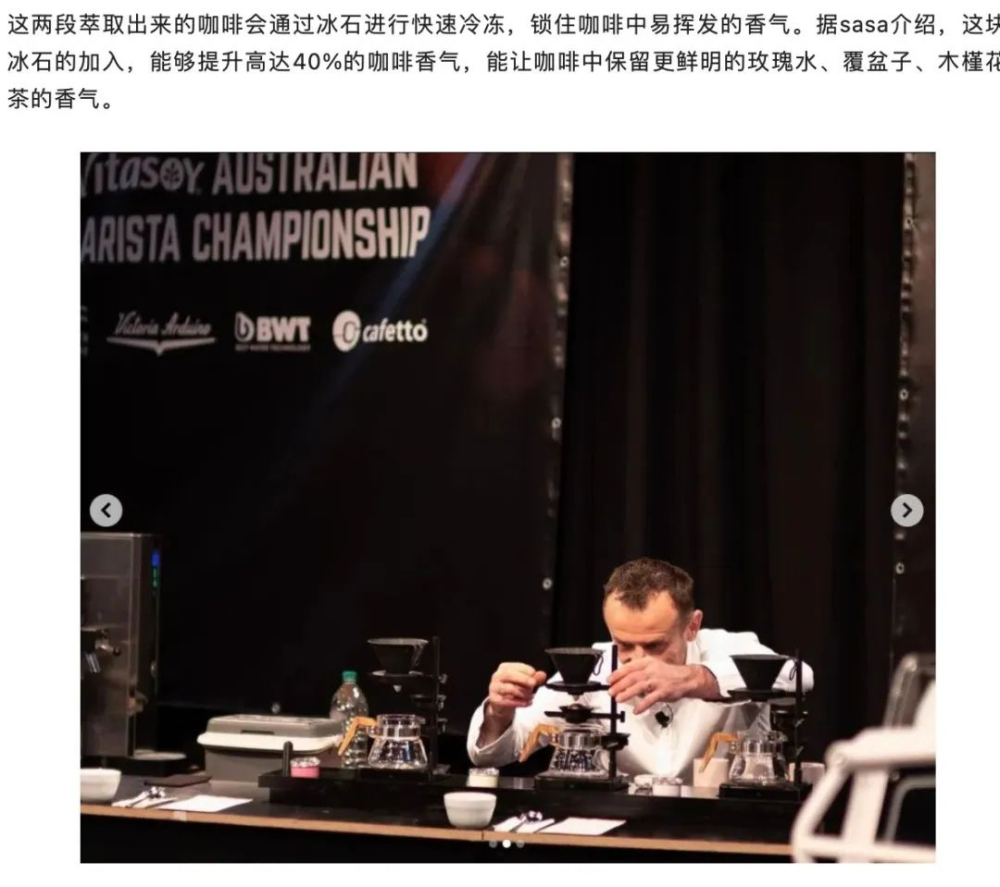
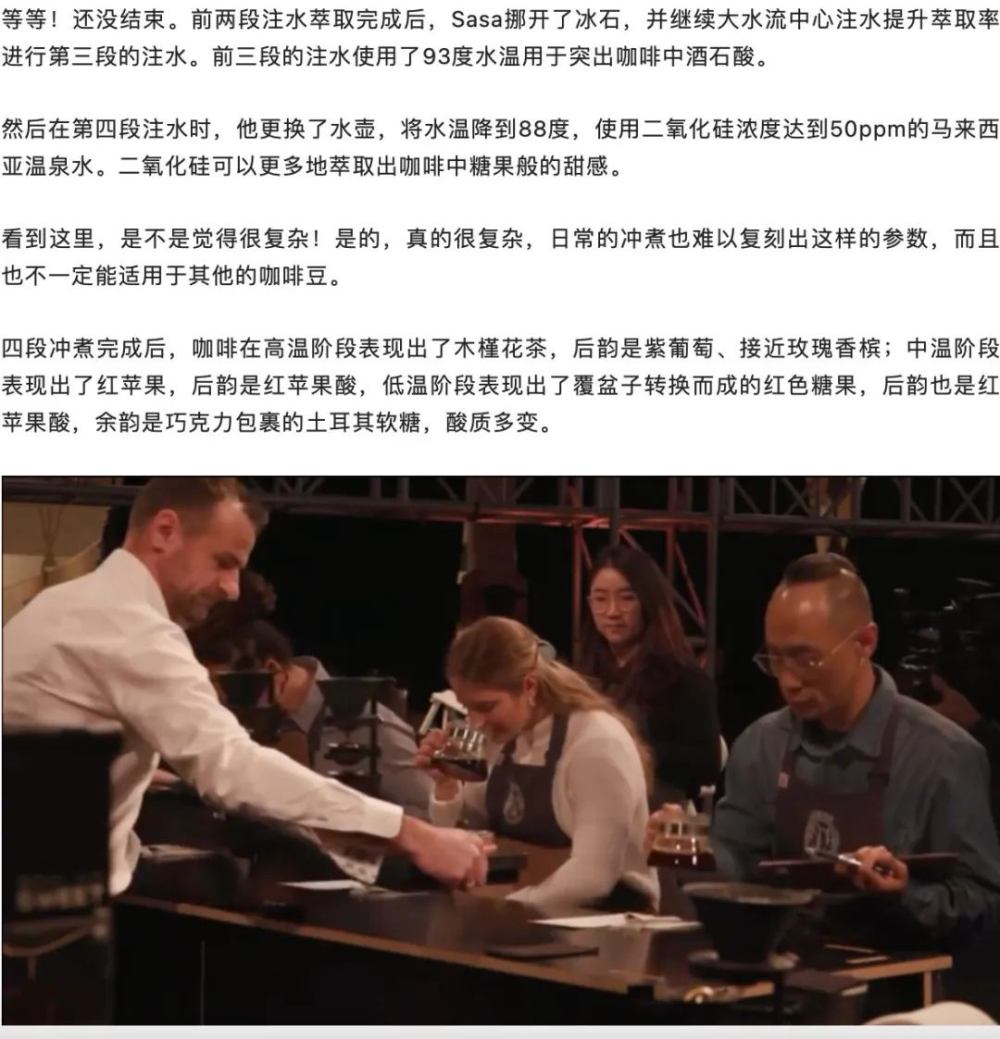
In the dripper Sasa used this time, a self-invented ice stone was placed in the middle, designed to lock in the aromatics in the freshly extracted coffee liquid. Before discussing this ice stone in detail, let us first review Sasa's entire brewing process and approach. (The content is somewhat long and presented in screenshots; those who have already seen it can skip it.)
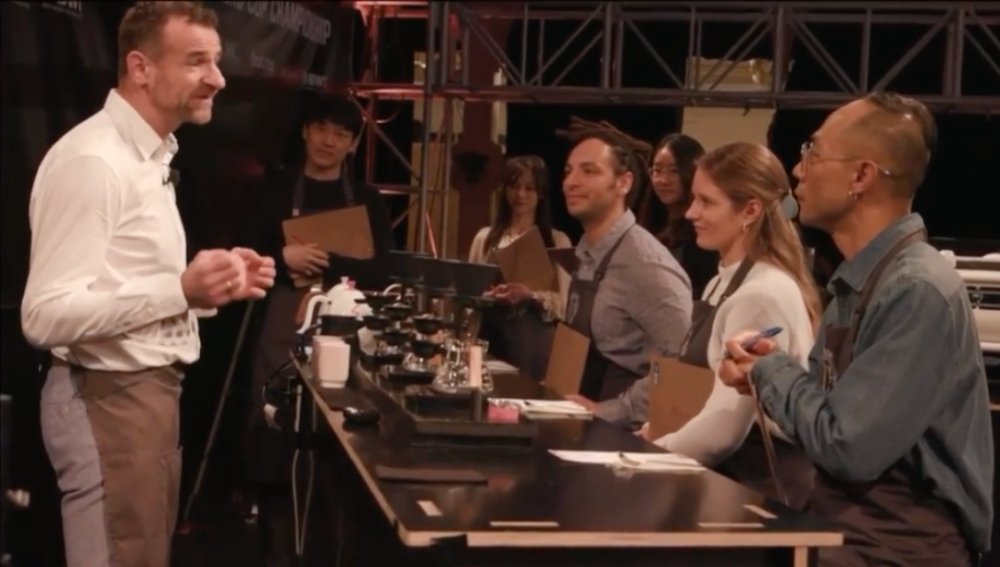
A small ice stone can lock in more aromatic substances extracted during the first and middle stages of coffee brewing. After this theory was proposed, everyone became deeply interested in this ice stone, and some friends even could not wait to buy one right after watching the competition!
In a post-competition interview, Sasa revealed that he would officially launch this new invention later. According to him, in order to make a low-temperature fermented 90-hour Green Tip Geisha show a fuller, gummy-candy-like sweetness, he discussed the scientific principles of the brewing process with scientist Professor Jahan and the Swiss Coffee Centre of Excellence.
During coffee brewing, more or less volatile aroma compounds are extracted. Under high-temperature extraction conditions, we obtain more aroma or volatiles, which is also why every time coffee is brewed with high temperature, the whole space is filled with the aroma of coffee.
However, as extraction time lengthens, the aroma also volatilizes more. Therefore, by the time the entire extraction stage is over and one tastes it, what is perceived is not the most complete aroma in the coffee.
In order to preserve these easily lost aromas, Sasa's research team conducted research and made scientific discoveries in extract cooling technology: during the first and middle stages of coffee brewing, that is, the stage when the main sweet, sour, and aromatic substances are extracted, using rapid cooling can capture (lock in) 40% more specific aromas—essentially reducing the volatility of the aromas so that tasters can perceive a richer, fuller coffee flavor.
Until recently, the price of this Paragon coffee brewing device was finally revealed. "Units, tens, hundreds, thousands..." The original price is $4,292?! Not quite sure, take another look! More than 30,000 RMB for a brewing stand plus a metal ice stone.
Coffee bloggers on YouTube also began reviewing this brewing device. When the blogger picked up the ice stone and shook it, hearing liquid inside, a comment appeared in the comments section: "I know this one, it's just the food-grade stainless steel ice cube commonly seen in bars, with coolant inside (a mixture of alcohol and water)." So they opened Taobao and searched—30 yuan...
Of course, since it can sell for tens of thousands of yuan, this ice stone must have something special about it. In the blogger's review process, it can be seen that after coffee drips onto the ice stone, it is rapidly cooled and gently separated, leaving the volatile aromas in the coffee. This may be the smooth effect that food-grade stainless steel ice balls cannot achieve.
So what is the biggest difference between coffee brewed with a V60 plus Paragon and coffee brewed directly with a V60? According to the review, the same Geisha coffee beans were extracted using the same brewing parameters. Directly v60 brewed coffee liquid TDS was 1. 27, while coffee brewed with Paragon had a higher concentration, with a TDS of 1.37). A difference of 0.1 also brought the coffee a higher concentration and a fuller mouthfeel.
The blogger said that the Geisha brewed directly with a V60 had melon aroma and a tea-like aftertaste, with a long-lasting melon flavor, medium body, and an overall clean and balanced profile with a slight milk chocolate finish; whereas the Geisha brewed with Paragon had a very intense melon flavor, with the melon aroma rushing straight into the nasal cavity upon drinking, and was overall fuller with higher sweetness, with sourness, sweetness, and aroma all rising sharply.
The blogger also made an analogy: if a V60 is like listening to music with the volume set to 5, then Paragon is setting it to 10, and that intensity is the music going bangbangbang in your ears. However, when brewing Geisha, overly concentrated flavor instead makes it feel ordinary, and it becomes impossible to clearly distinguish the layers within it.
Overall, although this extraction method can enhance the aroma in coffee, it also has limitations. Not all coffee beans are suitable for increasing the volume of flavor so much in this way.
The blogger also very cleverly put a link in the comments section for purchasing food-grade stainless steel ice balls. The implication is: yes, these ice balls costing a few dozen yuan can achieve the same effect.
As for the stand, as long as one is hands-on enough, I believe netizens will later 3D print it.
Image source: YouTube (Geisha Gang, Nucleus Coffee Tools), internet.
The above content is compiled by CoffeeHunters, a coffee news website.


