







Why Do Coffee Machines Use 9 Bar for Espresso?
Espresso extraction pressure is commonly set at 9 bar because that level balances body, sweetness, and clarity in the cup. Pressure is separate from the five core variables of beans, dose, ratio, grind size, and time, and it changes how water moves through the puck. Comparing 6 bar, 9 bar, and 11 bar shows clear flavor differences.
Home espresso machines often use vibration pumps, while commercial models rely on rotary pumps, and pump pressure is not the same as the pressure actually reaching the coffee. The 9 bar figure became an industry standard through decades of practice, and modern pressure profiling now lets baristas vary pressure during a shot. A moka pot, by contrast, brews with steam pressure well below that range.
In espresso extraction, pressure is an often overlooked yet crucial parameter. Starting from Front Street's extraction practices, this article first sorts out the five core elements—coffee beans, dose, ratio, grind size, and time—before diving into how pressure affects espresso flavor. You'll learn the difference between pump pressure and extraction pressure, the differences between vibration pumps and rotary pumps, and a practical comparison of coffee performance at three pressures: 6bar, 9bar, and 11bar. The article also traces the origins of 9bar becoming the industry standard and explores the new possibilities that pressure profiling brings to flavor adjustment.
For more specialty coffee knowledge, please follow our WeChat official account: Front Street Coffee (FrontStreet Coffee)
When Front Street explains espresso extraction, it always repeatedly emphasizes the coordination among the five elements: coffee beans, dose, ratio, grind size, and time. As long as you can master these 5 key points with ease, operating an espresso machine is no longer a difficult task.
For those just getting into espresso, Front Street Black Cocoa Basic Blend is a relatively safe entry-level choice. This bean combines Brazilian and Yunnan origins, uses a medium-dark roast, and offers excellent compatibility with most home espresso machines and commercial equipment. When extracted, you can taste full nutty aromas and chocolate-like sweetness; made into an Americano, it brings out a subtle plum acidity, while as a milk coffee it presents a creamy, smooth character.
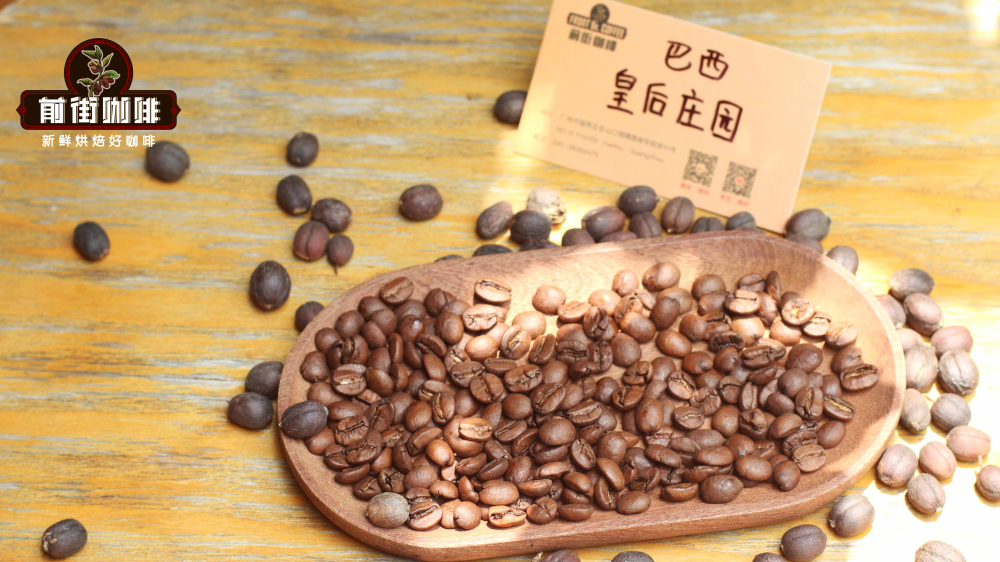
If you want to experience the distinctive flavors of a single origin, Front Street Queen's Estate is worth trying. This bean comes from Brazil's Yellow Bourbon variety, with a very rare peaberry form. After traditional sun-drying, it reveals layered flavors of mixed nuts, milk chocolate, and sugarcane. It can be extracted not only with an espresso machine but also with a moka pot, pour-over, or French press. Although its crema is not as rich as Front Street's blend series, it can be called a clean and aromatic "all-purpose single origin."
However, there is one more parameter that is often glossed over on ordinary days but is actually the most unignorable element in espresso extraction—pressure.
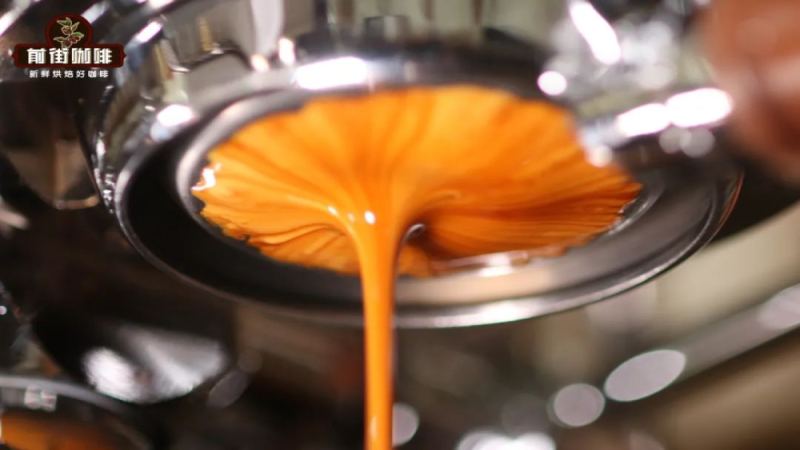
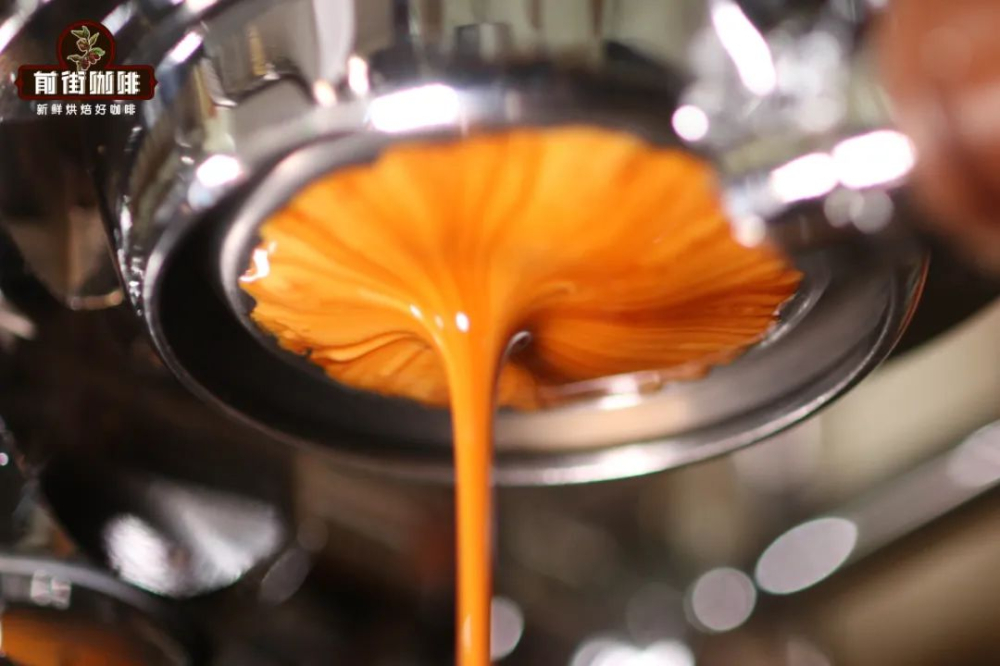
The fundamental difference between espresso machines and other brewing methods is that the former relies on pressurized extraction, while the latter belongs to normal-pressure extraction. Pressure makes it easier for coffee to present a rich texture, and that golden layer of Crema only appears under the action of pressure.
Looking through various espresso extraction tutorials or coffee machine manuals, 9bar is almost treated as the fixed pressure for espresso extraction, as if "espresso extraction pressure = 9bar" has long been an unquestionable law. So where exactly did this 9bar standard come from?

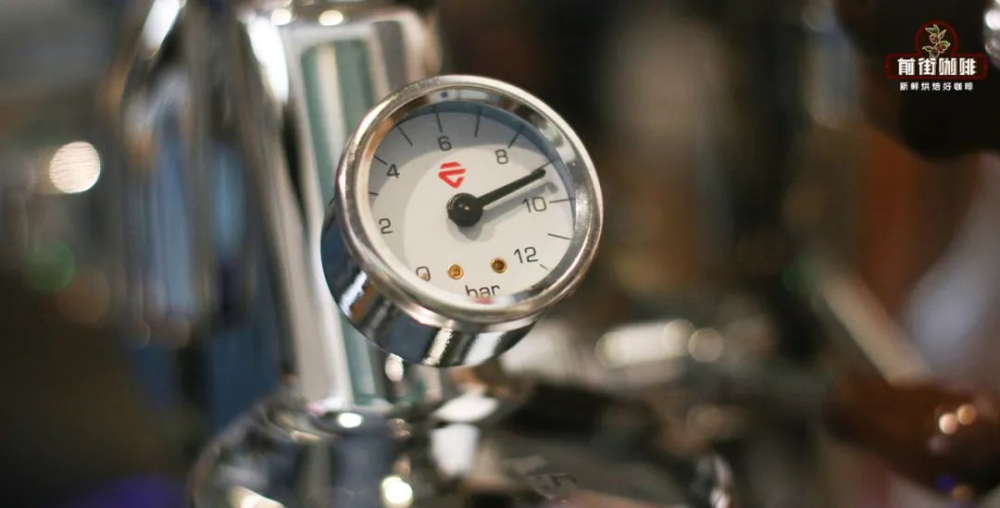
Front Street first clarifies a concept: pressure is actually divided into pump pressure and extraction pressure. What we commonly call 9bar refers to extraction pressure. You can pay attention to the pressure gauge's reaction—if the gauge starts immediately after you press the button, that is pump pressure; if you press the button without locking in the portafilter and the gauge shows no movement, and only after dosing and locking the portafilter tightly does the needle begin to move, that represents extraction pressure.
The pressure of an espresso machine mainly comes from the built-in pressure pump. Currently, the common pressurization methods on the market fall into two types: vibration pumps and rotary pumps. Vibration pumps rely on a piston-like structure rapidly reciprocating to generate pressure, so it is very difficult to maintain constant output within just 30 seconds. This type of pump is usually rated at 15bar, but in reality it may first slowly climb to 15bar, then quickly fall back, or even drop below 9bar. Some home machines have weaker water flow, which can also cause extraction pressure to be lower than pump pressure.
Rotary pumps, on the other hand, generate pressure through high-speed rotation of metal vanes, responding quickly and delivering more stable output. They are mostly used in commercial machines and high-end home models, and their pump pressure and extraction pressure remain basically consistent.
Since we want to understand why 9bar is the standard, we might as well do a small experiment to observe the different performances of espresso under different pressures. Front Street used a rotary pump espresso machine, which can ensure that pressure remains stable within the set range throughout extraction. In terms of parameters, using 9bar as the baseline, 20g of coffee powder was used to extract 40g of espresso, taking 29 seconds.
Next, Front Street kept the other parameters unchanged and only adjusted the pressure to 6bar. From the brew head pressure gauge, it can be seen that going from 0bar to 6bar took 7 seconds (while at 9bar, 0 to 9bar took only 5 to 6 seconds), and the overall flow rate was also slower than at 9bar. The final extraction of 40g of espresso took 36 seconds.
In terms of crema performance, 6bar and 9bar were comparable in richness, but the crema texture was coarser and dissipated faster. After comparing them by taste, the espresso extracted at 6bar was not outstanding enough in aroma or acidity, and was overall softer and heavier.
Then the pressure was raised to 11bar. The pressure gauge showed that going from 0 to 11bar took only 5 seconds. The initial flow rate was close to that at 9bar, but in the later stages the flow rate was slightly faster than at 9bar, and the final extraction time was 27 seconds.
In terms of crema, no obvious difference could be seen. After tasting, the 11bar espresso had more impact than the 9bar one, and the mouthfeel was also more intense.
Front Street conducted this comparison to let everyone intuitively see: the lower the pressure, the longer the extraction time, the weaker the crema performance, and the flatter the taste becomes; the higher the pressure, the shorter the extraction time, and the richer and more stimulating the flavor.
As for why 9bar became the standard extraction pressure for espresso, we have to trace back to Italy in the 1960s and 1970s. At that time, pump-pressurized coffee machines had already become widespread, replacing the earlier old-style models at 3 to 4bar. The new machines had higher pressure, but a problem followed—greater pressure did not mean better-tasting coffee. People found that extracting with pressure above 9 to 10bar tended to bring out an unpleasant burnt-wood-like flavor in coffee. After repeated practice, people gradually realized that coffee extracted at 9bar was quite balanced in both richness and flavor performance, so 9bar has been used to this day as the default extraction pressure for espresso.
Today, new coffee machines with pressure profiling capabilities are becoming increasingly common, and more and more people are beginning to try pressure profiling extraction, that is, actively adjusting extraction pressure to select the flavor substances in coffee. Extracting at 9bar throughout is also not the only path to making a high-concentration coffee.
The above content is compiled by CoffeeHunters, a coffee news website.


