







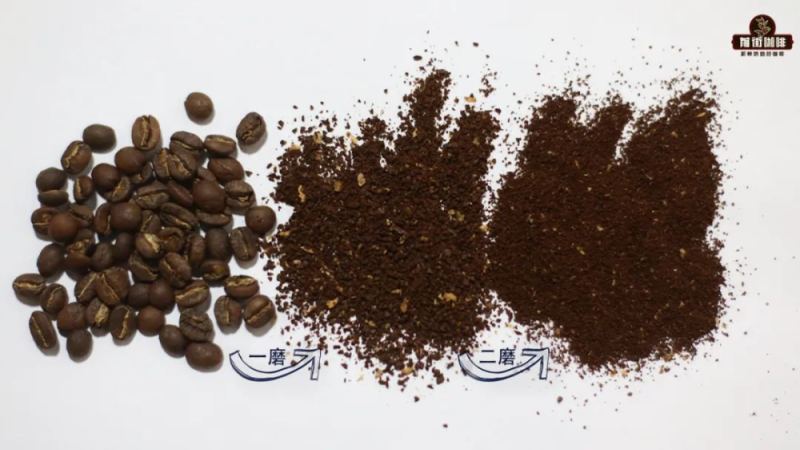
Is re-grinding coffee particles worth the risk to a grinder?
Re-grinding already-ground coffee is technically possible but generally not advisable. Running coarse coffee particles back through the burrs raises the load on the grinding zone: oils and static electricity make the grounds cling to the burrs, and a dense flood of fine powder can block the grinding chamber or damage the machine. A shop grinder was reportedly ruined when excess fine powder clogged its burrs solid.
Competition offers a different lesson. At wbc coffee events, 2017 WBC Japanese competitor Tetsu Suzuki and 2019 WBrC Chinese competitor Du Jianing used liquid nitrogen cooling and coarse-then-fine grinding to chase a narrower particle size distribution and higher uniformity. That approach needs specific equipment, so the practical advice is to judge by your own grinder's condition and budget.
Some coffee enthusiasts might wonder: since a grinder can grind coffee beans into fine powder, grinding already-ground coarse powder finer again shouldn't be a problem, right? This idea seems reasonable, but in practice it could cost your grinder dearly. This article focuses on re-grinding, first explaining why tossing coffee grounds back into the grinder can lead to clogging, breakdowns, and other risks, and mentioning a real case where a Front Street Coffee shop's grinder was ruined as a result; then introducing how 2017 WBC Japanese competitor Tetsu Suzuki and 2019 WBrC Chinese competitor Du Jianing used liquid nitrogen cooling, coarse grinding followed by fine grinding, and other techniques to pursue a more concentrated particle size distribution and higher uniformity, and finally reminding everyone to make a decision based on their own grinder's condition and budget.
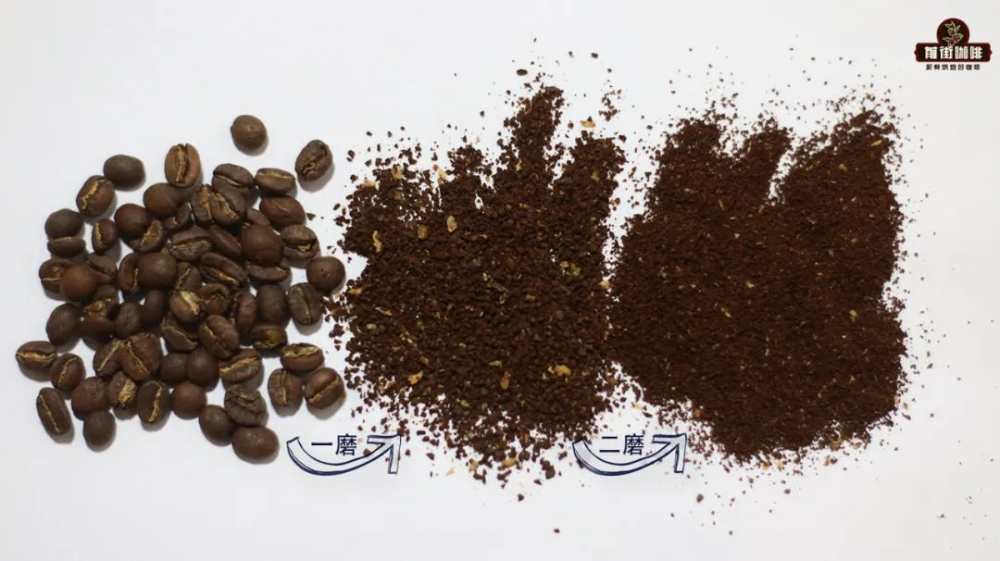
Can this idea actually work?
Many people understand a grinder as a device that breaks larger substances into small particles. If it can grind something as big as a coffee bean into powder, then coffee grounds coarser than the target grind size should, logically, also be processed to a similar fineness when passed through the burrs again. It sounds like there's nothing wrong with that.
But once you actually try it, you'll find things are far from as simple as they seem. I'm sure everyone has heard of grinders "eating" coffee—you weigh out 20g of beans going in, but less than 20g comes out, with the lost portion retained inside the machine. This can happen because oils released by the coffee beans stick to the burrs and hold onto coffee grounds, or because static electricity causes coffee grounds to cling to the burr surfaces.
If you then feed already-ground coffee back into the grinder, the sticking caused by static and oils will only get worse. In extreme cases, a large amount of coffee grounds flooding densely into the grinding zone of the burrs can easily cause a blockage, or even make the machine break down entirely. That previous grinder at the Front Street Coffee shop was completely ruined because excessive fine powder clogged the burrs solid. So never risk a grinder just to save a little coffee powder.
Re-grinding
From the perspective of protecting your grinder, Front Street Coffee does not recommend casually re-grinding coffee grounds repeatedly. However, we can learn from the re-grinding ideas and methods proposed by others.
On the 2017 WBC stage, Japanese competitor Tetsu Suzuki used re-grinding when grinding espresso beans. She first cooled the coffee beans with liquid nitrogen, then ground the beans to powder at a coarser setting; afterward she cooled the coffee powder with liquid nitrogen again, and finally ground it to the fine-ness required for espresso.
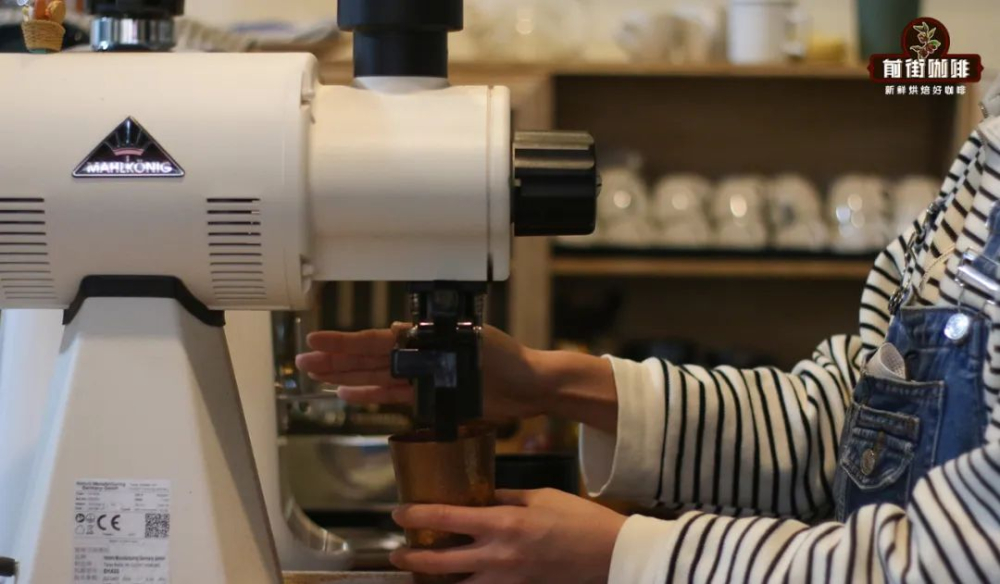
According to her explanation, the role of liquid nitrogen is to freeze the coffee beans, thereby reducing the evaporation of aromatic and flavor compounds; and re-grinding is used because, at the same setting, coffee particles that have been ground twice will have a larger surface area. In other words, the coarser portion of the particle size distribution is reduced, and the overall particle size is more concentrated and uniform.
At the 2019 WBrC, Chinese competitor Du Jianing also used re-grinding to achieve the grind quality she wanted. For her first grind, she still chose a coarser setting, and after producing coarse particles she first removed the chaff to improve the coffee's cleanliness; then she ground the coarse particles to the target size. Coffee particles obtained through re-grinding will be slightly more uniform than with a single grind.
The core purpose of choosing re-grinding is to pursue more extreme coffee ground uniformity. But what deserves even more attention is the grinding equipment they used: Tetsu Suzuki used an EK, whose large burrs are not easy to clog, and that machine was provided by the organizer; Du Jianing used a C40 hand grinder, which is easy to maintain, though operating it takes more physical effort. After reading this, compare it with your own grinder and wallet, and then decide whether to give it a try.
The above content is compiled by CoffeeHunters, a coffee news website.


