








Does pour-over coffee water flow rate change extraction flavor?
A comparative brew using Ethiopian Guji Hambela beans kept dose, grind, temperature, and ratio fixed and changed only the second pour: 120 ml at 3 ml per second versus 6 ml per second. The slow pour extracted more substances, but neither method produced negative flavors, and no coffee taste like alcohol appeared in either cup.
Parameters were 15g dose, grind 80% passing a No. 20 sieve, 1:16 ratio, 91°C water, and a V60 dripper. The slow pour finished total extraction at 2 minutes 33 seconds; the fast pour was quicker. Differences showed mainly in berry sweetness and acidity liveliness, with the slower pour giving more layered sweetness.
Does the pouring speed of pour-over coffee actually change the flavor direction of a cup of coffee? Front Street Coffee used Ethiopian Guji Hambela beans as the sample, keeping the dose, grind size, water temperature, and brew ratio fixed, and adjusting only the pouring rate of the second pour—injecting 120 ml of hot water at 3 ml per second and 6 ml per second respectively, brewing twice for each for comparison. The experiment recorded extraction time, coffee bed condition, concentration, and extraction yield data, and compared the acidity, sweetness, and layering. The results showed that a slower pour can indeed extract more substances, but neither brewing method produced negative flavors; the difference was mainly reflected in berry sweetness and the liveliness of acidity. This article will present the complete experimental process and data to help enthusiasts understand the true impact of pouring speed.

Therefore, this time, following the plan proposed by this friend, a set of comparative brews was arranged. According to him, "only the second pour was changed: plan one used a flow rate of 3 grams per second, and plan two used a flow of 6 grams per second," while the pouring speed Front Street normally uses is about 4 to 5 grams per second.
Front Street usually divides brewing into three pours, so this time only the second pour used a different flow rate, while the bloom and the third pour maintained Front Street's usual pouring rhythm. The experiment used Ethiopian Guji Hambela coffee beans, and the brewing parameters were set as: Dose: 15g Grind size: 80% passing a No. 20 sieve Ratio: 1:16 Water temperature: 91°C Dripper: V60 Plan one (slow pour): During the bloom stage, Front Street poured 30 ml at 4 ml/s and let it sit for 30 seconds. For the second pour, 120 ml was poured at 3 ml/s, and the pour ended at 1 minute 10 seconds; after the water level dropped, the third pour of 90 ml began at 1 minute 30 seconds at a rate of about 4.5 ml/s, finishing at 1 minute 50 seconds. After all the coffee liquid had dripped through, the total extraction time was 2 minutes 33 seconds.
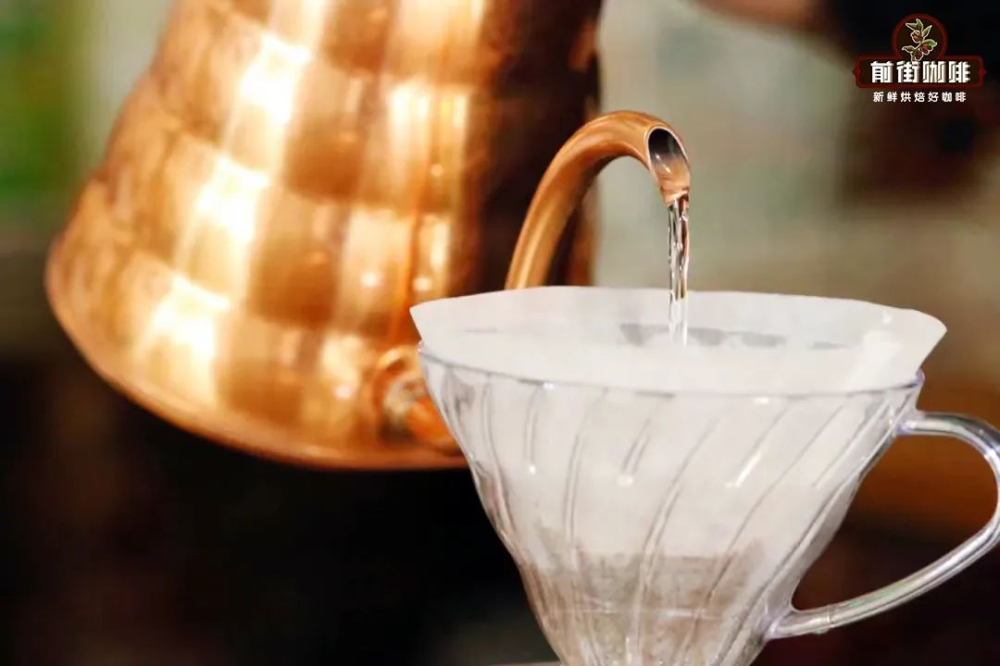
Plan two (fast pour): The bloom was also poured with 30 ml at 4 ml/s and left to sit for 30 seconds. The second pour was changed to 120 ml at 6 ml/s, and the pour was completed at 50 seconds; after the water level dropped, the third pour of 90 ml began at 1 minute 08 seconds at a rate of about 4.5 ml/s, finishing at 1 minute 28 seconds. The final extraction time when dripping ended was 2 minutes 10 seconds.
To reduce error, Front Street brewed each method twice. The slow-pour method measured concentrations of 1.39% and 1.41%, corresponding to extraction yields of 20.58% and 20.88%. The fast-pour method measured concentrations of 1.32% and 1.36%, with extraction yields of 19.53% and 20.13%.
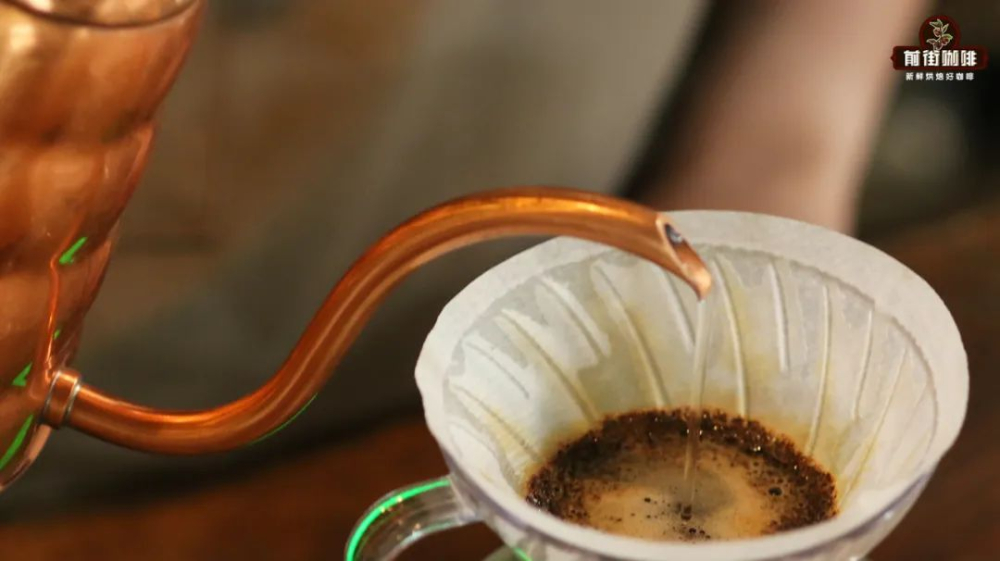
First, look at the extraction process. As the questioner observed, when the pouring rate changes, the extraction time changes with it. The difference in flow rate only for the second 120 ml pour—3 ml/s versus 6 ml/s—made the total time differ by about 20 seconds. In terms of the final coffee bed shape, the height of the coffee wall was the same for both brewing methods, but in the slow-pour plan, the second pour did not raise the coffee bed to its final height; only after the flow increased in the third pour was the coffee bed pushed up to the observed position.
In the fast-pour plan, the coffee bed height was the same after the last two pours. Front Street cannot assert which is better or which is flawed; in the end, it still depends on whether the other parameters are reasonably matched.
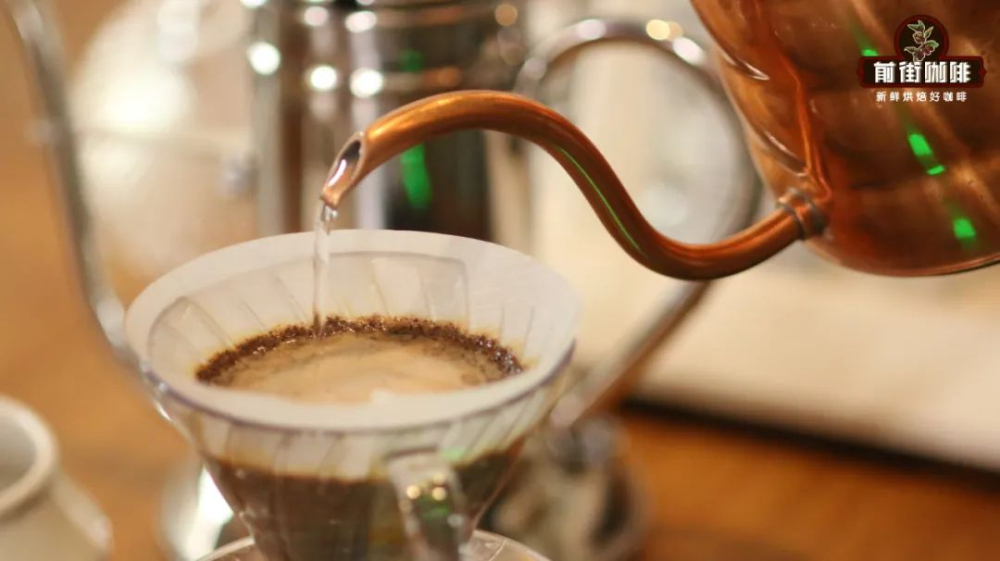
From the concentration data, the gap between the two was actually not large, but the slow pour did extract more substances, which is related to the extraction time. If water is poured at 3 ml/s throughout, the coffee bed will not be raised too high, and while the pouring time is extended, the flow-through speed is also slowed, thereby making the extraction yield higher. But note that a high extraction yield is not necessarily a good thing. In terms of flavor, both matched the characteristics of Guji Hambela coffee, and neither showed any unpleasant negative flavors. The biggest difference was in acidity and sweetness: the slow pour brought out more prominent berry sweetness, while the fast pour had livelier acidity and richer layering. There was not much change in mouthfeel between the two. Finally, flow rate certainly affects coffee flavor, as this Front Street experiment showed, there will be differences; but as long as the parameters are set reasonably, even if the flow rates differ greatly, the brewed coffee will still remain within a reasonable range. So there is no need to obsess too much over how much influence the flow rate parameter can have—if the coffee tastes bad, it may be that the flow rate is wrong, but it is more likely that your parameters were not well matched!
The above content is compiled by CoffeeHunters, a coffee news website.


