







What Golden Mandheling and Geisha Show About Coffee Color and Clarity
Coffee liquid that looks black or red does not automatically mean the cup is murky. Color depth comes from extraction yield and roast level: higher extraction releases more soluble material, and dark-roasted beans produce darker brew than light-roasted ones. Clarity, however, is judged on the palate, not from the color of the liquid in the carafe.
A comparison brewed on the same equipment with the same technique used PWN Golden Mandheling against Green Label Geisha, two beans with very different roast levels. Under equal lighting both carafes looked clear and free of impurities, and both tasted clean and high in clarity. Visual preconceptions tend to make drinkers overestimate the strength of a darker-looking coffee.
After brewing is complete, the state of the coffee bed can reveal a lot about the extraction, and the color of the coffee liquid is often used as a basis for judgment. Many people, upon seeing darker-colored coffee, instinctively assume it tastes stronger, or even suspect it might be murky. In reality, the depth of color is related to extraction yield and roast level, but it does not directly equate to a higher or lower degree of clarity. This article starts with the color of the coffee liquid, analyzes whether dark color means murkiness, and, combined with Front Street's comparative brewing examples, explains how to judge clarity through taste rather than sight, while also offering practical advice on bean selection, resting, parameter control, and pouring technique.
Every time you finish brewing, you can actually read quite a few clues from the spent coffee bed to judge whether there was anything wrong with the cup. Likewise, many people stare at the color of the coffee liquid, wondering whether it too holds some kind of "signal."
What's going on when brewed coffee comes out too black?
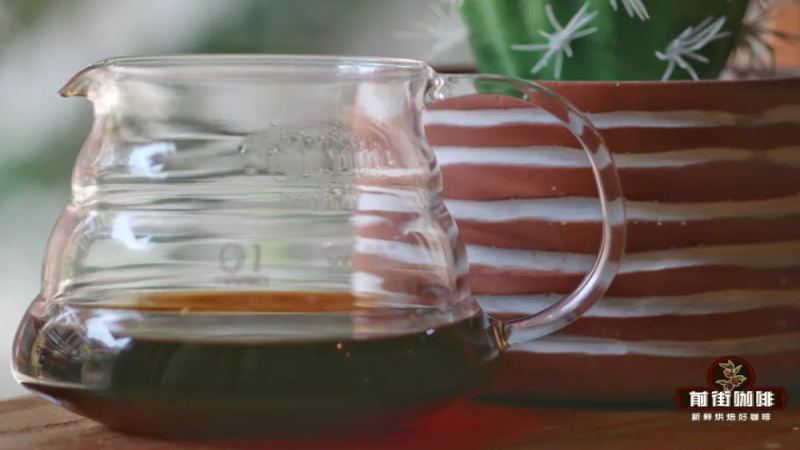
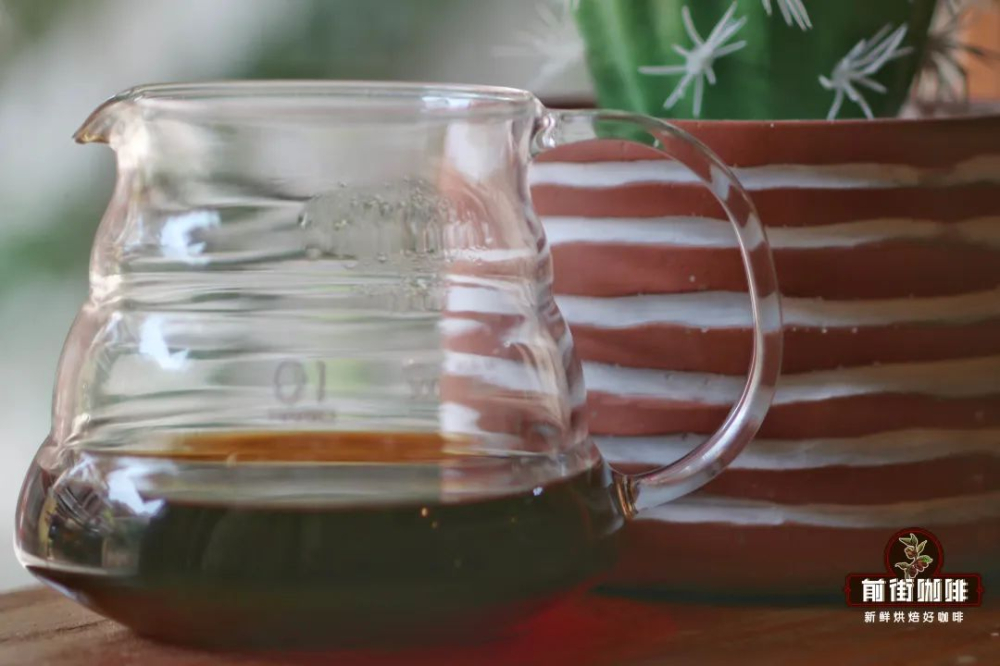
If you use a transparent glass carafe to catch the brewed coffee, you'll notice the liquid often appears red, black, or a tea-like color somewhere in between. Visually, the darker the liquid, the easier it is to associate it with a stronger coffee flavor.
This is indeed one part of the reason. The higher the extraction yield, the more soluble substances are released, and the concentration of the coffee liquid naturally rises along with it. Another factor is roast level: dark-roasted beans are noticeably darker than light-roasted beans, and the same logic applies to the brewed coffee.
Does too dark a coffee color mean murkiness?
To verify this question, Front Street used the same set of equipment, the same brewing technique, and corresponding parameters for extraction, comparing two beans with an obvious difference in roast level (PWN Golden Mandheling and Green Label Geisha).
Under lighting of the same intensity, both carafes of coffee liquid were quite clear, with no impurities. On the palate, both beans had very clear flavors and high clarity.
Visual preconceptions make it easy to "imagine" the strength of a coffee's flavor based solely on the liquid's color. The lighter the coffee liquid and the better its light transmission, the more we mistakenly assume light-roasted coffee is clearer and give it a "clean" evaluation during tasting; dark-roasted coffee, meanwhile, appears "thick and murky."
Rather than judging coffee strength first by the color of the liquid, Front Street believes it's better to simply take a sip and assess the clarity of the brewed coffee through tasting.
So-called high coffee clarity refers to flavors that are clear, bright, and transparent, with no defective notes, such as earthy mustiness, moldiness, or over-fermented sensations like rotten fruit.
How can you improve the clarity of coffee?
1. Choose high-quality coffee beans
First, the higher the quality of the coffee beans, the easier it is to present a pleasant clarity. The defect rate has already been minimized during production, so at the brewing stage, negative flavors are naturally much fewer.
2. Rest the beans well before brewing
Freshly roasted coffee beans are still in the process of degassing. Brewing them in a hurry at this point tends to give the coffee a harsh taste, and the flavors haven't "matured" properly, so clarity suffers. When you get a bag of fresh coffee beans, it's worth letting them sit for 4–7 days until they enter their peak flavor window before brewing.
3. Keep brewing parameters under control
The wrong grind size leading to too many fines, water that's too hot, or too long a steeping time all make it easier to extract the coffee's large-molecule bitter substances, greatly lowering clarity. Negative flavors in a cup of coffee are tied to every parameter, so only by managing each brewing parameter well can you better avoid brewing problems.
4. Pour the water stream in steady circles
An unstable or overly rapid stream poured onto the coffee bed is equivalent to "forceful" agitation, which easily causes over-extraction or uneven extraction, producing bitter and astringent flavors. When the brewing parameters are fine, pouring slowly and gently in circles can likewise release the coffee's aromatic substances—there's no need to increase agitation force.
Finally, learning pour-over is a gradual process. If your stream is unstable, there's nothing for it but to practice more.
For professional coffee knowledge exchange and more coffee bean information, please follow Coffee Workshop (WeChat public account: cafe_style)
For more specialty coffee beans, please add the personal WeChat of Front Street Coffee (FrontStreet Coffee), WeChat ID: qjcoffeex
The above content is compiled by CoffeeHunters, a coffee news website.


