







Where Did the Coffee Bean Originate, and Why KOMEDA's Hong Kong Debut Matters
AEON Group will open the first KOMEDA'S Coffee store in Hong Kong on the 21st, bringing a Japanese chain that started in Nagoya in 1968 and now ranks third in Japan by store count, behind Starbucks and Doutor. AEON plans at least 10 Hong Kong branches within three years by converting space in its general merchandise stores and supermarkets and by taking mall sites.
The chain's home base of Nagoya is often described as the birthplace of Japanese coffee shop culture, a reminder that where the coffee bean originated and where cafe culture developed are separate stories. Competition in China is tightening, with FamilyMart, Lawson and 7-ELEVEn running their own coffee brands and Sinopec EasyJoy working with Tims Coffee, so AEON's Greater Bay Area expansion faces a crowded field.
Japanese well-known coffee chain brand KOMEDA'S Coffee is about to enter the Hong Kong market through the AEON Group, with its first store opening on the 21st, and plans to open at least 10 branches within three years. This long-established coffee shop, which originated in Nagoya and has a history of more than 50 years, ranks only behind Starbucks and Doutor in terms of store numbers in Japan. At the same time, competition in China's coffee market is becoming increasingly fierce, with convenience store chains such as FamilyMart, Lawson, and 7-ELEVEn launching their own coffee brands, and Sinopec EasyJoy also cooperating with Tims Coffee. Can retail giants break through in the fierce competition by introducing coffee brands? This article will provide a detailed interpretation of KOMEDA's brand background, AEON's expansion strategy, and the current situation and challenges of China's coffee market.
For professional coffee knowledge exchange and more coffee bean information, please follow Coffee Workshop (WeChat public account cafe_style)
For more specialty coffee beans, please add the private WeChat of Front Street Coffee, WeChat ID: qjcoffeex
According to related reports, AEON Group recently announced a partnership with Japanese coffee chain brand KOMEDA to bring the brand into Hong Kong and open dedicated stores, with the first branch officially opening on the 21st. Shimatake Toku, Chairman of AEON's Administration Department and Corporate Finance Department, said the group plans to establish at least 10 branches in Hong Kong within the next three years.
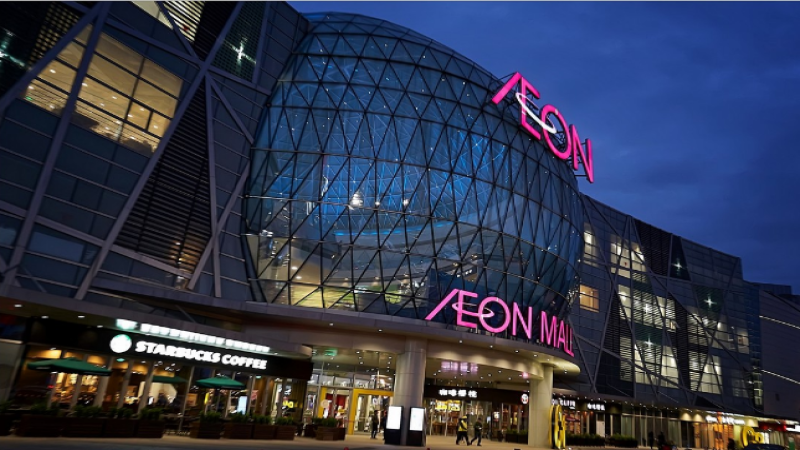
Specifically, AEON will convert some areas of its existing general merchandise stores (GMS) and supermarkets into KOMEDA branches, while also looking for suitable locations in shopping malls to open new stores. In addition, the group will continue to deepen its presence in the Greater Bay Area market, with the goal of increasing the number of mainland stores from 136 as of the end of March this year to 280.
KOMEDA'S Coffee is a full-service coffee chain brand that originated in Nagoya, the birthplace of Japanese coffee shop culture. Since its founding in 1968, the brand has accumulated extremely high popularity in Nagoya, adhering to the concept of creating "the best place to relax" for customers, allowing people to enjoy their own coffee time every day as comfortably as if they were in their own living room, and striving to create a cozy atmosphere like a family living room.
As of the end of February, KOMEDA'S Coffee had 896 stores in Japan, making it a truly long-established Japanese coffee chain. Its store scale ranks third among coffee chain brands in Japan, after Starbucks and Doutor.
In the face of the rapid development of the domestic coffee sector, many supermarkets and convenience stores with chain scales of tens of thousands of stores have also entered the market, launching or introducing branded coffee. According to incomplete statistics, 12 mainstream convenience store chains including FamilyMart, Lawson, 7-ELEVEn, Meiyijia, and C-Store have launched at least 13 coffee brands, with prices ranging from as low as 6.9 yuan to as high as 24 yuan.
Just last month, Sinopec EasyJoy convenience stores also teamed up with Tims Coffee to launch two new ready-to-drink coffee products, which are being sold in EasyJoy convenience stores nationwide.
Since Tims Coffee officially entered the Chinese market in February 2019 and opened its first store in Shanghai, it has been expanding in the form of independent brand stores. At the end of last year, Tims Coffee entered Metro supermarkets and opened smaller Tims Go stores, perhaps intending to target daily consumer groups within supermarkets.
In recent years, the coffee market has shown a trend of vigorous development. In major mainstream shopping malls, various coffee brands such as Starbucks, Pacific Coffee, and Peets Coffee can be seen everywhere. Introducing coffee brands into physical retail stores can not only enhance the shopping experience and improve convenience, but also extend customers' stay time in stores, thereby driving traffic growth.
And coffee brands entering supermarkets themselves can bring a certain amount of traffic. In addition, supermarket customer traffic is large and stable, so whether they focus on coffee or position themselves as leisure drinks and desserts, they can attract a group of consumers.
However, the number of brands in China's coffee market is currently rising continuously, and competition is extremely fierce. On this ever-changing track, how many brands can survive in the long term?
Image source: Internet
The above content is compiled by CoffeeHunters, a coffee news website.


