








What Is SOE Coffee Doing in a Drink With Boba and Jelly
Coffee with toppings is no longer new. Heytea put brown sugar boba into its coffee series around 2019, Luckin followed with the Meteorite Latte using brown sugar agar, and Starbucks has tested caramel coffee popping boba in some regions. Orders that once meant a single-origin swap now increasingly include crispy boba or lemon jelly.
A single-origin espresso, often shortened to SOE, is espresso pulled from one origin rather than a blend, such as a Yirgacheffe. Topping-heavy drinks raise a familiar debate: the additions draw younger customers and photo-friendly menus, while traditional and specialty drinkers question how much of the coffee's own flavor remains readable under boba, agar and syrup.
For professional coffee knowledge exchange and more coffee bean information, please follow the Coffee Workshop (WeChat official account: cafe_style) For more specialty coffee beans, please add the personal WeChat of Front Street Coffee (FrontStreet Coffee), WeChat ID: qjcoffeex Perhaps it won't be long before walking into a coffee shop and ordering no longer sounds like just "iced Americano with Yirgacheffe SOE swap, an extra shot, filled with ice but no water," but instead becomes "iced Americano with Yirgacheffe SOE swap, plus crispy boba and lemon jelly." From Heytea putting brown sugar boba into coffee, to Luckin using brown sugar agar to create its Meteorite Latte, to Starbucks trying caramel coffee popping boba in some regions, adding toppings to coffee is hardly new. This innovation path has attracted a large number of young consumers while also continually sparking debate among traditional and specialty coffee enthusiasts. This article reviews several key moments in the tea-ification of coffee and discusses what this change means for the coffee industry.
For professional coffee knowledge exchange and more coffee bean information, please follow the Coffee Workshop (WeChat official account: cafe_style)
For more specialty coffee beans, please add the personal WeChat of Front Street Coffee (FrontStreet Coffee), WeChat ID: qjcoffeex
Perhaps it won't be long before ordering coffee no longer sounds like just "iced Americano, with Yirgacheffe SOE swap, extra shot, filled with ice but no water," but instead becomes "iced Americano, with Yirgacheffe SOE swap, add crispy boba, add lemon jelly."
Coffee's move toward tea drinks has actually had traceable signs for a long time. Around 2018, some merchants tried adding fruit juice and fruit to coffee, which later gradually developed into today's common fruit specialty coffee. The difference is that today's specialty drinks care more about how the final product looks in photos, so visually they tend to be richer and more layered.
By 2019, Heytea introduced brown sugar boba into its coffee series, allowing many people who wanted a latte and also wanted to eat tapioca pearls to have both, and it set off a wave of boba coffee.
Luckin followed soon after, launching its Meteorite Latte with brown sugar agar added to the latte. Compared with Heytea's soft and chewy pearls, agar's texture seemed to be more welcomed by consumers. This product stayed on sale for three years.
Starbucks also noticed this trend and, starting in 2020, launched coffee products with "pearl" elements in multiple regions. To make the pearls and coffee more harmonious, Starbucks developed caramel coffee popping boba, which burst when bitten, preserving the fun of chewing pearls while interfering as little as possible with the overall taste of the drink.

At first, these coffee popping boba were added to Coffee Frappuccinos, but because the popping boba themselves were rather sweet and the Frappuccino was also sweet, market feedback was not ideal. In 2021, Starbucks put them into cold brew products instead and launched them as a limited offering in parts of the United States with a preference for sweets.
As it turned out, American consumers were equally unimpressed. Many said they would rather have pearls made from tapioca starch, since at least those have a soft and chewy texture. The popping boba were cloyingly sweet and lacked chewiness, and once the caramel coffee inside burst, it also made the coffee taste strange.
From this perspective, China's brown sugar boba and brown sugar agar seem more substantial instead. The fact that two well-known coffee chains both tried adding toppings to coffee is enough to show that this innovation approach is not groundless.
However, this has also drawn opposition from many people who insist on traditional and specialty coffee. Most believe coffee should be drunk pure, and that once ingredients other than milk, white sugar, and water are added, it can no longer be called coffee.
Coffee's gradual tea-ification may be hard to avoid. Only by constantly changing the product itself and overturning everyone's fixed perceptions of it can it attract more attention. But this market and the market that insists on traditional, specialty coffee serve two completely different groups of customers.
A has A's inheritance, and B has B's innovation. Many tea drink shops today use tea bases made from various real tea leaves and also add many toppings, but this has not affected the sales of good tea leaves, nor has it shaken the mindset of the consumers who insist on brewing good tea.
People who love coffee may not buy coffee products with toppings, but those who consume such products may become curious about pure coffee because of them. That itself is not a bad thing. Just as many people's first cup of coffee started with instant coffee, yet later they fell in love with single-origin coffee, and even with specialty coffee.
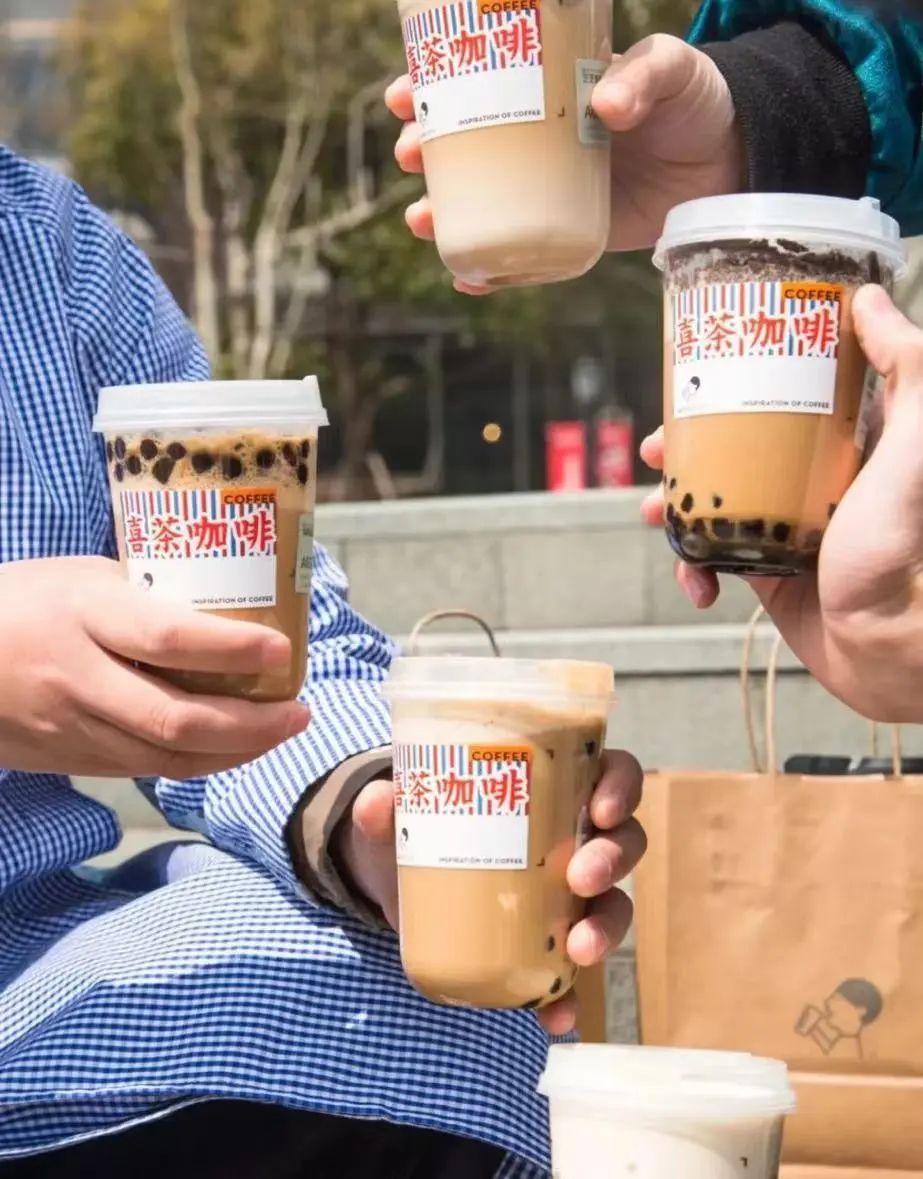
Coffee itself is something with strong inclusiveness, just like tea leaves. It can be understood from a professional angle, matched with suitable parameters, and brewed into tea or coffee with regional flavor; it can also be made more diverse by adding different ingredients.
The two do not conflict. If we truly want the coffee industry to develop continuously and healthily, we need both people who insist on professionalism and pass on tradition, and people who innovate and break through, so that more people pay attention to coffee.
Image source: Internet
The above content is compiled by CoffeeHunters, a coffee news website.


