







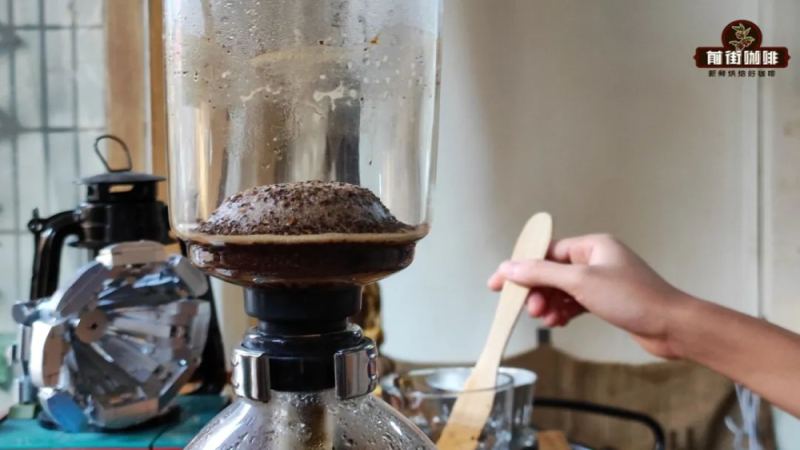
What causes the little hill in siphon coffee?
The little hill is a finishing-stage shape, not a taste score. In siphon coffee brewing, the heat is turned off, the grounds are stirred in one direction with a rod, and as the liquid falls back into the lower pot, the grounds layer in the upper pot piles into a rounded mound. A higher hill does not mean better flavor.
Same-direction stirring has two stated purposes: pushing bitter, harsh compounds to the surface so they stay out of the lower pot, and shaping the grounds bed so water drains through it evenly. Knowing how to make coffee with pot methods like the siphon means understanding that logic instead of copying the gesture; the mound is just one method's byproduct.
When brewing siphon coffee, after turning off the heat, stir with a stirring rod in the same direction, and wait for the coffee liquid to flow back down into the lower pot. The coffee grounds layer in the upper pot often rises into a rounded little "hill." Many people regard this action as an essential finishing step for siphon brewing, and some have even developed the saying that "the higher the hill, the better the taste." Front Street Coffee will break down this phenomenon from the perspective of principle: what exactly is the purpose of stirring in the same direction? How does the little hill form? And what factors affect its height? At the same time, it will also explain that the presence or absence of the hill is not a standard for judging whether coffee tastes good. It is essentially just one of many siphon methods, and understanding the logic behind it is more important than blindly imitating it.
The formation of a "little hill" during the finishing stage of siphon coffee is a classic scene that many enthusiasts love to talk about. When practicing siphon brewing, many people actually do not clearly understand what this raised shape really means. They simply copy it after seeing others do it, and over time, it has even been treated as an indispensable finishing move in siphon brewing: after turning off the heat, stir with a stirring rod in the same direction, and when the coffee liquid falls back into the lower pot, the coffee grounds layer in the upper pot piles up into a full, round little mound.
Later, sayings such as "if a little hill appears during the finishing stage, it means the brewing was on point and the flavor is good, and the higher the hill, the better" also began to circulate.
Front Street Coffee will first make clear why same-direction stirring with a stirring rod is used during the finishing stage. There are mainly two reasons. First, it prevents bitter and off-flavors from entering the lower pot. In the early days, most people brewing siphon coffee believed that bitter and harsh substances are released only at the end of extraction, and that vigorously stirring the grounds layer could make these impurities float to the surface, thereby preventing them from flowing down together with the coffee liquid. Second, it makes the grounds layer form a hill shape so that when water passes through the grounds layer and descends, it does so more evenly. If you carefully observe the structure of the upper pot of a siphon brewer, you will find that the place where the filter is installed has a stepped, narrowed design, while the actual water-descending position is only about the size of the thin tube in the center. If the grounds layer is flat, the coffee liquid around the edges has to pass through more coffee grounds on its downward path, while the center passes through the least; but when the grounds layer rises into a hill shape, the difference in the amount of grounds that the center and the edges must pass through is reduced.
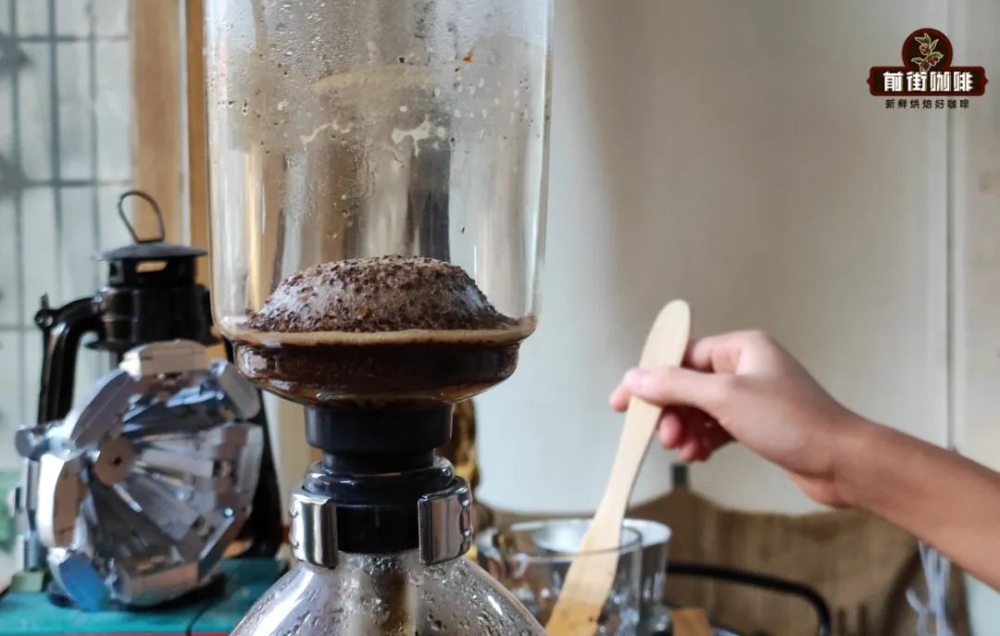
Finally, Front Street wants to emphasize that stirring a tall little hill during the finishing stage of siphon coffee does not mean the cup of coffee is necessarily delicious. It can even be said that such a standard does not exist at all. This is because stirring the grounds into a hill during the finishing stage is only one of many siphon methods. There are also methods that do not include this step at all, and in the end the grounds layer remains flat with no little mound rising up, which likewise does not mean the coffee is not good.
Actually, making a little hill is not difficult at all. You only need to stir 3 to 5 circles in the upper pot with a stirring rod after turning off the heat, and when the coffee liquid flows into the lower pot, a little hill will naturally rise in the center. The height of the hill is related to the amount of grounds, the stirring depth, and the stirring force.
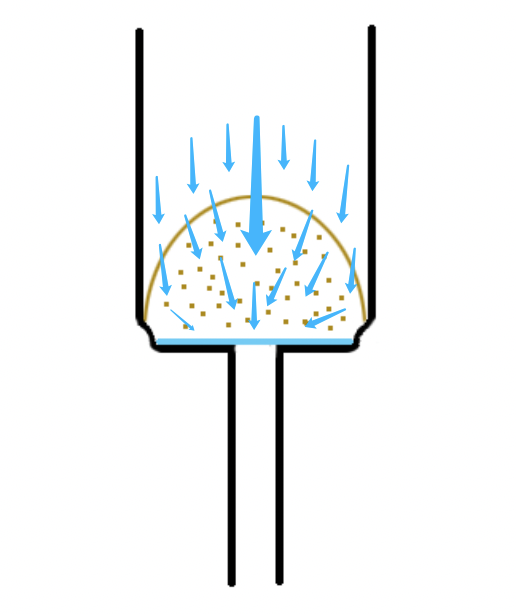
On the premise that the bottom area of the upper pot remains unchanged, the more grounds there are (the larger the volume), the easier it is to push the hill higher. Stirring depth refers to the position where the stirring rod is inserted: if only the surface is stirred, the hill formed will be relatively low; if inserted deeper, it can drive the coffee grounds in the middle and lower layers to move together, and the hill piled up will be larger. The effect of stirring force is even more direct: the greater the force, the more obvious the hill effect.
However, whether a little hill can form is not directly related to whether the coffee tastes good. It is just that making it into a hill shape really does look a bit better than a completely flat grounds layer!
The above content is compiled by CoffeeHunters, a coffee news website.


