







Does the cup rim change pour-over coffee aroma?
Cup rim shape does change how pour-over coffee tastes. A comparison of an open-mouth cup, a straight-walled cup, and a tapered-mouth cup, using the same brewed coffee, showed clear differences in coffee aroma, acidity, sweetness, and body. Each rim design guides the liquid across the tongue at a different speed and shifts how quickly the coffee cools.
The tasting used Guatemala sun-dried La Bella Geisha coffee beans alongside Brazil Queen's Estate and Ethiopia Yirgacheffe Gutingting, brewed with 15 grams of coffee at a 1:15 ratio, 91°C water, medium-fine grind, and three-stage extraction in preheated ceramic cups. The tapered-mouth cup showed the most varied coffee aroma, with roasted nuts and tropical fruit plus a soft floral note.
When drinking pour-over coffee, does the shape of the cup really affect the taste? Front Street used three common cup types—an open-mouth cup, a straight-walled cup, and a tapered-mouth cup—to conduct a comparative tasting of the same coffee and found that aroma, acidity, sweetness, and body all show noticeable differences depending on the rim design. Starting from cup type classification, this article combines the brewing performance of Guatemala Geisha, Brazil Queen's Estate, and Ethiopia Yirgacheffe Gutingting to analyze how different rims guide the flow of coffee liquid in the mouth and temperature changes, and offers cup selection suggestions for coffee beans with prominent acidity, bitterness, and aroma, helping coffee lovers find a drinking method better suited to themselves.
Cups are among the most ordinary utensils in daily life, with different shapes and different names. The cup types, styles, and designs on the market are diverse, but in the end they all cannot depart from the basic attribute of practicality. Front Street tried using cups of different forms to drink pour-over coffee, wanting to see whether the flavor would also change accordingly.
Several common cup types
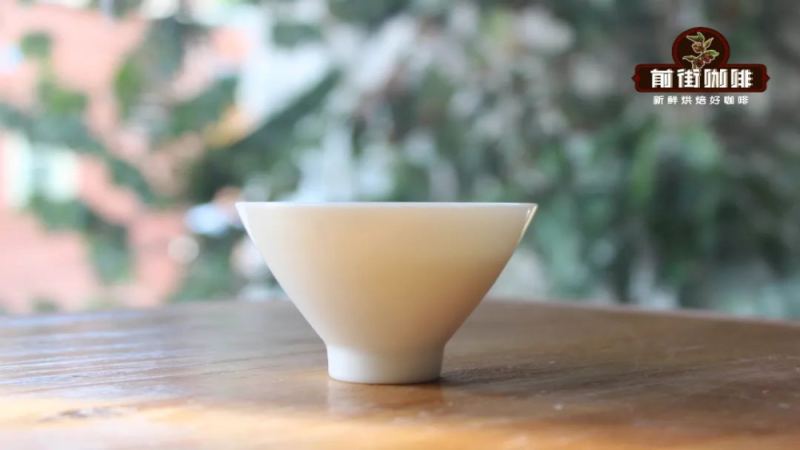
1. Open-mouth cup, also called a wide-mouth cup, with a relatively large diameter, wide at the top and narrow at the bottom, and the wall generally sloping outward at about 45 degrees, like a bamboo hat.
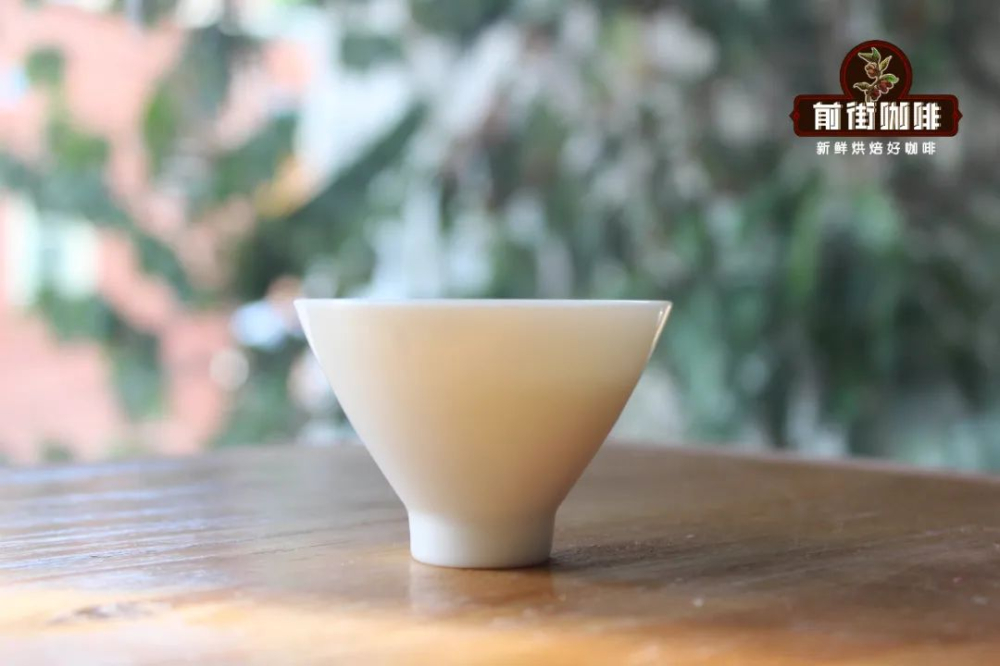
2. Straight-walled cup, with a medium diameter, straight walls from the belly to the rim, and a base that gradually narrows.
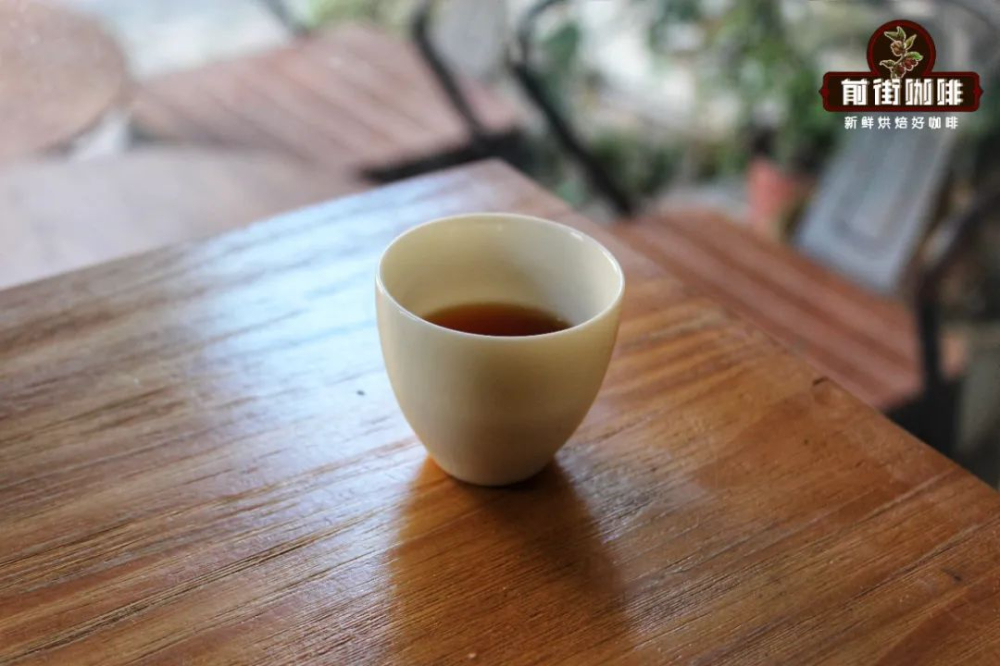
3. Tapered-mouth cup, also called an arhat cup, with an inward-curving rim, a belly that bulges outward, and both the base and top narrowing.
What difference does the cup type make when drinking the same coffee?
Front Street first brewed Guatemala sun-dried La Bella Geisha coffee beans and compared them using the above three cups. The material chosen was ceramic, which has better heat retention, and the cups were preheated before drinking.
Here, the brewing parameters used were those produced by Front Street shops: 15 grams of coffee powder, a coffee-to-water ratio of 1:15, brewing water temperatures of 91°C, a medium-fine grind (78% passing rate on the Chinese standard sieve), and three-stage extraction.
In the aroma stage, the tapered-mouth cup smelled diverse, and on the palate one could taste roasted nuts and tropical fruit with a soft floral note; the straight-walled cup also had nut and fruit aromas, but not as rich as the tapered-mouth cup; the open-mouth cup had the faintest aroma.
When the coffee was tasted hot, the straight-walled cup had the highest concentration, with a full berry-like sweet-and-sour taste; the open-mouth cup had more obvious acidity with a slight tea-like feel; the tapered-mouth cup had the highest sweetness, making the coffee rounder on the palate.
After the temperature dropped, the acidity of the open-mouth cup began to weaken but was still the highest of the three; the overall flavor of the tapered-mouth cup declined, while the flavor of the straight-walled cup did not change much from when it was hot.
For coffees of different flavor types, how does it taste when drunk from the same cup?
To obtain more comparative data, Front Street also brewed Brazil Queen's Estate coffee beans, which are mainly bitter, and Ethiopia Yirgacheffe Gutingting coffee beans, which are mainly acidic. The same daily shop production parameters were used.
Why does the taste differ with different cup types?
The structure of the human tongue allows it to perceive different tastes: the tip of the tongue can sense sweetness, the sides can sense acidity, and the base of the tongue is most sensitive to bitterness.
——Open-mouth cup
When drinking coffee from an open-mouth cup, the coffee liquid has more contact area with the air, and the shape of the opening makes the coffee spread more when it enters the mouth. The coffee first flows past the sides of the tongue and the tip, where acidity and sweetness are more easily captured, making the acidity brighter.
The open rim allows the coffee temperature to drop faster, and the flavor layers in different temperature ranges are especially distinct. After it cools, the sides of the tongue sense acidity particularly clearly, so drinking bitter coffee becomes "muddled in taste." In addition, an open mouth does not easily gather aroma, so the aroma stage tends to be weaker.
——Straight-walled cup
The advantage of the straight-walled cup is that the diameter is not large, and the straight-line design lets the coffee liquid flow into the mouth in a concentrated way, giving a greater sensory impact in the mouth. Medium-hot coffee has a higher concentration, making the mouthfeel fuller and more solid. The straight-walled cup performs ordinarily in the aroma stage, but the relatively tall body makes it cool more slowly, so the mouthfeel does not change too quickly.
——Tapered-mouth cup
The tapered design means that when drinking, we need to raise the cup and lift the lower jaw, forming a mouth shape that is more forward and concentrated, similar to sipping, so the liquid is distributed more evenly in the mouth.
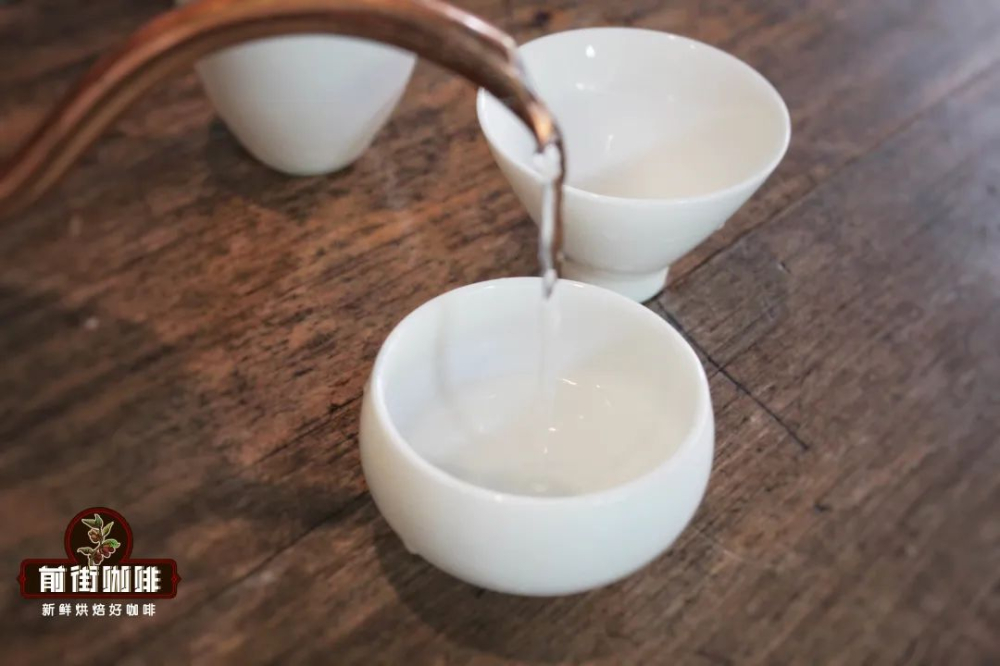
The wide body and inward-curving rim allow the aroma to be released at the widest part and then gather at the rim, making it very favorable for smelling aroma.
At the medium-hot stage, the perception of the coffee's various tastes is more balanced, enhancing the coffee's viscosity and smoothness. Bitter coffee tastes fuller, while acidic coffee instead seems to lack layers and feels thin.
Which cup is best to choose?
Now that we understand that different cup types affect coffee aroma, flavor, and mouthfeel, we can choose coffee beans with "corresponding" flavor types for tasting, thereby "elevating" the coffee we brew!
If brewing coffee that emphasizes acidity, we can choose an open-mouth cup that makes the flavor layers more distinct, such as light-roast acidic beans like Yirgacheffe and Kenya. For dark-roast bitter coffees represented by Golden Mandheling and Blue Mountain, it is recommended to use a tapered-mouth cup with a balanced mouthfeel, which allows one to feel the coffee's body and sweet aftertaste more.
For some coffee beans with more prominent aroma, such as Front Street's Musician series Mozart, Rose Valley, Flower Moon Night, and others, the heat retention of the straight-walled cup can keep the coffee's flavor from changing too quickly as the temperature drops.
Of course, besides different shapes leading to different drinking experiences, factors such as thickness, material, and capacity may also affect the coffee in our hands. If you are a cup enthusiast with many styles stored at home, you can, like Front Street, do a horizontal comparison of your own cups and choose the one that suits you best.
For professional coffee knowledge exchange and more coffee bean information, please follow Coffee Workshop (WeChat public account: cafe_style)
For more specialty coffee beans, please add the private WeChat Front Street Coffee (FrontStreet Coffee), WeChat ID: qjcoffeex
The above content is compiled by CoffeeHunters, a coffee news website.


