







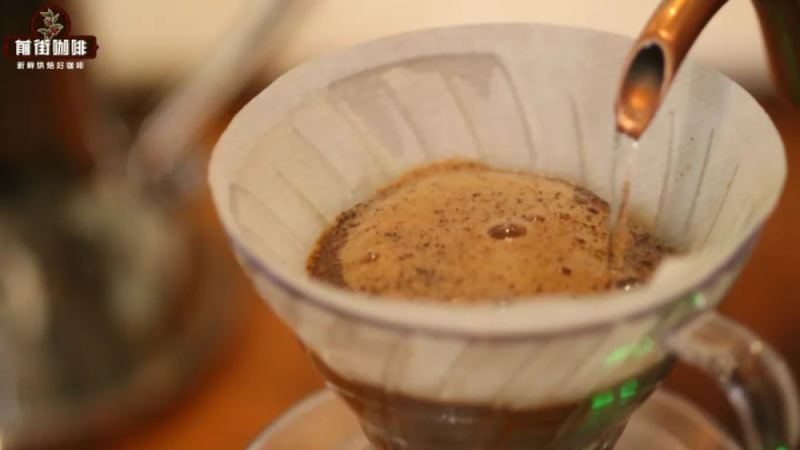
How does fast circular pouring affect coffee brewing?
The fast circular pour in pour-over coffee brewing uses centrifugal force to fling water outward, increasing the tumbling of the coffee bed and speeding up extraction. Done well, it pushes grounds and foam to the edge to form a coffee wall that helps retain aromas. The trade-off is control: a slight misstep causes uneven extraction and imbalanced flavor, so beginners should not copy it blindly.
Pouring technique is only one brewing parameter. It has to work with grind size, water temperature, and the beans themselves. Competition pours often rely on custom lots with a high quality floor, not everyday coffee tree beans. That gap explains why a method seen in competitions can perform poorly in a normal kitchen setup.
In pour-over coffee brewing techniques, the rapid circular swirling pour is a controversial yet frequently seen aggressive method in competitions. It uses centrifugal force to fling the water out, accelerating the tumbling of the coffee bed, thereby enhancing extraction efficiency and even helping to form a coffee wall that locks in flavors. However, this technique demands extremely high control from the operator; a slight misstep can lead to uneven extraction of the coffee bed and imbalanced flavors. Front Street Coffee will objectively analyze the pros and cons of the swirling pour in this article, and in conjunction with coffee bean quality, roast level, and the differences between competition beans and everyday beans, explain why beginners are not advised to blindly imitate it. The article will also point out that pouring technique is just one part of the brewing parameters and must be coordinated with grind size, water temperature, etc., to be effective.
It's not that this method is wrong, but rather that such pouring is difficult for beginners to control. If you can't master it, you'll practice it more and more incorrectly, and by the time you want to correct it, you'll need to spend even more time and effort.
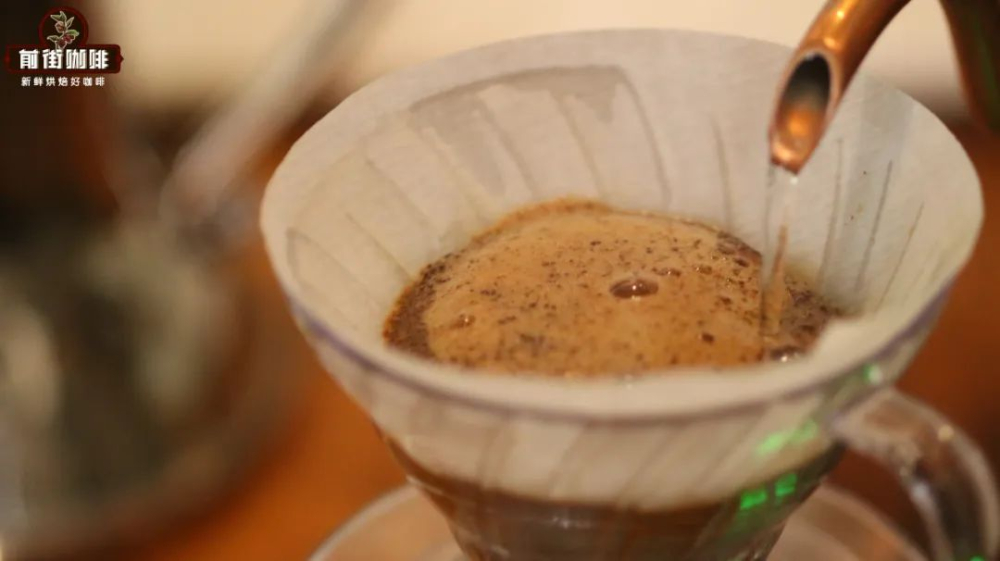
Let's first talk about the benefits of this aggressive pouring method! First, for the water to be "flung" up, the circular motion must be quite fast, and the centrifugal force causes the water to have an outward drifting force. The rapid circular motion also increases the tumbling of the coffee bed, making it easier to extract the coffee's flavors.
Second, a properly executed swirling pour helps push the coffee grounds and foam on the surface to the edge to form a coffee wall. This further prevents the loss of coffee flavors.
In world-class coffee brewing competitions, we can see some competitors tending to pour quickly, with a large stream, and exhibiting a swirling phenomenon, and some of them have even won championships. This has led many people to imitate such pouring.
But Front Street also hopes that everyone can see not just the pouring technique, but the entirety of the brewing process. Competitors will say at the very beginning of their introduction, "I'm using a custom batch from XX estate..." This is where the first problem lies: the coffee beans used by competitors differ from the coffee beans we can access in our daily lives. The beans chosen by competitors are definitely suited to their brewing plans, and they have very high requirements for the lower limit of quality (a high lower limit means that no matter how you brew this bean, it won't taste too bad—this is also why in the self-selected bean segment, everyone tends to choose excellent varieties like Geisha, and no one chooses Catimor to compete, right?).
The second point is that competitors try to minimize variables, so for brewing techniques, they try to control the impact of this variable on the overall result to a minimum. In other words, brewing competitions are not determined by whose brewing skills are superior. In competitions, the impact of pouring technique on coffee flavor is far less than the impact of pouring on coffee taste in our daily lives.
The third point, as Front Street has said, is that pouring technique is just one part of all brewing parameters. Discussing pouring technique without considering other supporting parameters is just "playing dirty"! Front Street gives a few examples: the swirling pour tumbles the coffee grounds with greater force, thus improving extraction efficiency. For some high-quality, "extraction-resistant" coffee beans, it can express rich and full flavors. Front Street once brewed an extremely light-roasted coffee bean brought by a friend; the bean was quite hard, and by using a swirling pour and similar techniques to quickly tumble the coffee bed, it effectively extracted rich floral notes and acidity.
For some average-quality or darker-roasted coffee beans, which easily release coffee substances, using a swirling pour or other high-tumbling pouring techniques can easily extract burnt bitterness, astringency, and off-flavors.
The same applies to parameters like grind size and water temperature.
The fourth point is that when using the "swirling" pouring technique, if not operated properly, it can easily cause uneven extraction of the coffee bed. A common situation is that the coffee wall is thinner and the coffee bed is lower on the side farther from the pouring kettle, while the coffee wall is thicker and the coffee bed is higher on the side closer to the kettle. This is also why Front Street does not recommend beginners use this technique to brew coffee.
The above content is compiled by CoffeeHunters, a coffee news website.


