







Does Coffee Bed Shape Really Tell You Anything About Taste?
A deep pit in the coffee bed does not mean the pour-over was brewed well. The pit forms mainly because of three things: the roast level of the beans, pouring in small circles, and using a larger dose of grounds. Dark-roasted beans have low density and expand noticeably, so they build a thick coffee wall and a deep center.
Roast level matters most. Light-roasted beans are denser and expand less, so the same pouring technique produces a flatter bed. Small circular pours preserve the coffee wall at the edges, and a bigger dose gives the bed more support. Observing shape coffee beds is useful for checking whether pouring was even, not for judging flavor.
Many friends who are just getting into pour-over coffee often have an almost worshipful attitude toward the expansion of the coffee bed and the deep pit, believing that producing a deep pit means superior technique. Front Street has found this phenomenon to be quite common when talking with customers in the shop, so we decided to analyze the conditions for forming a deep pit from a theoretical perspective. In fact, the deep pit is mainly related to three factors: the roast level of the coffee beans, the circular pouring pattern, and the dose of coffee grounds, with roast level having the most significant influence. Dark-roasted beans have low density and expand noticeably, making it easy to form a thick coffee wall and a deep pit; light-roasted beans are the opposite. In addition, pouring in small circles preserves the coffee wall around the edges, and a larger dose also provides enough support for a deep pit. But a good-looking coffee bed does not equal good-tasting coffee. The real point of observing the coffee bed is to check whether the pouring was even and whether the coffee wall was damaged. This article will systematically sort out the brewing logic behind the coffee bed for coffee lovers, helping everyone return to the brewing parameters themselves.
Through many conversations with customers in the shop, Front Street has found that quite a few friends who are just starting to learn pour-over coffee have an indescribable sense of reverence for the degree of expansion of the coffee bed and the so-called deep pit. Front Street feels it is necessary to analyze the principles behind the deep pit.
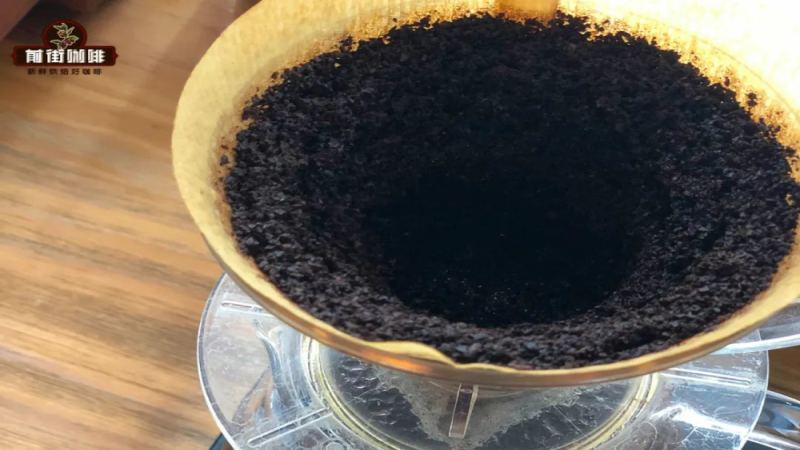
First, let's look at what the deep pit in their minds looks like:
Being able to produce such a deep pit is not because the brewing technique is so superb; you just need to do the following three things. First, use dark-roasted coffee beans; second, pour water in small circles; third, use a larger dose of coffee. The first point is the most critical. Some friends often ask Front Street: I saw the owner at a certain coffee shop produce a coffee bed that was both high and deep, but when I go home I can never produce the same. This is very likely because the time you saw it, dark-roasted beans were being brewed, while what you tried at home was a lighter-roasted bean.
Why is that? This actually has to do with the density of the coffee grounds. The darker the roast level of the coffee beans, the more the beans expand, the lower the density becomes, and the bean texture becomes fluffy. Therefore, during brewing, dark-roasted coffee grounds expand more noticeably, more coffee grounds float on the surface of the liquid, and correspondingly, fewer coffee grounds settle in the coffee bed at the bottom.
Light-roasted coffee grounds, however, have higher density, expand relatively less during brewing, have fewer coffee grounds floating on the surface of the liquid, and relatively more coffee grounds in the bottom bed. If you pay attention to the changes in the coffee bed in the dripper while brewing, you will find that when the water level drops after pouring ends, the coffee grounds and foam floating on the surface slowly deposit toward the edge of the coffee wall. So dark-roasted coffee easily produces a state with a thicker coffee wall and a thinner coffee bed, which looks like a very deep coffee pit.
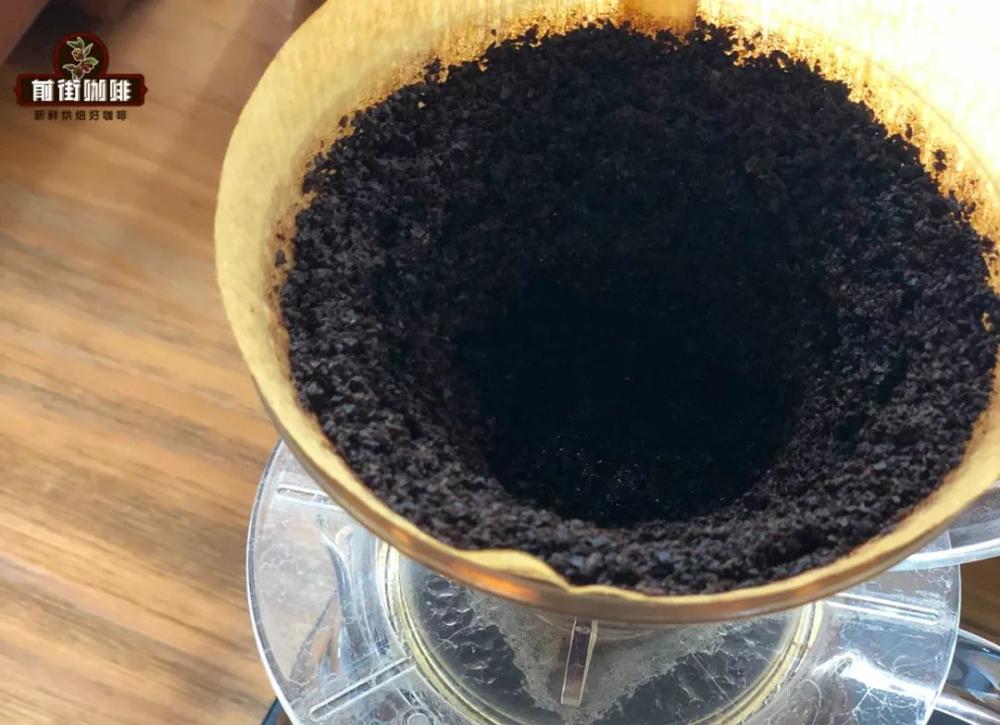
10x speed ing
The second point is what to pay attention to when pouring water. Pouring in small circles can wash out the pit in the middle while preserving the coffee wall around the edges; if you pour in large circles and thin out the coffee wall, then the coffee grounds originally on the coffee wall will be washed into the coffee bed, filling the pit, and the pit formed this way naturally will not be so deep.
The third point is also fairly easy to understand. Drippers generally have a structure that is wide at the top and narrow at the bottom. To form a deep pit, you need enough coffee grounds to serve as the coffee wall. So in a small dripper, 15 grams of coffee is unlikely to form a coffee bed that looks very deep; generally, 18 grams or more is used.
After understanding how to create a pit, I believe everyone also understands that producing a deep pit does not mean the coffee you brewed tastes good. In other words, one purpose of observing the coffee bed after brewing is to check whether the coffee bed shows traces left by improper brewing. For example, pouring in circles that are too large washes away the coffee wall, or pouring in circles that are not round enough causes one side of the coffee wall to be thin and the other side thick. These pouring problems can all be discovered and corrected by observing the coffee bed.
And a coffee bed that looks very standard does not prove that your coffee has no problems either; it only shows that the coffee bed did not reflect any obvious mistakes in your pouring process. So when brewing coffee, do not become overly obsessed with the coffee bed, but start from the brewing logic and brewing parameters.
The above content is compiled by CoffeeHunters, a coffee news website.


