







What Is Changing in Olympic Coffee News for 2022?
The 2022 World Barista Championship and World Brewers Cup run together in Melbourne, Australia, from September 27 to 30. Past champions and competitors have raised concerns about scoring transparency, judge selection, theme setting, and gender inclusivity, and are calling for reforms to the competitions.
WBC competitors serve espresso, a milk drink, and a signature beverage within 15 minutes, judged by four sensory judges and one technical judge. WBrC uses single-origin beans across a compulsory round and an open service round, emphasizing the taster's experience and coffee quality over presentation alone.
The 2022 World Barista Championship (WBC) and World Brewers Cup (WBrC) will be held concurrently in Melbourne, Australia, from September 27 to 30. As top-tier events in the coffee world, WBC and WBrC have for years driven the development of the specialty coffee industry and the professionalization of baristas. However, in recent years, multiple past champions and competitors have pointed out shortcomings in the events regarding scoring transparency, judge selection, theme setting, and gender inclusivity, calling for reform. This article will walk you through the latest updates on the events and take a deeper look at competitors' views and suggestions for the future development of WBC.
For professional coffee knowledge exchange and more coffee bean information, please follow Coffee Workshop (WeChat official account: cafe_style).
For more specialty coffee beans, please add the private WeChat of Front Street Coffee (FrontStreet Coffee), WeChat ID: qjcoffeex
Known as the Olympics of the coffee world, the World Coffee Championships (WCC), hosted annually by World Coffee Events (WCE), has always attracted the attention of a vast number of coffee professionals and enthusiasts.
The latest news shows that the 2022 World Barista Championship (WBC) and World Brewers Cup (WBrC) will be held concurrently in Melbourne, Australia, later this month (September 27 to September 30).
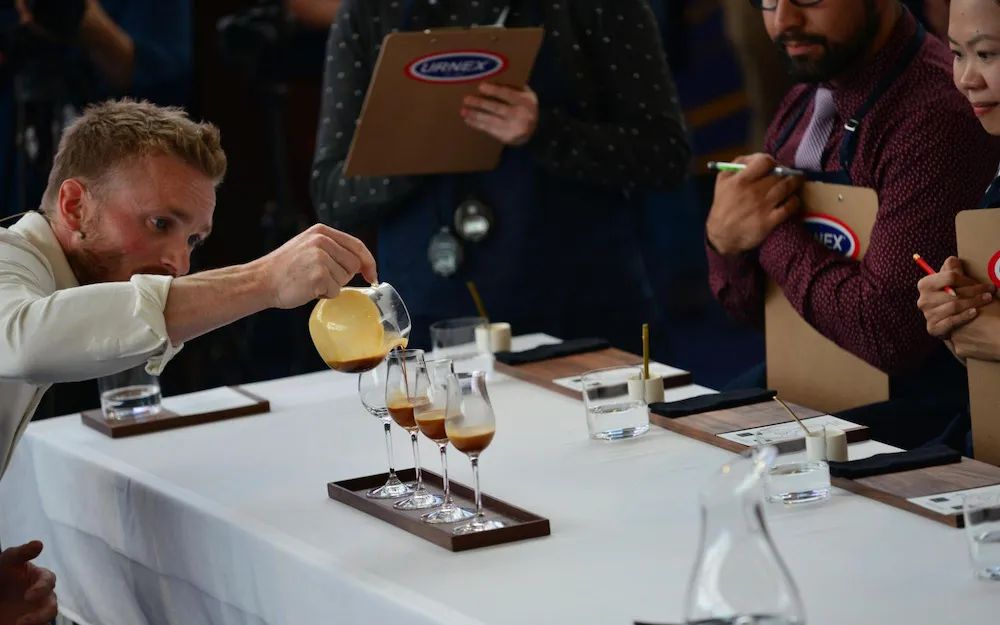
World Barista Championship (WBC) Focuses on the preparation of espresso-based routine and signature beverages. Each competitor must complete four cups each of three types of coffee beverages within 15 minutes: espresso, a milk beverage of unrestricted form (usually a cappuccino), and an innovative signature beverage, scored by 4 sensory judges and 1 technical judge.
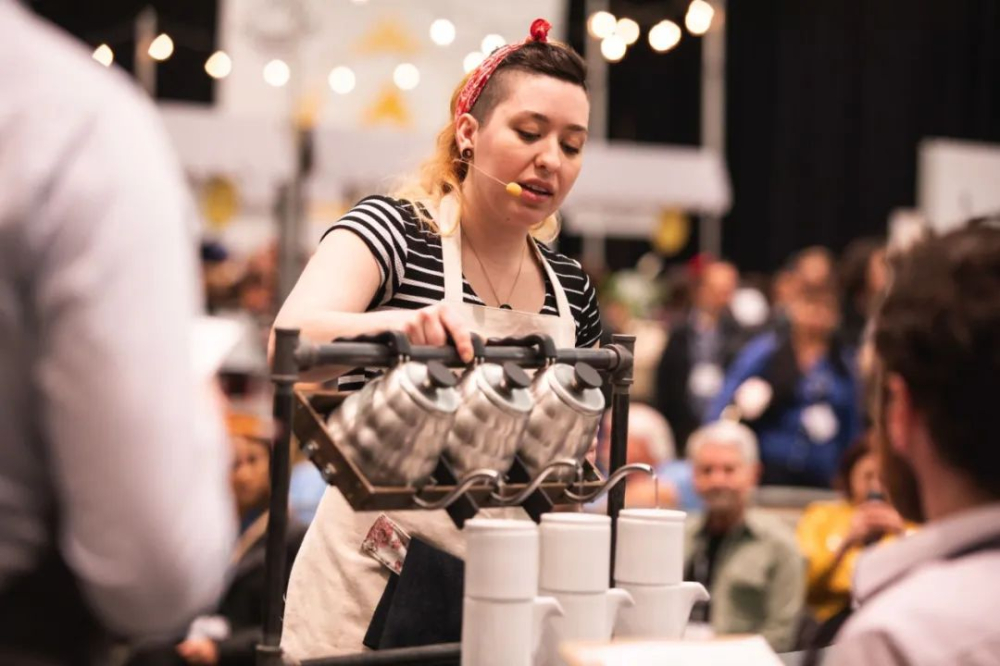
World Brewers Cup (WBrC) Focuses on using single-origin coffee beans and preparing them by pour-over. WBrC is divided into two stages: the compulsory round and the open service round. The former requires the use of coffee beans designated by the event, while the latter allows competitors to bring their own coffee beans. In each stage, 3 cups of coffee must be brewed for the judges to conduct sensory scoring.
The Brewers Cup places more emphasis on the taster's experience, allowing baristas to present a more authentic coffee flavor to the tasters. Therefore, in the open service round, presentation elements need to be incorporated to deepen the coffee experience.
As one of the world's recognized top coffee competitions, since 2000, each edition has aimed to improve coffee quality and promote the professionalization of baristas. Over these more than twenty years, the coffee industry has undergone tremendous changes.
In recent years, many competitors and industry professionals have raised suggestions for improving the acceptance, inclusivity, and transparency of the WBC event.
Some media outlets have interviewed several past WBC champions and competitors (Pete Licata in 2013, Agnieszka Rojewska in 2018, Jooyeon Jeon in 2019, and the British competitor Maxwell, who has participated in three WBCs) to learn about their views on the event.
WBC provides a stage for baristas to share their ideas, allowing the public to gain a deeper understanding of the barista profession and the coffee industry, and to promote specialty coffee.
Jooyeon Jeon said that this is a competition many people in the coffee community look forward to, because it brings together the world's most professional baristas. For many, it is an opportunity to learn more about coffee and to understand coffee brewing experience, so this competition is about the development of the specialty coffee industry and the enhancement of the value of baristas.
In the past, few people regarded being a barista as a profession, and even now many still think that barista work is simple and that part-timers can handle it. The WBC stage, however, provides an opportunity for everyone to get to know baristas, and makes people feel that baristas are doing professional and valuable work.
In this regard, Pete Licata also said that over the past dozen years, the specialty coffee industry, once small and immature, has now developed rapidly, and so has the barista profession. But over all these years, some intangible and unmeasurable expectations have gradually become part of the competition and scoring, while some important things have gradually been weakened.
Pete pointed out that WBC should be a competition for baristas, testing baristas' skills. But today's competition pays more attention to coffee sourcing and to competitors knowing things that others do not know. Such a competition has lost some of its acceptance and inclusivity. Although WBC's rules and regulations have developed over the years, the format and judging have generally remained unchanged, which is a problem for some competitors.
Maxwell, a British competitor who has participated in three WBC finals, said in an interview that he believes the competition needs to be more transparent. Maxwell said he initially thought WBC would be more objective and fair than everyday settings, but later found that the competition's rules were not built on an understanding of scoring and objectivity... Simply put, scoring is more tied to the judges' emotional judgment.
All four competitors said in interviews that WBC is indeed a better platform for baristas to present themselves, and that both the event organizers and the judges work hard to ensure the value of this competition. But over the past dozen years there has not been much development, so some things must be redefined to make it more objective, transparent, and easier to understand.
Greater transparency in the scoring system
Regarding the subjectivity of scoring, Maxwell believes that scoring is still too subjective and opaque, and that the competition has not explored these issues enough.
Reason: "The complexity of the rules and the lack of transparency control the rules. Many scores are given behind closed doors, with no opportunity for accountability afterward and no detailed explanation of the scoring process. At the same time, some more experienced and influential judges may unconsciously influence the scores of other judges."
Maxwell believes that opinions are valuable, so it is normal for each judge to have different views on coffee and to give different scores. But the final published scores do not really reflect this. Therefore, he believes that having judges announce their scores on site would make the public more interested in the competition and make it fairer to the competitors.
Disclosure of judge selection
Pete and Maxwell said that the selection of WBC judges is not made public, so the selection process is not regulated, and many competitors also complain about the qualifications of the judges.
Some competitors work hard and make sacrifices behind the scenes, yet sometimes they are judged by people who have not had the same experiences or background, which is unfair. Although most judges in recent years have also worked hard to make their scoring more rational, accurate, and fair, there is still much room for improvement.
Setting of WBC competition themes
Today we can also notice that, whether in WBC or other coffee competitions, many of the themes and presentations chosen by competitors are things that ordinary coffee professionals cannot learn from.
Although these competition themes should encourage people to try more and better practices, plans, and strategies, they should not encourage things that baristas working in cafes every day cannot learn.
Pete said that some competitors have research institutions conduct research for them, and then they cite this data in their presentations to increase credibility and gain extra points, but the weight of information should not be higher than everything else.
This is unfair to some competitors who are creative but do not have the time or ability to travel to origin to study cultivation and processing methods. Therefore, Pete believes that innovation and creativity should be separated.
Inclusivity of WBC
Over the years, the list of WBC champions has highlighted an issue of inclusivity, namely that the vast majority of winners are men and white.
In the competitions over the past ten or twenty years, it was not until the 2018 World Barista Championship that there was the first female champion, Agnieszka Rojewska from Poland, and the second was Jooyeon Jeon from South Korea in 2019.
Agnieszka said that very few women ultimately participate in WBC, so the seemingly low chance of women winning appears to be logical.
Every competitor who makes it to the WBC stage is the final representative of their country or region after a round of selection. But in these competitions, very few women actually participate, and the competition itself does not prevent anyone from taking part.
To win in the competition often requires investing a large amount of money or having sponsors, so as to have better coffee, better pre-competition preparation, and better training. The biggest obstacle to few women participating is resources. Therefore, more attention needs to be paid to opportunities for female competitors to obtain resources and training.
For baristas, WBC is still a remarkable stage. This stage has driven the development of the specialty coffee industry and also promoted the development of the barista profession, because it can encourage baristas to innovate and research their skills more, and encourage baristas to connect more with origin.
The competitors who participate in the competition put forward ideas for change also in the hope that such an event can better demonstrate this value.
Image source: perfectdailygrind
The above content is compiled by CoffeeHunters, a coffee news website.


