







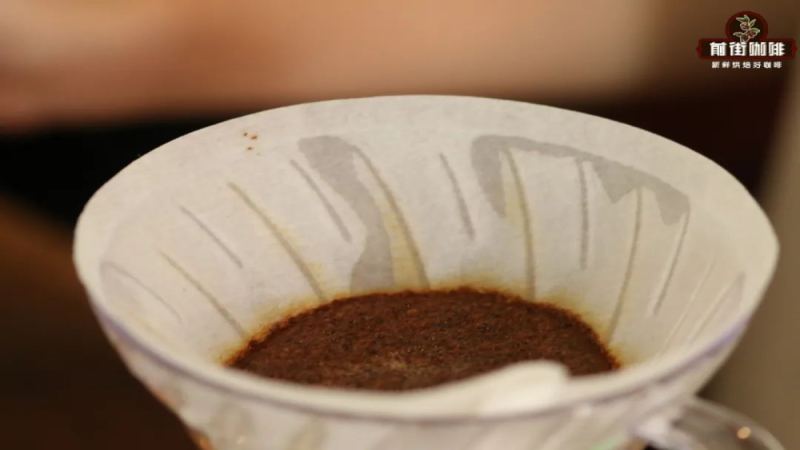
How to process coffee beans during the bloom?
Blooming releases carbon dioxide trapped in the coffee grounds, and that gas otherwise blocks the water from reaching the soluble compounds. A standard reference is water equal to about twice the coffee dose, poured over roughly 30 seconds. When the bed is just moistened, little liquid reaches the server, and the expansion of the grounds shows the gas is escaping. Skipping bloom or doing it incompletely leaves the bed bubbling and disturbs extraction.
Blooming is not mandatory in every recipe; a fine-grind one-pour method can bypass it entirely. For most pour-over routines it improves extraction stability, so the pour is judged by the state of the coffee bed rather than a fixed clock. Adjusting water volume and duration changes the resulting cup, and beginners benefit from keeping the dose ratio and timing consistent while observing how the bed behaves.
Blooming is a key step in pour-over coffee that affects extraction stability, as it releases carbon dioxide from the coffee grounds and creates the conditions for the smooth release of flavor compounds later on. But blooming is not absolutely necessary—the "one-pour" method Front Street Coffee shared before can skip this step entirely. So how exactly should you control the amount of water, the timing, and the technique during blooming? This article uses 2 times the coffee dose and 30 seconds as standard references, analyzes one by one how the coffee's flavor changes when the water amount is too little or too much and when the time is too short or too long, and offers pouring advice suitable for beginners, helping you make more accurate judgments in actual practice.
The core reason we bloom coffee before brewing is to let the carbon dioxide in the coffee grounds—which hinders flavor release—escape, so that the subsequent extraction goes much more smoothly. In other words, adding the blooming step is meant to lower the difficulty of pour-over and make it easier for us to brew out good flavors.
Can pour-over coffee skip blooming? In fact, blooming is not a required step in every pour-over routine. For example, the "one-pour" method Front Street Coffee introduced earlier grinds the coffee beans very fine and pours all the water into the grounds at once, thereby bypassing the blooming step. However, for the vast majority of brewing recipes, adding the blooming step really does make it easier to improve extraction stability and extraction yield. After the coffee bed blooms, the carbon dioxide is released, and the subsequent pouring will not be disturbed. Conversely, if you skip blooming or do it incompletely, the coffee bed will keep bubbling during brewing and interfere with the normal extraction process. Since blooming is so critical to pour-over, what points should you pay attention to when doing it? How will adjustments to the water amount, blooming duration, and pouring technique change the coffee's flavor? The water amount and time for blooming are mainly judged by the condition of the coffee bed. The ideal situation is: the water amount just moistens all the coffee grounds, while very little water flows into the server; the blooming duration is determined by observing how much the coffee bed expands—expansion means the internal gases are being released, and when the bed gradually stabilizes and no longer "exhales," it means degassing is complete.
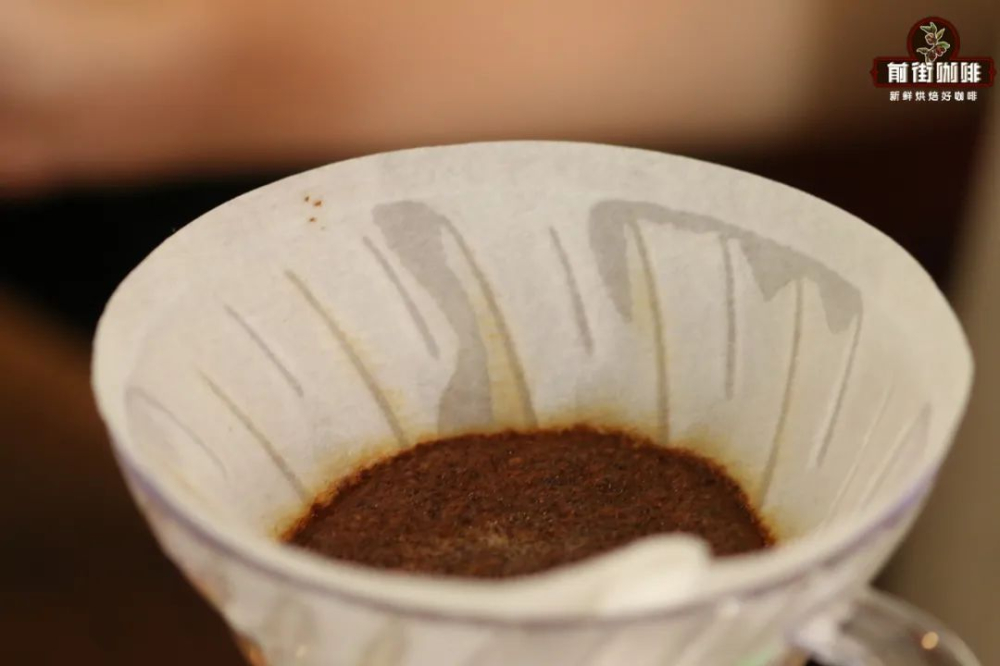
In practical operation, people usually bloom with water at 2 times the weight of the coffee grounds, for about 30 seconds. So what happens when the water amount and time deviate from this standard? Let's take water at 2 times the coffee dose as the standard blooming water amount and 30 seconds as the standard blooming duration, and look at the different cases: - If the pouring amount is less than the standard amount, the coffee bed may not be fully moistened. If your pouring technique is not skilled enough, the grounds at the edges may not get wet; or the surface may look fully wet while some coffee grounds at the bottom are still not soaked through. Coffee brewed this way tends to have astringency.
- If the pouring amount is more than the standard amount, more bloom water will flow into the server ahead of time. With a fixed coffee-to-water ratio, the subsequent pouring amount will inevitably be less than originally planned, and the final coffee will taste more sour with a thinner body.
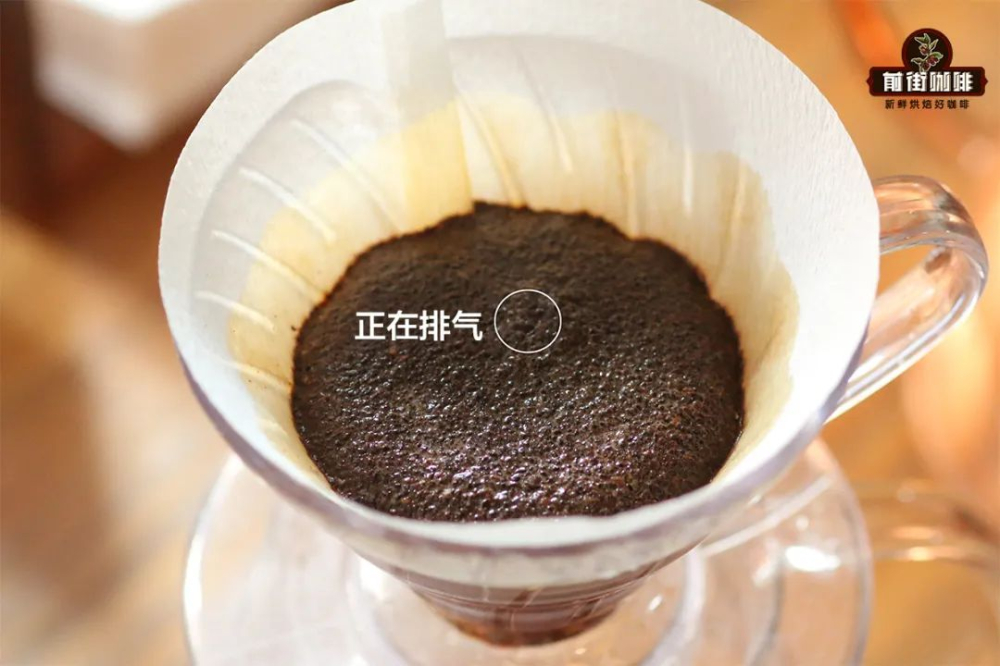
- If the blooming time is too short, the carbon dioxide in the coffee grounds has not been fully released. If you see large bubbles continually rising from the coffee bed during the pouring after blooming, it means the bloom was insufficient. Residual gas will hinder the extraction of flavor compounds, and the bursting bubbles will also disturb extraction, so the final coffee will taste green, astringent, and sharply sour. - If the blooming time is too long, the water on the surface of the coffee bed (the "hamburger") will gradually sink, leaving the expanded coffee grounds with large gaps between particles caused by water loss. When you continue pouring, a hole will appear, followed by rougher coffee foam. Seeing this means the bloom has gone too far. Coffee brewed this way tends to have a burnt-bitter finish, and its sweet-and-sour balance is not pronounced.
As for the pouring method during blooming, Front Street Coffee recommends that beginners pour in circles from the center outward until the surface of the coffee grounds is completely moistened. This technique makes it easiest to evenly wet the entire coffee bed.
The above content is compiled by CoffeeHunters, a coffee news website.


