







Which Pour-Over Dripper Suits Your Coffee Extraction Style?
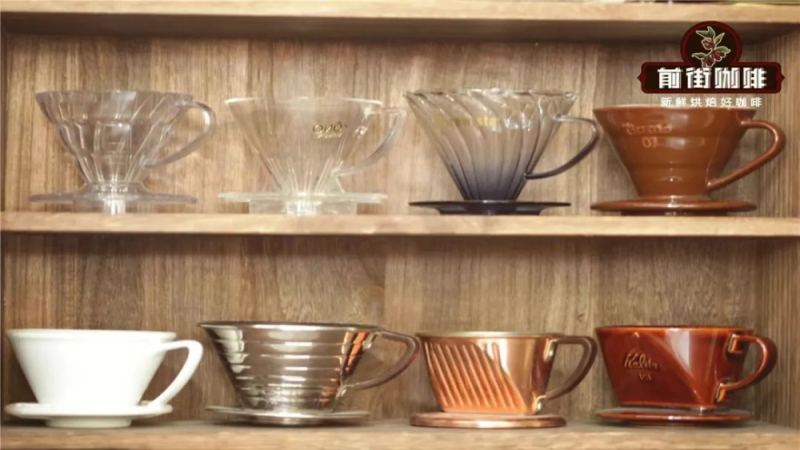
Choosing a pour-over dripper comes down to two things: the flow channel design and the material. Spiral ribs, like those on the V60, push water along the cone instead of straight down, which speeds up flow, improves evenness and reduces clogging. Vertical ribs do the same job more directly: they hold the filter paper off the wall so water can pass.
The cone shape itself is standard because it extracts evenly and fits most filter papers. Material choices are resin, glass, ceramic and metal, each with different heat retention and durability. For coffee enthusiasts, functionality should come first. Front Street Coffee, drawing on years of brewing experience, advises matching the dripper to your own brewing style before appearance.
Choosing a handy dripper is the first hurdle for pour-over beginners. The market is flooded with all kinds of drippers, from the classic V60 to oddly shaped Strawberry and Diamond drippers—what exactly are the differences between them? This article starts with the structural design of the flow channels, analyzing how spiral ribs, vertical ribs, and concave flow grooves affect water flow speed. It then compares the real-world performance of materials like resin, glass, ceramic, and metal, and finally discusses the involution trend in dripper appearance design. Front Street Coffee, drawing on years of brewing experience, offers functionality-first purchasing advice to help coffee enthusiasts find the dripper that best matches their own brewing style.
The Evolution of Flow Channel Design
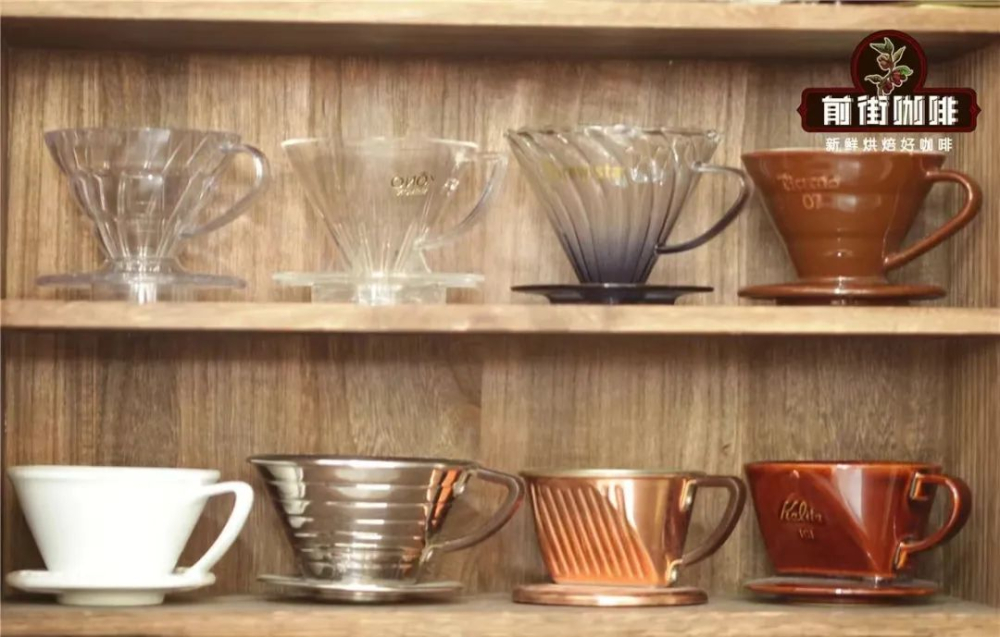
The flow channels on a dripper are the key component affecting coffee extraction. Without structures like ribs, a dripper would be nothing more than a funnel, and the filter paper would cling tightly to the walls—just like with a Chemex—making it very difficult for water to flow through smoothly. That's why, once cone-shaped drippers became the accepted standard, manufacturers started racking their brains to design all kinds of flow channels on that foundation. The reason for choosing the cone shape is easy to understand: this shape inherently makes even extraction easier while being compatible with the vast majority of filter papers on the market.
Hario added alternating long and short spiral ribs to the cone-shaped dripper. With spiral ribs, water no longer simply flows straight down under gravity—it has to follow the direction of the ribs. This improves extraction evenness, speeds up the flow, and makes clogging less likely. This dripper is the famous V60, named simply because its cone angle is 60 degrees.
Later, other manufacturers also released cone-shaped drippers with spiral patterns, likewise called V60. These drippers look similar at first glance but differ in their design details. For example, the one Front Street has on hand has spiral ribs running in the opposite direction from Hario's, and all the ribs are elongated.
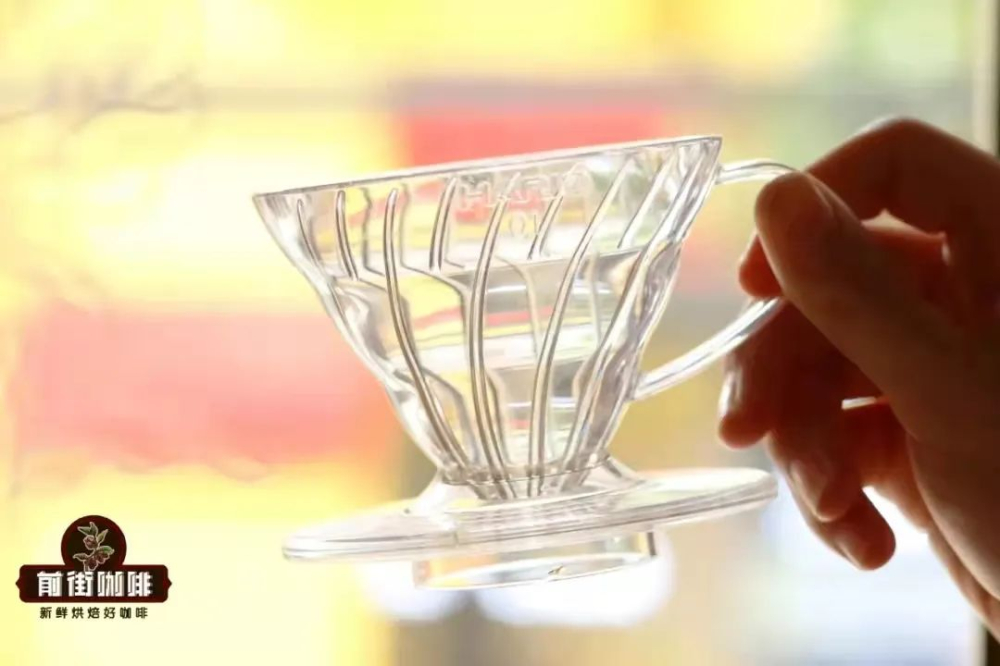
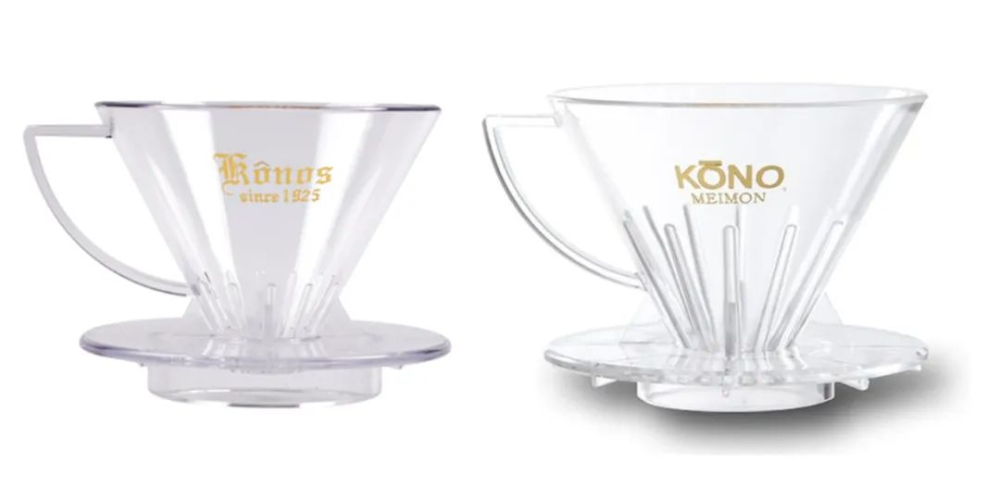
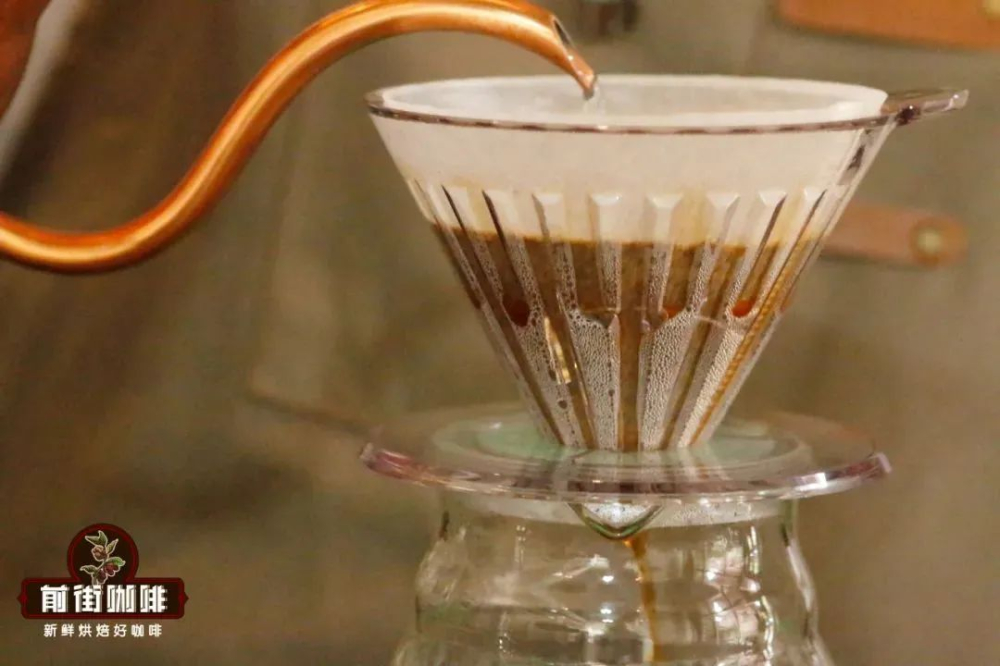
There's also a more straightforward design—vertical ribs—with an equally simple and clear purpose: to speed up water flow. You can think of it this way: without ribs for support, the filter paper would fit snugly against the dripper, making it hard for water to get through. With a structure that props up the filter paper, water can flow through those gaps. In other words, the more ribs and the longer they are, the bigger the gaps, and the faster the flow. The differences between the various versions of the Kono dripper lie precisely in rib length, which creates the difference in flow speed.
The Star dripper is famous for its fast flow precisely because its walls are densely lined with alternating long and short vertical ribs.
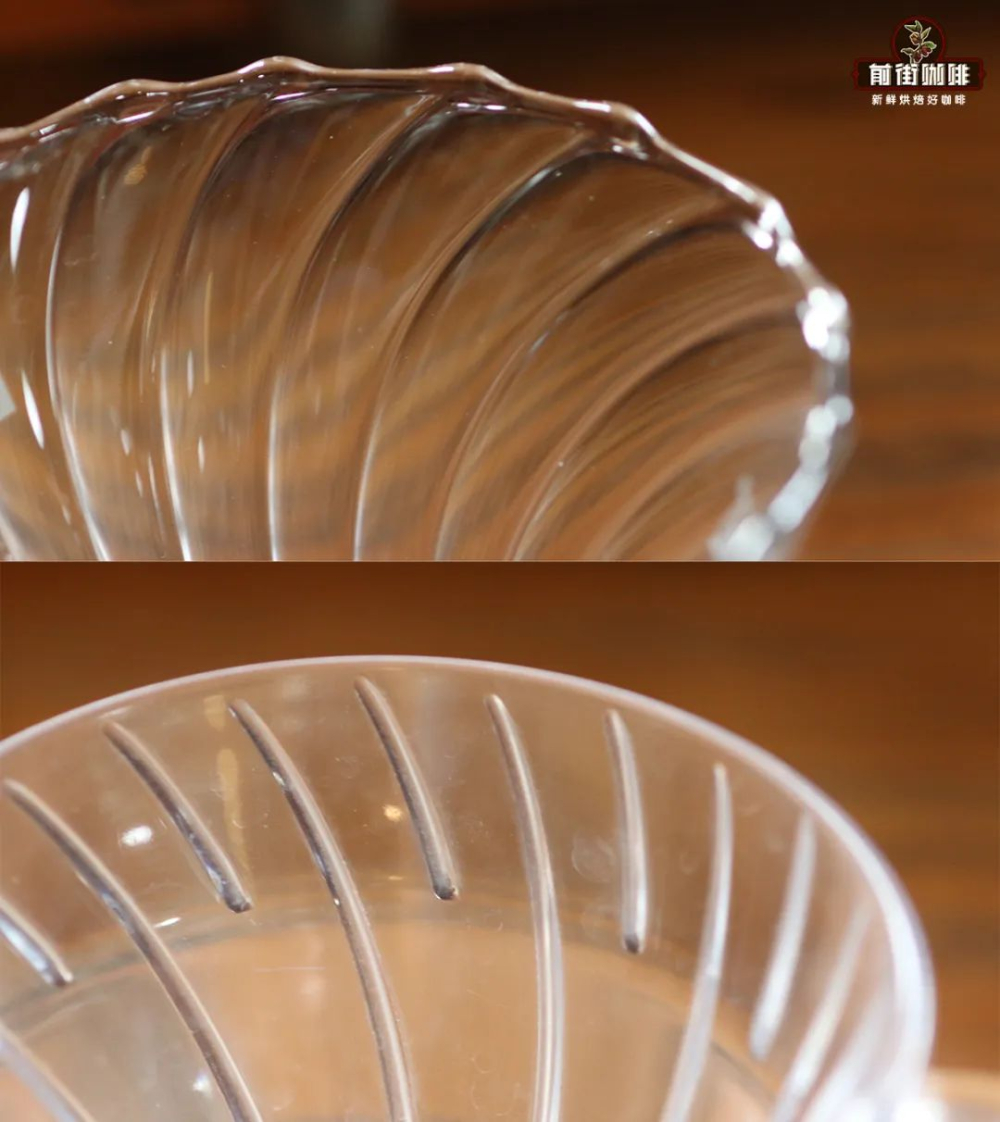
Besides outward-protruding ribs, there are also inward-concave flow grooves. The principle is the same—creating gaps to let water flow faster.
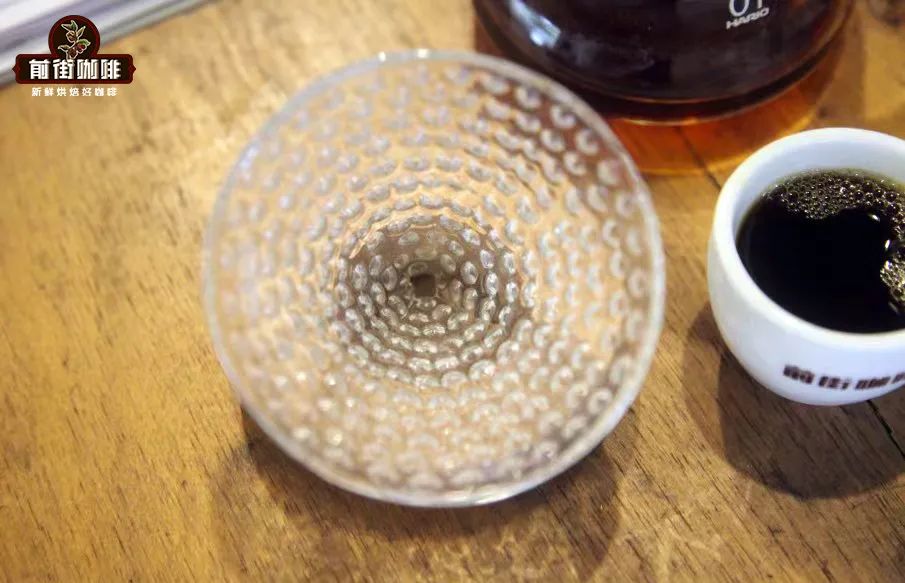
Of course, some drippers take a different path, like the Strawberry dripper and the Diamond dripper. The Strawberry dripper's support structure isn't strip-shaped but consists of densely packed small bumps, looking like the seeds on a strawberry's surface. Although the number of support points is high, which theoretically should make water flow fast, the reality is the opposite—its flow is very slow, and the problem lies in its outlet hole being simply too small.
The Diamond dripper gets its name because its flow channels are arranged in a diamond pattern, sparkling like the facets of a diamond. Its flow speed is on par with the V60.
Front Street believes that when choosing a dripper, functionality should come first—the best dripper is the one that suits your own brewing habits. Faced with all these rib and flow channel designs, we just need to choose based on their respective flow speed characteristics.
How to Choose Dripper Material
Common dripper materials include resin, glass, ceramic, and metal. Honestly, there's not much left to compete on when it comes to materials, aside from some types that could already be considered handicrafts, like bamboo-woven drippers.
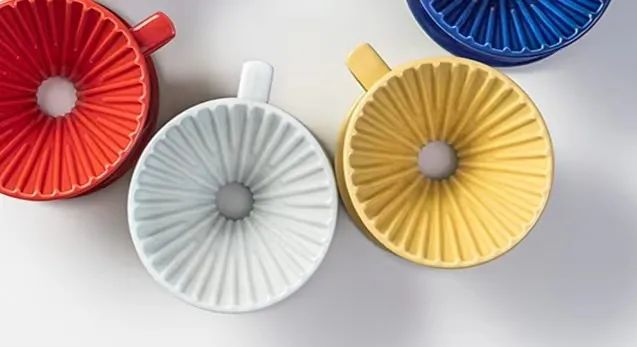
From a practical standpoint, Front Street recommends choosing resin. The primary reason is that it's cheap—you won't feel bad if you drop it. Of course, that's only a secondary factor; more importantly, resin has an advantage over other materials in manufacturing precision.
If you want both practicality and good looks, go with ceramic. In terms of craftsmanship precision, glass and ceramic are evenly matched, but ceramic far surpasses glass in aesthetic moldability. As for heat retention, after the same preheating, ceramic also performs better.
Functional Considerations
Many new drippers nowadays come with special features. For example, the valve-equipped V60 that Hario released adds a valve to control the descent of water on top of the V60, functioning similarly to a Clever Cup. This design is friendlier to beginners and adds more playability for experienced users.
The Involution of Dripper Appearance
Beyond competition in practical structures, appearance has also become an important battlefield in the dripper involution. Think about it: when functionality is largely similar, appearance and price naturally become the key factors in consumer decisions. When it comes to looks, colorful schemes have long been standard practice for major brands. To stand out among the crowd of drippers, you have to offer a different memorable point.
Take the previously viral Origami dripper, for example—it largely won consumers' hearts with its minimalist, sharply angular shape combined with vivid yet tasteful colors.
Another example is the Rose dripper and Azalea dripper from Taiwan's Zhizao Suo, as well as COFIL's Mount Fuji dripper. Seeing these works, one can't help but exclaim: so drippers can be made like this!
Images from the internet
At this level, the discussion is no longer about whether a dripper is practical, but whether its beauty can move you. Then you look at the price and can only sigh: so it was poverty that limited my imagination.
The above content is compiled by CoffeeHunters, a coffee news website.


