







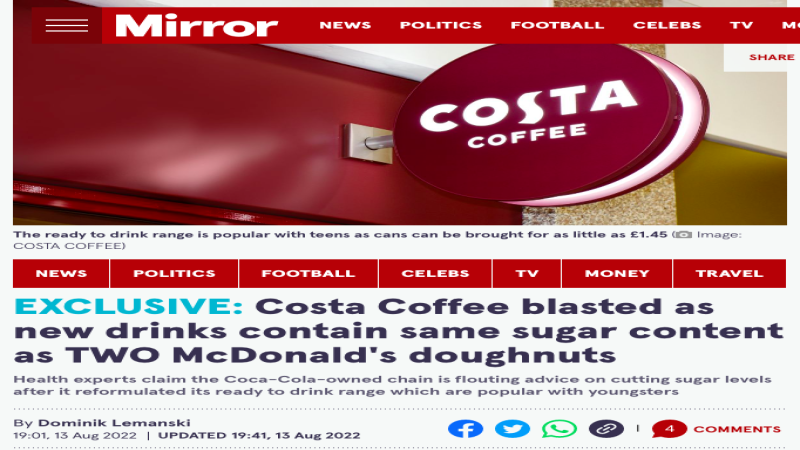
What Is Coffee Sugar Doing in Ready-to-Drink Latte Cans?
Costa's ready-to-drink coffee has quietly raised its sugar content, with a vanilla latte holding 14 grams of sugar per 250 milliliters and a classic latte holding 13 grams, according to a Mirror report. That is about one-third more than the 2019 survey figure. Health experts say the increase works against the UK government's sugar-reduction drive aimed at obesity and tooth decay.
Costa responded that the new recipe follows consumer feedback on flavor and that the higher total comes from naturally occurring milk sugar, not added sugar. The products sell for as little as 1.25 pounds, which helps explain their popularity among teenagers. For comparison, the UK National Health Service advises children aged 4 to 6 to keep daily sugar under 19 grams.
Coffee is often labeled as a healthy drink, but the sugar problem in ready-to-drink coffee cannot be ignored. According to a report by the British Mirror, Coca-Cola's brand Costa's pre-packaged coffee is quietly increasing sugar content, with some products seeing a one-third rise in sugar compared to 2019. Experts point out that this move runs counter to the UK government's sugar reduction initiative. Meanwhile, countries like Singapore have introduced measures to restrict advertising of high-sugar drinks, and Chinese consumers are also beginning to pay attention to sugar and sugar substitute options in milk tea and coffee. The health risks behind a sweet drink deserve the attention of every coffee lover.
Coffee has always been associated with a unique bitterness that gives it a healthy impression, but the actual situation of ready-to-drink coffee is not necessarily so. A report by the British Mirror points out that Costa, a chain coffee brand under Coca-Cola, is quietly increasing the sugar content of its pre-packaged coffee products.
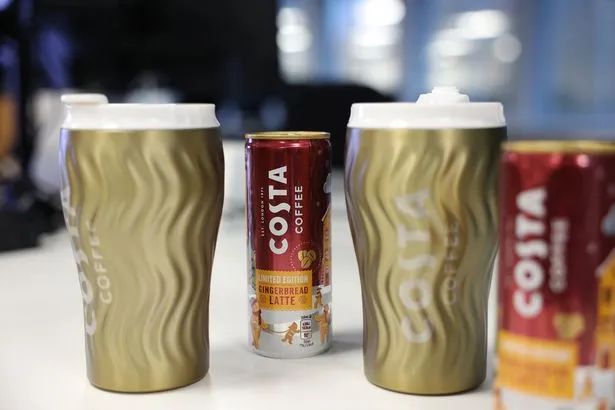
Survey data shows that among Costa's ready-to-drink products, a vanilla latte contains 14 grams of sugar per 250 milliliters, while a classic latte contains 13 grams. The Mirror says this latest figure is one-third higher than the 2019 survey results. Moreover, some products sell for only £1.25, and their low price makes them popular among teenagers.
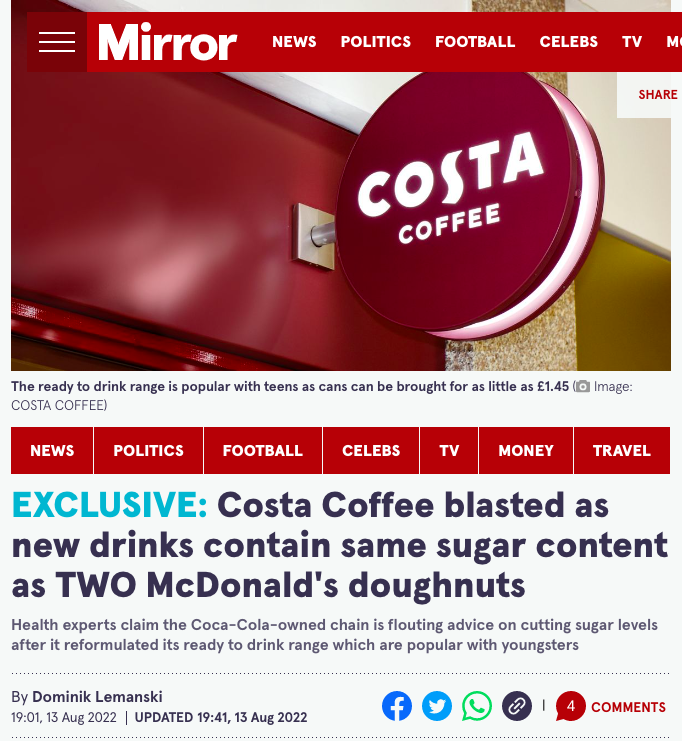
The UK National Health Service recommends that children aged 4 to 6 should consume no more than 19 grams of sugar per day, and those aged 7 to 10 should keep it within 24 grams. Some health experts criticize this Coca-Cola-owned chain brand for ignoring official advice to reduce sugar intake to fight obesity and tooth decay.
Staff at the UK sugar survey organization Action on Sugar also said that although the UK government has been pushing the food industry to proactively reduce sugar content in products, the latest evidence shows that companies have not been actively cooperating.
In response, Costa said the brand adjusted the overall flavor of its products based on consumer feedback, and the total sugar content in the new recipe has increased, but this comes from the sugar naturally present in the milk ingredient, not from added sugar.
Dependence on sweetness plays out around the world day after day. When the body consumes sweet substances, the brain perceives sweetness and releases dopamine, producing pleasure, which may be the root cause of people's sugar addiction.
To address the relatively high incidence of diabetes, some countries are working to guide consumers' diets and sugar intake. For example, Singapore requires nutritional grades to be labeled on product packaging and menus based on sugar content. Singapore's health minister announced at an event on August 11 that, to curb the development of diabetes, the country will ban advertising of high-sugar milk tea and coffee through any online or offline channel next year.
In China, phrases such as "the first cup of milk tea in autumn," "the first cup of coffee in autumn," and "milk tea by the bucket" have also sparked controversy, and domestic netizens' attitude toward such "sugar-coated bombs" is different from before. Consumers are beginning to pay attention to the sugar content and added sweeteners in drinks, and merchant menus have gradually evolved from simple "full sugar," "half sugar," and "less sugar" to offering sugar substitute options.
A cup of sweet milk tea can indeed bring a lot of happiness, but it also hides health risks. Recently, a 37-year-old pregnant woman 31 weeks pregnant in Nanning, Guangxi, had abnormal blood test results because she drank a cup of milk tea almost every day: her triglycerides were severely exceeded, and she showed signs of premature birth. Excess fat and sugar made her blood appear "milk tea-colored," and she also suffered from multiple conditions such as diabetes, gestational diabetes, and high blood sugar.
A moment of sweetness is indeed necessary, but do not overindulge.
Image source: Internet
For more coffee bean information, please follow Coffee Workshop (WeChat public account cafe_style) For professional coffee knowledge exchange, please add WeChat ID kaixinguoguo0925
The above content is compiled by CoffeeHunters, a coffee news website.


