







Why Does Slurping Improve Coffee Quality Perception?
Slurping means drawing coffee rapidly into the mouth so the liquid atomizes, releasing more volatile aromatic compounds for the taste buds and olfactory nerves to pick up. It is the standard method baristas use during cupping to judge coffee quality, because perceived flavor depends on both tongue taste and aroma.
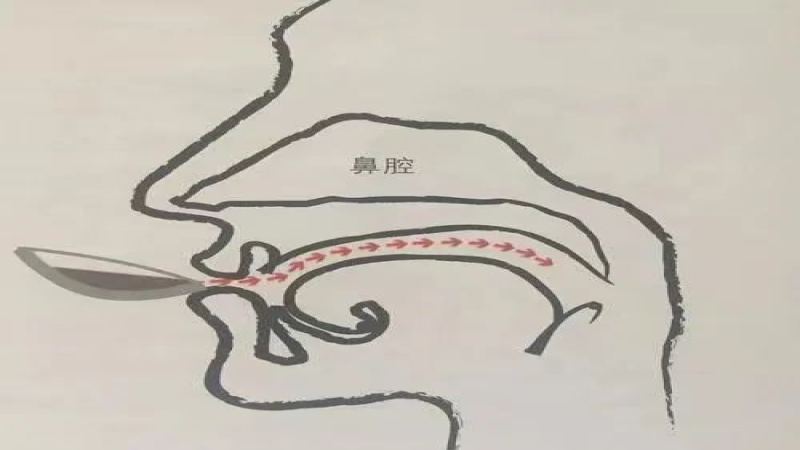
The procedure: close the lips, place the tongue tip between the teeth, leave a narrow gap, and inhale fast with abdominal force. Faster inhalation means finer atomization, similar to splitting a liquid into countless droplets that expose far more surface area, which helps release aroma. A coffee enthusiast can try it at home, though louder does not mean better.
In the world of coffee tasting, there is a unique drinking method known as "slurping," which involves rapidly drawing coffee liquid into the mouth to atomize it, thereby maximizing the release of volatile aromatic compounds and allowing the taste buds and olfactory nerves to capture coffee flavors more fully. Front Street Coffee has touched on this method when sharing knowledge about coffee flavors. This article will detail the operational essentials of slurping, the science behind it, and its practical value in cupping and everyday drinking, while also exploring whether this tasting method is suitable for ordinary coffee enthusiasts in their daily routines, and offering related advice.
Those unfamiliar with the situation might mistakenly think this is a ramen-eating contest. In reality, this action, which produces a "slurp~slurp~" sound, is precisely the method known as "slurping" in coffee tasting.
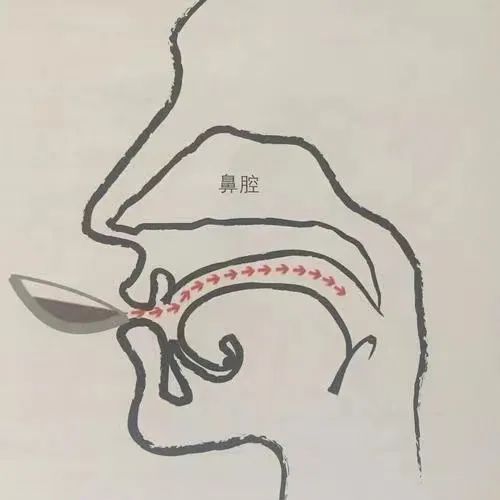
Why do professionals adopt this seemingly less-than-elegant way of drinking? Front Street has touched on this in sharing knowledge about coffee flavors: the flavors we perceive when drinking coffee are not just the tastes detected by the tongue, but also the aromatic flavors perceived by the olfactory nerves. Only the combination of the two constitutes the coffee flavor we perceive. Slurping happens to maximize the perception of coffee flavors. The specific operational essentials are: close both lips, place the tip of the tongue between the teeth, slightly open the lips to leave a narrow gap, and use the power of the abdominal dantian to rapidly draw the coffee liquid into the mouth, accompanied by a sharp "slurp~" sound.
During the high-speed inhalation process, the coffee liquid is atomized, which is like dividing a whole liquid into countless tiny droplets—the volume remains unchanged, but the surface area is greatly increased, making it easier for the volatile aromatic compounds in the coffee liquid to be released. In this way, our taste buds and olfactory nerves can more easily capture the flavors of the coffee beans. For this reason, baristas generally use slurping to evaluate coffee quality during cupping. Generally speaking, the faster the inhalation speed, the higher the degree of atomization, and the louder the resulting sound. However, the logical relationship here needs to be clarified—it is not that a louder sound indicates a better slurping effect.
So is it necessary to slurp when drinking coffee normally? Objectively speaking, adopting this tasting method can indeed capture richer flavor layers than conventional drinking methods. As long as it does not disturb others, it is worth trying. But if you are in a public place, the sound produced may affect those around you, so you need to make a flexible judgment based on the specific situation.
However, to be honest, drinking coffee this way is actually quite tiring. Moreover, when we drink coffee normally, we do not necessarily have to pursue the ultimate flavor experience—the mouthfeel of the coffee is also an important part of the experience. With ordinary drinking methods, the coffee's mouthfeel (smoothness, fullness, richness) will be more comfortable.
If a friend wants to learn this tasting method, remember: "Don't think about how to drink to look professional, but drink professionally." When tasting with slurping, you can also alternate with ordinary drinking methods to see whether slurping yields a more pronounced flavor perception. If it does not, it may be that your slurping technique is incorrect.
Finally, it should be made clear that slurping, as a tasting method, can only help you perceive more coffee flavors; it cannot itself identify specific flavors for you. To accurately identify flavors, you still cannot do without extensive drinking, deep understanding, and repeated memorization.
The above content is compiled by CoffeeHunters, a coffee news website.


