







Does pour-over water temperature really change Panama Geisha?
A side-by-side brew of the same beans at 90°C and 93°C shows the difference is real but modest. Using Front Street Coffee's Butterfly blend, which contains 70 percent Panama Geisha, with all other parameters held steady, the 90°C cup came out softer and more balanced in acidity and sweetness, while the 93°C cup had a stronger aroma and sweeter profile but turned nutty and astringent as it cooled.
Both cups used 15 grams of coffee at a 1:16 ratio, a grind with 80 percent passing a No. 20 sieve, a V60 dripper, and a three-pour method. Measured concentration was 1.32 percent at 90°C and 1.40 percent at 93°C, so the higher temperature raised extraction by about 1.2 percent. A 91°C setting is offered as a stability option, and beans suited to hotter water or a cooling brew can be handled differently.
What temperature should pour-over coffee really be set at? Does a difference of two or three degrees really make a noticeable difference? This article takes the recommended range of 90–93°C as an example, selecting Front Street Coffee's Butterfly coffee beans containing 70% Panama Geisha, and brews at 90°C and 93°C respectively, keeping all other parameters the same, comparing the differences through concentration data and flavor tasting: 90°C is softer, with balanced acidity and sweetness; 93°C has a richer aroma and more prominent sweetness, but after cooling may develop nutty notes and astringency. The article also offers Front Street Coffee's commonly used 91°C recommendation for improving stability, as well as ideas on bean types suited to higher water temperatures and the cooling-brew method, helping you find a suitable water temperature plan between stability and flavor.

However, if the water temperature differs by only two or three degrees, how big a difference will there ultimately be in the cup? Taking medium-light roast as an example, the recommended range given by Front Street Coffee is 90–93°C—does this mean any temperature within this range can be used to brew the same medium-light roasted beans? To find out, let's do a controlled experiment directly.
For this test, we selected Front Street Coffee's Panama Butterfly coffee beans, which contain 70% Panama Geisha and carry the typical fruity notes of Geisha. The focus of comparison is the impact of water temperature changes: we brew separately at the lower limit of the recommended range, 90°C, and the upper limit, 93°C.
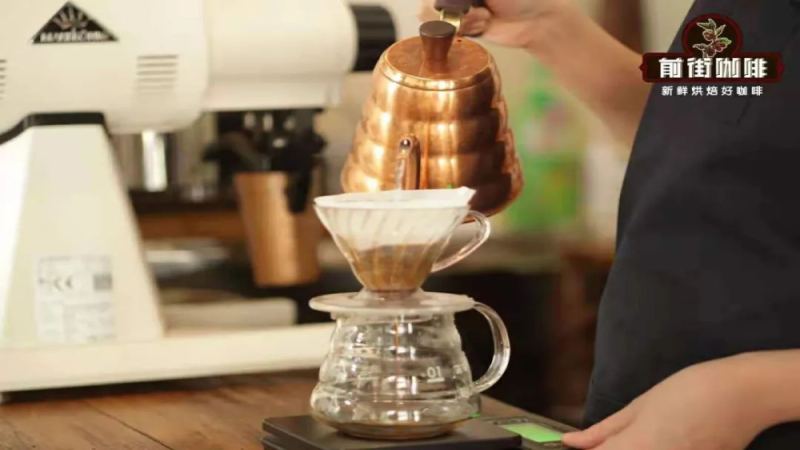
Other brewing conditions use Front Street Coffee's standard parameters: Dose: 15 grams Ratio: 1:16 Water temperature: 90°C/93°C Grind size: 80% passing a No. 20 sieve Dripper: V60 dripper Technique: three-pour method
Samples were then taken to measure the concentration of the two cups: the 90°C cup was 1.32%, and the 93°C cup was 1.40%. From the data, raising the water temperature by 3°C increased the extraction yield by 1.2%.
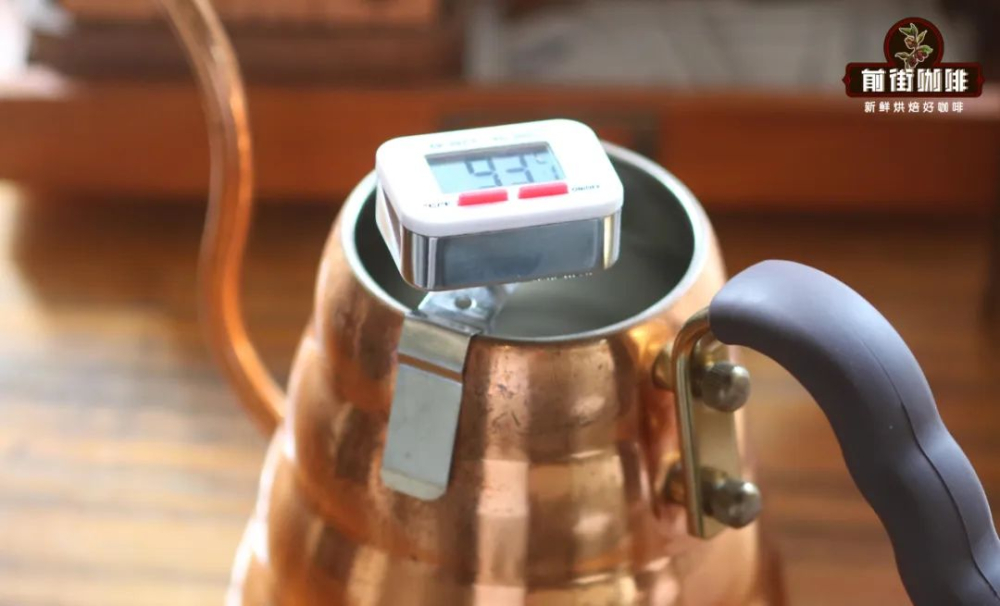
Combining the data for a flavor comparison. First, the 90°C group: the aroma is mainly fruity and sweet, but relatively weak in intensity; on the palate it shows citrus fruit notes, with soft acidity and a hint of light floral honey sweetness and tea-like character. Overall it can present the bean's basic flavors, with moderate concentration, drinking smooth and comfortable.
Now the 93°C group: the aroma is noticeably stronger and more three-dimensional, showing a composite aroma of fruit and ginger flower; the sweetness on the palate is higher than the 90°C group, and although it is likewise built on citrus notes, the ginger-sugar-like sweetness is more prominent and the layers are clearer. However, there are also minor flaws: after the coffee cools, a slight almond-like nutty flavor and astringency emerge.
From the tasting results, between the upper and lower limits of the recommended water temperature, a difference of just 3°C produces a fairly noticeable change in the cup. Within the recommended range, a lower water temperature more easily yields a soft, smooth style; a higher water temperature can release richer aromas and flavors, but at the same time more easily brings a risk of astringency and muddiness.
Therefore, when brewing the vast majority of medium-light roasted coffee beans, Front Street Coffee usually sets the water temperature at 91°C, to reduce surprises caused by variables and improve consistency in the cup. Of course, some beans are better suited to higher temperatures, such as Ethiopia's Uraga and Kenyan coffee beans; using a higher water temperature better showcases their flavor layers and solid acidity.
As for choosing water temperature, there are now more approaches. For example, the popular cooling-brew method: use a higher temperature (≥93°C) in the early stage of brewing to extract the middle and front sections, obtaining more abundant aromas and flavor compounds; then switch to a lower temperature (≤88°C) in the later stage to adjust concentration and reduce the release of bitter compounds in the latter half.
The above content is compiled by CoffeeHunters, a coffee news website.


