







What Does the Australiano Say About Australian Coffee?
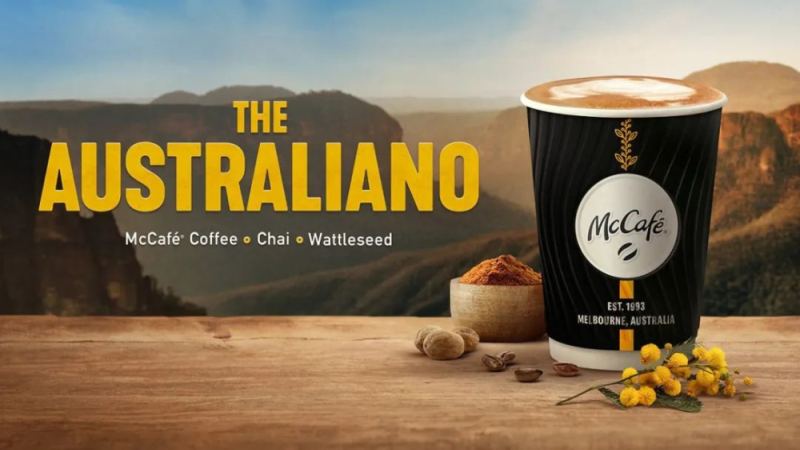
McDonald's Australia has launched the Australiano, a drink made with locally roasted beans plus wattleseed and chai, aiming to give the country a signature coffee of its own. The chain's McCafe brand, founded in Melbourne in 1993, already accounts for one in every four cups of coffee sold in Australia, so the launch builds on an existing base.
The company collected taste preferences from customers across the country over about two years before settling on the recipe. Australian coffee culture has produced the flat white, the piccolo and single-origin espresso, and its cafe scene has pushed Starbucks to scale back locally. The Australiano is positioned as a national calling card alongside Italian espresso and the Americano.
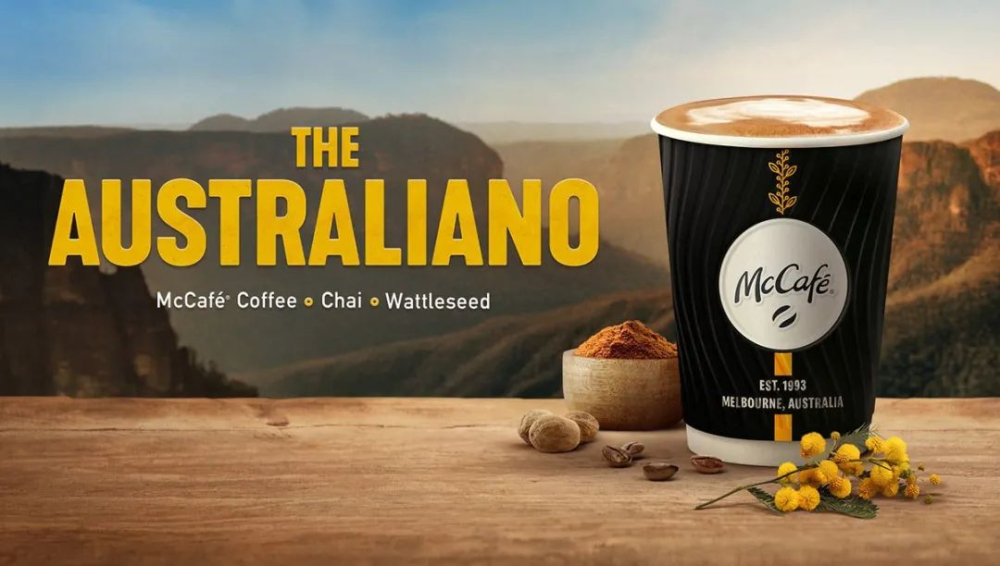
McDonald's has recently created a coffee specifically for Australia called the Australiano, blending locally roasted beans, wattleseed, and chai flavors, in an attempt to establish a signature drink for this country with a deep coffee culture. McCafe, a brand born in Melbourne in 1993, accounts for one in every four cups of coffee sold in Australia. Now, with the launch of an Aussie-style coffee, it not only completes the soul of local coffee but also draws attention to Australia's coffee prowess. From the first-class offerings in Melbourne and Sydney, to baristas' skill of carrying multiple cups in one hand during peak hours, to the continuous emergence of innovations like the flat white, piccolo, and SOE, Australian coffee has long established its own school—even forcing Starbucks to retreat in its home market. This article takes you through the story behind this cup of Aussie-style coffee and why Australian coffee culture is so strong.
According to Australian news outlets, McDonald's recently launched what it calls "a coffee that belongs to Australians themselves" for Australian consumers. The product uses coffee beans roasted locally in Australia and adds the uniquely local wattleseed as well as the chai flavor that Australians love, ultimately crafting a cup of "Australiano" that suits Australian tastes and carries distinct regional characteristics.
Although Australia has a rich coffee culture, it has never had a coffee that could truly represent the country. Just as Italy has espresso and America has the Americano, Australia ought to have its own national coffee calling card. To this end, McDonald's Australia set a goal two years ago to create a coffee of Australians' own. They extensively collected taste preferences and suggestions from customers across the country, then conceived this unique coffee product that could represent Australia, naming it the Australiano.
McDonald's Australia brand manager Lancy Huynh said that Australia is a country with an extremely strong coffee culture, and being able to create a coffee that belongs to the people and represents the nation is simply a wonderful thing. As one of the earliest advocates of Australian coffee culture, McCafe hopes this "Australiano" can spark a new wave of coffee culture "revolution" while becoming a blended coffee that Australians are proud of.
McDonald's founded McCafe in Melbourne, Australia, in 1993. As McCafe continued to succeed in Australia and overseas markets, it came to be regarded by Australians as "a true Australian success story." In Australia, one in every four cups of coffee sold comes from McCafe, making it already a national chain coffee brand locally.
However, the classic coffees McCafe has long offered are none other than Italian espresso and the Americano, lacking the "soul" of Australian coffee culture. As a result, quite a few Australians feel that selling Americanos in Australia is somewhat out of place... So, to better promote Australian coffee culture, McCafe, as the earliest advocate, once again "led by example" and launched the "Australiano." McDonald's also said that in the coming weeks, everyone across Australia will be able to taste this new product for free. (envious.jpg/gif)
Just how strong is Australia's coffee culture? Local coffee has always been its own system, differing from other countries in everything from roasting methods to drink names and preparation techniques. Almost every cafe does exceptionally brisk business, with output during busy hours reaching over 200 cups an hour, and baristas are all run off their feet. As a result, most Australian baristas have developed a special skill—carrying several cups of coffee in one hand at the same time. Despite the busyness, the quality of every cup remains what baristas care about most.
Especially in major cities like Melbourne and Sydney, every coffee shop maintains first-class standards, and prices are very affordable. What cafes compete over is not style, but the skill of the baristas and the quality of every cup of coffee. That's why many friends who have been to Australia remain endlessly nostalgic about the local coffee.
In Australian cafes, besides regular coffee products, most shops also offer a "secret menu," accommodating customers' various complicated ordering styles as much as possible. For example, a cappuccino with soy milk, with foam taking up three-quarters of the cup (meaning that apart from the espresso, all the remaining space in the cup is foam)—even when busy, baristas must properly handle customers' regular (but not too outrageous) customization requests.
Some customized drinks have also gradually become fixed options on many coffee menus, such as the well-known flat white and the piccolo. These approaches, which appear to have evolved from the latte, mostly originate from Australian creativity.
Australia's coffee culture would not be what it is without Italians, who brought espresso machines and European cafe culture, making espresso an important part of Australian coffee culture. According to Australian historians, espresso was introduced in the 1950s, but at the time locals discriminated against Italians, so coffee did not take off then. It was not until the urban renewal and gentrification that began in the 1980s that a huge push was given to the takeoff of Australian coffee culture.
The chairman of the Australian Specialty Coffee Association also once mentioned that Australians love the mouthfeel of velvety steamed milk evenly blended with coffee. To this end, Australians have even specifically studied dairy cattle breeds, with the aim of further improving the texture of milk and making Australian milk coffee even more distinctive.
With the development of specialty coffee, local Australian baristas are also constantly experimenting, improving, and elevating the quality of every cup. As a result, in recent years many winners of barista and roaster competitions have come from Australia. While some improve milk quality, others improve the coffee itself, so in recent years more and more independent or specialty coffee shops have opened in Australia, even "repelling" Starbucks from the Australian market.
In every specialty coffee shop, baristas not only focus on the mouthfeel of milk coffee but also put more thought into roasting coffee beans, so that every cup of milk coffee customers drink is not only silky and rich but also lets them feel the flavor characteristics of the coffee's origin—or lets the roaster, through their own roasting approach, bring out a certain flavor of the coffee in the milk coffee. Thus SOE (single origin espresso) came into being.
Thanks to its continuously developing coffee culture and a series of novel, innovative coffee service methods, Australia seems able to maintain its reputation as a leader in specialty coffee. This time, the "Australiano" launched by McCafe may become a weather vane for the development of Australian coffee culture—from quality to name, letting people around the world think of Australia when they see a cup of coffee, and feel Australians' love for and pursuit of coffee.
Image source: Internet
For professional coffee knowledge exchange and more coffee bean information, please follow Coffee Workshop (WeChat public account: cafe_style)
For more specialty coffee beans, please add the private WeChat of Front Street Coffee, WeChat ID: qjcoffeex
The above content is compiled by CoffeeHunters, a coffee news website.


