







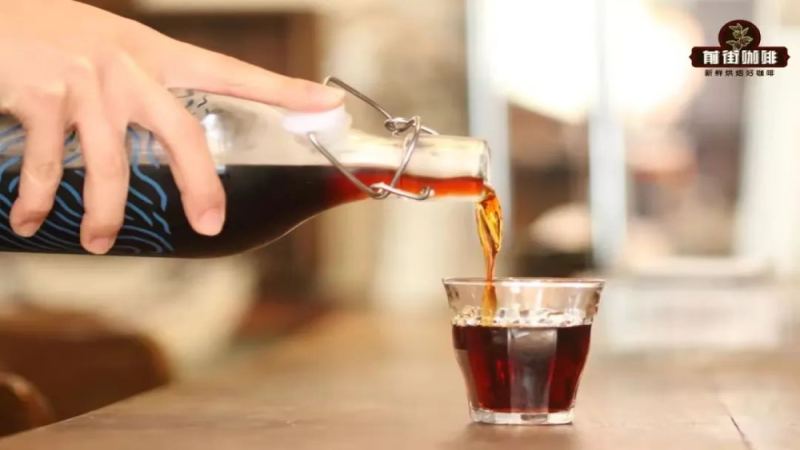
What does the process description of making coffee involve for cold brew?
Cold brew coffee is made by steeping or dripping coffee grounds with cold water over a long period, which contrasts with hot water brewing. Because cold water extracts far less efficiently than hot water, the process relies on extended time: a typical cold brew cycle runs about 6 to 8 hours to reach a satisfactory concentration.
Cold brew and ice drip are the two common forms of cold brew coffee, distinguished from cold brew steeped coffee in some contexts. The longer extraction releases water-soluble flavor compounds more fully, giving a richer taste and a mellower mouthfeel. Bean selection, grind size, coffee-to-water ratio, and steeping time all shape the result.
Cold brew coffee has attracted increasing attention from coffee enthusiasts in recent years. It extracts coffee liquid by steeping or dripping with cold water over a long period, forming a sharp contrast with conventional hot water brewing. Cold brew and ice drip are the two most common forms of cold brew coffee. This article will systematically introduce the key points of making cold brew coffee, including suitable coffee bean selection, grinding size standards, coffee-to-water ratio, and steeping time, while also helping everyone clarify the relationship between coffee bean flavor and the cold brew extraction method. The article also retains Front Street brand coffee bean recommendations, making it convenient for readers to choose according to their own taste preferences.

Recently, quite a few friends have asked Front Street about cold brew coffee, so today we'll take this opportunity to talk properly about "cold brew coffee."
So-called cold brew coffee is fundamentally completely different from brewing coffee with hot water. It is a method of obtaining coffee liquid by steeping or dripping coffee grounds with cold water over a long period. Cold brew and ice drip are the two most common forms of cold brew coffee. However, in some contexts today, cold brew coffee is also narrowly used to refer specifically to cold brew steeped coffee, in order to distinguish it from ice drip coffee. This may be related to translation habits—cold brew coffee corresponds to the English "Cold Brew Coffee," while ice drip coffee corresponds to "Cold Drip Coffee" or "Dutch Coffee."
When making pour-over coffee normally, water temperature is an extremely important factor, because the temperature directly determines the extraction efficiency of the coffee. The extraction ability of cold water is far inferior to that of hot water. To get a cup of coffee with a satisfactory concentration, the only way is to compensate by extending the extraction time. For this reason, the production cycle of cold brew coffee is quite long, usually requiring 6 to 8 hours.
The most notable difference between cold brew coffee and hot coffee is the longer extraction time, which allows water-soluble flavor substances to be released more fully, making the finished product taste richer and the mouthfeel more mellow. In addition, because the entire extraction and storage process is carried out at low temperature, the shelf life is naturally longer, generally allowing it to be stored for 3 to 5 days.
So what kind of coffee beans should be chosen for cold brew coffee? Front Street's suggestion is to use medium-light roasted single-origin coffee beans. The cold brew coffee made this way has a refreshing and pleasant taste, especially suitable for enjoying in summer.
Some friends may want to know whether a certain coffee bean is suitable for cold brew, or may hope Front Street will recommend a few beans suitable for making ice drip coffee. In this regard, Front Street feels it is necessary to help everyone sort out the connection between coffee bean flavor and cold brew coffee, so that it becomes clearer what kind of coffee beans you need.
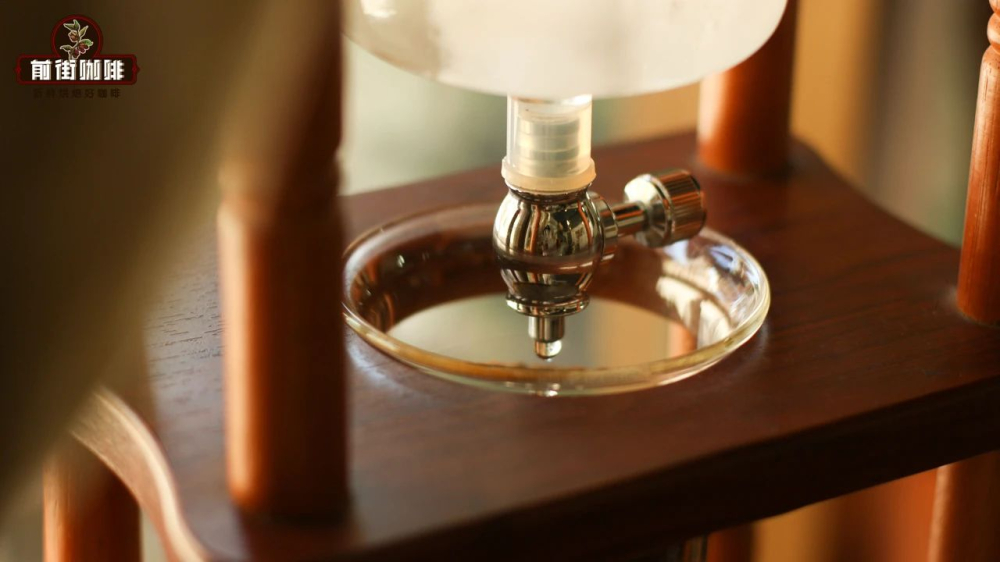
The flavor description on a coffee bean package comes from the taste perceived during cupping. In other words, no matter which extraction method is used, the coffee produced will present the flavors stated on the label. As a production method, cold brew coffee can highlight certain specific flavor characteristics, such as a fresh citrus acidity or a rich fermented aroma.
Therefore, whether used for pour-over or cold brew, you can choose single-origin coffee beans whose flavor description matches your taste preferences. There is no contradiction between the flavor of the coffee beans themselves and the cold brew extraction method.
If you prefer flavors with prominent acidity, refreshing and crisp, you can choose washed light-roasted coffee beans, such as Front Street. Washed Yirgacheffe and Front Street. Kenya Little Tomato;
If you prefer fruity aroma and honeyed sweetness, then sun-dried or honey-processed medium-light roasted coffee beans will be more suitable, such as Front Street Huakui and Front Street Strawberry Candy;
If you are after cold brew coffee with a rich fermented flavor, Front Street recommends Front Street. Colombia Sidra and Front Street Mozart.
So does that mean medium-dark roasted coffee beans cannot be used for cold brew?
That is not the case. It is just that most people cannot quite accept iced bitter coffee, just as no one would actively drink cold Banxia herbal tea, so it is naturally not very recommended. Front Street once also tasted a cold brew coffee made with medium-roasted Yunnan beans. When properly refrigerated and stored until the seventh day, the mouthfeel was mellow, and the fruity wine-like fermented sensation was especially prominent. This shows that coffee beans that are not acidic are not incapable of being used for cold brew; it is just that making a delicious cup of cold brew is indeed not easy.
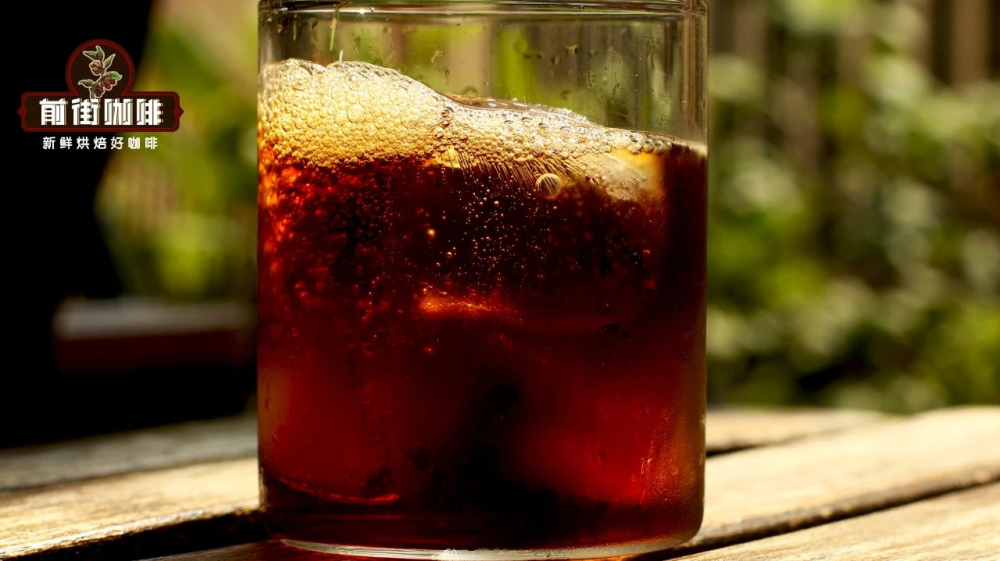
The method for making cold brew coffee is actually not complicated. As long as you grasp a few key parameters, you can make a satisfying cup of iced coffee. Cold brew is divided into steeped cold brew coffee and drip ice drip coffee. Front Street has previously given a detailed explanation of how to make ice drip coffee. Friends who are interested can click "here" to view it, and this article will not repeat it.
The equipment needed to make cold brew coffee is very simple; a 600ml container is enough. You ask whether a mineral water bottle works? Of course it works, as long as you do not mind that it is not attractive enough! Cold brew coffee mainly focuses on three parameters: coffee grind size, coffee-to-water ratio, and steeping time.
The grind size needed for cold brew coffee is usually slightly finer than for pour-over, roughly equivalent to a coarseness with a 20-mesh screen passing rate of 82~85%, corresponding to 22~24 clicks on a C40 hand grinder.
The coffee-to-water ratio is generally set at 1:12, though of course it can also be flexibly adjusted according to personal preference. If calculated using a 600ml container, about 40 grams of coffee grounds paired with 480ml of cold water is needed.
The steeping time is recommended to remain between 12 and 24 hours. The longer the steeping, the higher the coffee concentration. During operation, simply pour the coffee grounds and water into the bottle, shake gently to fully wet the coffee grounds, then place it in the refrigerator (5-10°C) and refrigerate for 12-24 hours.
The last step is filtration. After separating the coffee grounds from the coffee liquid with filter paper or a filter cloth, it is ready to drink. You can also refrigerate it at low temperature for 4 hours before drinking; this way the aroma will perform even better, and it is recommended to let it sit refrigerated for a period before tasting.
The above content is compiled by CoffeeHunters, a coffee news website.


