







Which pour-over coffee mistakes should beginners fix first?
Five habits commonly slow progress when learning pour-over coffee, according to Front Street Coffee. They include starting the bloom timer only after pouring finishes, copying the barista swirl, assuming a small stream is steadiest, using a large stream to wash down the coffee bed wall before finishing, and removing the dripper before the liquid has fully drained.
Timing is the clearest case: degassing begins the moment grounds meet water, so counting 30 seconds after pouring makes the real bloom about 38 to 39 seconds. Pressing the timer at the start of pouring keeps it accurate. The swirl demands wrist control that beginners rarely have, and each of the other habits alters flow or extraction in ways that flatten the final cup.
In the process of learning pour-over coffee on your own, many enthusiasts unconsciously develop some not-so-correct operational habits. Front Street Coffee has summarized the five most common misconceptions: the choice of when to start the bloom timer, imitating baristas' swirling water pouring, mistakenly believing that a small stream is the most stable, using a large stream to wash down the coffee bed wall before finishing, and removing the dripper before the coffee liquid has fully drained. These practices may each seem to have their own logic, but in reality they all have a negative impact on the final flavor. This article will analyze the principle behind each misconception one by one, explain why these operations cause problems, and provide Front Street Coffee's recommended correct alternatives to help everyone build more scientific and stable brewing habits.
Today, Front Street Coffee is going to talk about a few misconceptions that are relatively easy to fall into when learning pour-over coffee on your own.
Misconception 1: Starting the timer only after pouring water for the bloom.
Regarding the idea that the bloom needs 30 seconds, basically no one disagrees. What truly tends to cause disagreement is from which point the timing should start. Some people are used to starting the timer the moment water is poured, while others only begin counting after the pouring is completely finished. The time difference between these two methods is about 8 to 9 seconds.
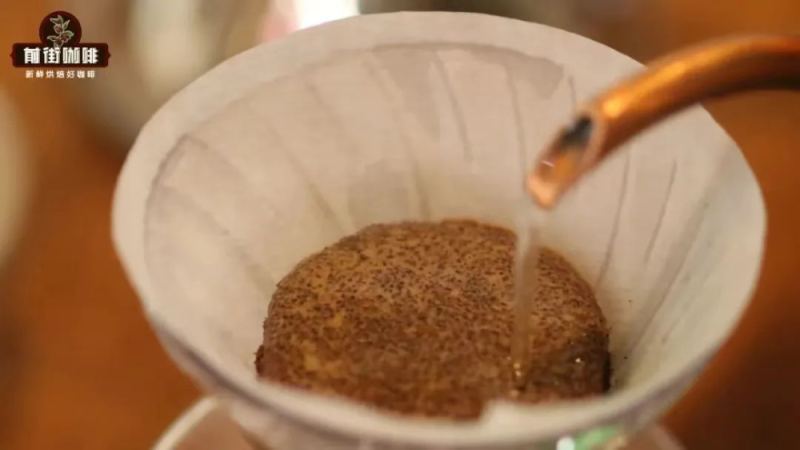
Friends who understand the principle of blooming should know that once coffee grounds come into contact with water, the degassing process has already begun. If you wait until pouring is finished before counting 30 seconds, then the actual bloom time becomes around 38 to 39 seconds. Therefore, the correct approach should be to press the timer as soon as pouring begins.
Misconception 2: Imitating the water-swirling motion.
Many people, when watching baristas brew, notice that they add a swirling motion while pouring water (swirling refers to using the wrist to drive the pouring kettle, causing the spout to rise and fall during the circling process, creating a movement in the water stream due to inertia). It does look very cool visually, so beginners rush to imitate it.
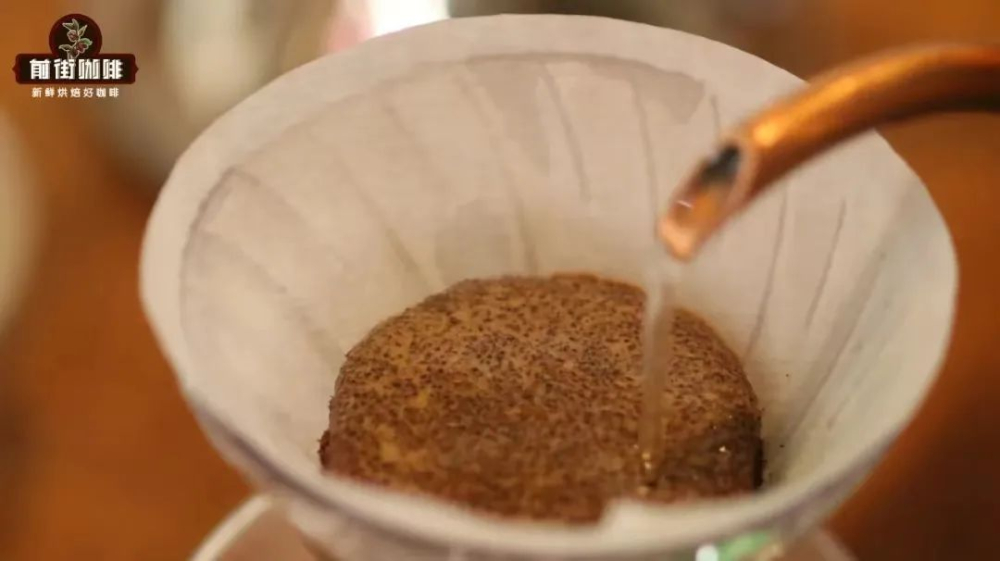
Front Street Coffee does not recommend that beginners adopt the swirling method for pouring water, because this motion places high demands on water control ability. If the basic skill of water control is not yet solid, forcing this operation will only introduce more unstable factors. In fact, many beginners report that their brewed coffee tastes messy, and part of the reason is related to swirling. Front Street Coffee suggests that everyone should still steadily pour in horizontal circles when brewing coffee, and first build a solid foundation.
Misconception 3: Believing that a small stream is the most stable.
Some friends are extremely cautious throughout the entire brewing process, taking every step carefully for fear that their own operational mistakes will ruin a cup of coffee. They pour the grounds gently, pour water carefully, and use an extremely fine stream the whole time.
But the actual situation is that coffee brewed with a small stream often has flavors that are too concentrated, and the layers cannot open up. The reason is that pouring takes too long, and the immersion time is also prolonged.
Misconception 4: Using a large stream at the end to flatten the coffee bed wall.
There is also a group of friends who like to use a relatively large stream near the end of pouring to circle around the filter paper and wash down the coffee bed wall attached to it. Their reasoning is: this can fully extract and not waste the coffee grounds stuck to the edge of the filter paper.
However, the consequence of doing this is that water poured onto the wall of the dripper will run straight down along the ribs, and after the coffee bed wall is washed down, the coffee layer instead becomes thicker. At the same time, the fine particles originally clinging to the edge of the dripper are washed back to the bottom, further increasing the resistance to water passing downward. The final result is that "the drought-stricken die of drought, and the flooded die of flood."
Of course, this is not to say that this practice is 100 percent wrong. There really is a brewing logic that goes with it, but the premise is "matching." If beginner friends are just haphazardly mixing various methods together, then it is still advisable to give up this practice as soon as possible.
Misconception 5: Removing the dripper before the coffee liquid has fully drained.
Some friends mysteriously fetishize the operation of "cutting off the flow." They believe that the last 10 to 20 milliliters of coffee liquid flowing out is the source of bitterness, so they remove the dripper early while there is still about 20 milliliters of liquid in it.
However, Front Street Coffee wants to make one point clear here: brewing coffee is not mysticism, but a brewing process with a scientific basis. This is reflected in various brewing parameters, such as grind size, water temperature, coffee-to-water ratio, and so on...
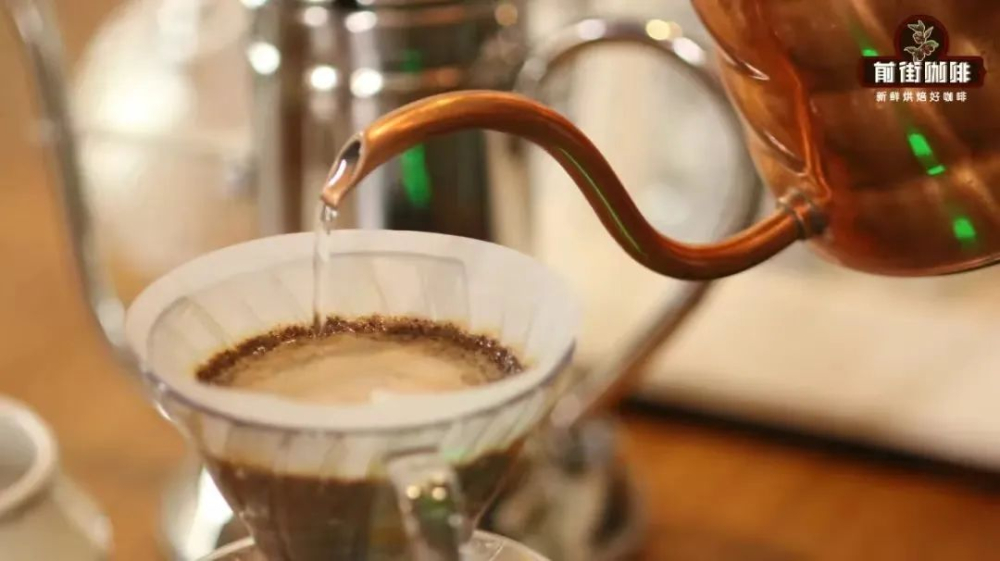
Once the flow is cut off, it means the actual coffee-to-water ratio deviates from the set value, and the final coffee liquid obtained is less than expected, making the result uncertain. If you think those last 10 to 20 milliliters are the source of bitterness, then what you should do in subsequent brewing is optimize the brewing parameters, not rely on cutting off the flow to solve the problem.
Cutting off the flow is essentially an emergency measure. When you judge that this cup of coffee has encountered an unexpected situation, such as a clogged dripper or water that will not go down, and waiting for all the water to finish draining would definitely over-extract it, only then do you choose to cut off the flow to rescue it. But when the parameters are correct and no accidents occur, those last 10 to 20 milliliters of tail liquid will not cause bitterness.
Front Street Coffee believes that the correct approach is to find suitable brewing parameters and let the coffee liquid drain naturally and completely. This is the fundamental solution.
The above content is compiled by CoffeeHunters, a coffee news website.


